
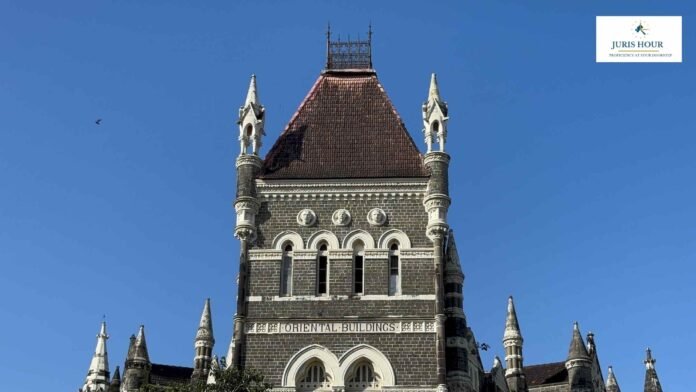
The Bombay High Court has quashed an Income Tax reassessment notice involving alleged escaped income of more than ₹15.56 crore, holding that suspicion about an investor’s background cannot substitute the statutory requirement of having a “reason to believe” that the assessee’s income escaped assessment.
A division bench of Justice B.P. Colabawalla and Justice Farhan P. Dubash observed that the material relied upon by an Assessing Officer must have a direct connection or live nexus with the belief that taxable income escaped assessment. A distant, tenuous or conjectural connection is insufficient to confer jurisdiction for reopening an assessment under Sections 147 and 148 of the Income Tax Act, 1961.
The petitioner/assessee is engaged in manufacturing gold chains and has been carrying on the business for more than two decades. The business was initially constituted as a partnership firm in 2004 and was subsequently converted into a company under Part IX of the erstwhile Companies Act, 1956.
Buy Now: Income tax E-Compilation – August 2026
According to the company, it required funds to expand its business and meet its working-capital requirements. It consequently received foreign investment from Viren Jewellers LLC, a Dubai-based entity engaged in the jewellery business.
A term sheet was executed between the parties on April 1, 2015. In the first tranche, Viren Jewellers purchased shares having a face value of ₹10 at a premium of ₹5 per share, involving an investment of approximately ₹6.57 crore.
The Dubai investor subsequently sought greater participation and decision-making rights in the company. Following a valuation conducted by chartered accountants, it invested a further amount of ₹9 crore by purchasing shares carrying a premium of ₹59 per share. Its shareholding in the petitioner company consequently increased to 28.82%.
The company maintained that the investment entered India through the Foreign Direct Investment route and was received after compliance with the applicable requirements of the Reserve Bank of India, the Foreign Exchange Management Act and the Registrar of Companies.
For Assessment Year 2016-17, the company’s return was selected for limited scrutiny. The Assessing Officer specifically examined the share premium received by the company, including the applicability of Section 56(2)(viib) of the Income Tax Act.
The company furnished documents concerning the share valuation, the source and genuineness of the investment, and the regulatory compliances undertaken before receiving the foreign investment.
A survey under Section 133A was also conducted at the company’s business premises on September 7, 2018. The share capital transaction was again explained during the survey, including through a statement given by one of the company’s directors.
The scrutiny assessment was ultimately completed under Section 143(3) on November 28, 2018, accepting the returned income of approximately ₹5.04 crore. According to the company, no new or incriminating material concerning the share investment was discovered during the survey.
A survey report was subsequently forwarded to the jurisdictional Assessing Officer on April 18, 2019. Relying substantially on that report, the officer issued the reassessment notice on March 30, 2021.
The reasons recorded for reopening noted that 43,82,923 shares carrying a face value of ₹10 had initially been allotted to Viren Jewellers at a premium of ₹5 per share. About four months later, another 12,86,039 shares were allotted to the same investor at a premium of ₹59 per share.
The Assessing Officer questioned the increase in the share premium from ₹5 to ₹59 within a short period. The reasons also questioned the upward revision of the projected earnings-per-share and dividend-growth rates used in the discounted cash-flow valuation.
The Department alleged that there was no proper economic rationale supporting the premium and that certain discrepancies existed in the company’s financial statements. It consequently treated the total amount of ₹15,55,79,207 received towards share capital and premium as a potentially non-genuine transaction.
The principal material relied upon by the Revenue consisted of statements given by Sanjay Khushaldas Bavishi under Section 131 of the Income Tax Act during the survey proceedings.
According to the recorded reasons, Bavishi stated that Manoj Jain, who was associated with Viren Jewellers, was known in the jewellery trade for allegedly engaging in non-genuine business practices, including cash collection and the transfer of funds through bogus import-export transactions.
The Assessing Officer inferred from the statements that Viren Jewellers had provided an accommodation entry to the petitioner. On that basis, along with the questioned share valuation and alleged financial discrepancies, the officer concluded that income chargeable to tax had escaped assessment.
The total escaped income was quantified at ₹15,56,00,843. This consisted primarily of the ₹15.55 crore share investment and an additional amount of ₹21,636 relating to delayed deposits of employees’ provident fund and ESIC contributions.
The petitioner contended that Bavishi’s statements did not establish that it was involved in any cash transaction or bogus business arrangement. It argued that the Department had merely relied upon allegations concerning the alleged conduct of Manoj Jain and applied them to an independent investment made in the petitioner company.
It was further argued that the statements and survey report relied upon by the Assessing Officer were not supplied to the company with the reasons for reopening. This allegedly deprived the company of an effective opportunity to answer the material used against it.
The company also maintained that the reasons proceeded on the incorrect factual assumption that it had been in existence for only two years when the shares were issued. Although the company was incorporated in 2013, its underlying business had been conducted as a partnership firm since 2004.
The Revenue defended the reassessment by contending that the survey report and the statements constituted fresh tangible material that was not available to the Assessing Officer during the original scrutiny assessment. It argued that the Court could examine the existence of material supporting the belief but could not decide its sufficiency at the notice stage.
The High Court found that Bavishi’s statements did not even remotely suggest that the petitioner company had participated in cash dealings or any non-genuine transaction allegedly undertaken by Manoj Jain.
The connection drawn by the Assessing Officer was, according to the bench, based purely on conjecture. The officer appeared to have assumed that since Manoj Jain was allegedly involved in bogus transactions, the investment made by Viren Jewellers in the petitioner company must also be painted with the same brush.
The Court categorically held that this was not permissible in law.
It reiterated that the material relied upon for reopening an assessment must possess a direct nexus with the Assessing Officer’s belief that income escaped assessment. Merely having a “reason to suspect” does not authorise the officer to exercise jurisdiction under Sections 147 and 148.
The survey report itself had recommended that the Assessing Officer conduct further verification and enquiries concerning the share investment. The Court found this significant because it demonstrated that the material available with the Department did not, by itself, establish that the foreign investment represented the petitioner’s unaccounted money.
The bench further noted that neither Bavishi’s statements nor the survey report had been supplied to the company, even though both formed the foundation of the reassessment action.
The Revenue relied upon the Supreme Court’s decision in Commissioner of Income Tax v. Durga Prasad More to argue that tax authorities are entitled to consider surrounding circumstances and apply the test of human probabilities while examining a transaction.
The High Court accepted the general proposition that tax authorities need not examine documents in isolation and may consider surrounding circumstances to determine the true nature of a transaction. It, however, held that the principle could not assist the Revenue where the material itself lacked a live nexus with the alleged escapement of income.
Applying the test of human probabilities, the bench found the Department’s case unsustainable.
The Revenue’s allegation effectively meant that the petitioner had transferred its own unaccounted cash to Viren Jewellers, which then routed the money back by subscribing to the petitioner’s shares. However, that transaction made the foreign investor a substantial shareholder with a 28.82% stake and significant participation in the company’s affairs.
The Court observed that Viren Jewellers and Manoj Jain had no connection with the petitioner company apart from the investment in question. It would, therefore, be implausible to suggest that the petitioner used its own money to allow a complete stranger to acquire substantial ownership and control over its business.
The second ground for reopening related to employees’ contributions of ₹20,360 towards provident fund and ₹1,276 towards ESIC. These amounts were deposited one day after the due dates prescribed under the respective welfare laws but before the due date for filing the Income Tax return.
The High Court noted that when the reassessment notice was issued on March 30, 2021, the applicable law in the Bombay High Court’s jurisdiction was governed by the decision in Commissioner of Income Tax v. Ghatge Patil Transports Ltd.
Under that ruling, employees’ contributions were deductible if deposited before the due date for filing the income-tax return under Section 139, even if paid after the dates prescribed under the relevant welfare statutes.
The Supreme Court subsequently overruled that position in Checkmate Services Private Limited v. Commissioner of Income Tax-1 on October 12, 2022. However, the Bombay High Court said the later judgment could not establish that the Assessing Officer possessed a valid reason to believe that income escaped assessment when the notice was issued in March 2021.
Since the contributions had been deposited before the return-filing deadline, the Assessing Officer could not, under the law then prevailing, have formed a valid belief that ₹21,636 had escaped assessment.
Membership Required to Access Case Details & Order Copy
To view the complete Case Details and Download Order Copy, you must have an active membership. Please subscribe to continue.

