
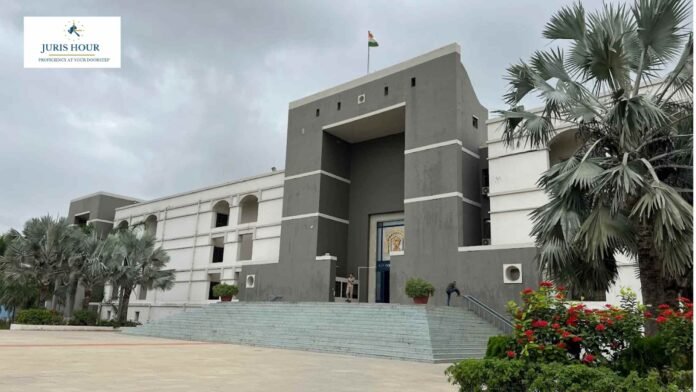
The Gujarat High Court has quashed an Income Tax reassessment notice issued under Section 148 of the Income Tax Act, 1961, holding that reopening an assessment on the basis of incorrect factual assumptions, without any fresh tangible material indicating escapement of income, is legally unsustainable.
The bench of Justice A.S. Supehia and Justice Vaibhavi D. Nanavati observed that where the assessee had already disclosed the relevant business transaction during the original scrutiny assessment, and the alleged payment relied upon for reopening was in fact an opening balance, the reassessment proceedings amounted to a fishing and roving inquiry and a change of opinion.
The assessee had filed its return of income for AY 2013-14 on September 27, 2013, declaring total income of Rs.23,08,270. The return was selected for scrutiny and the Assessing Officer completed the assessment under Section 143(3) on December 30, 2015, accepting the total income at Rs.23,08,270.
Buy Now: Recovery Of Tax Dues And Penalty Against Legal Heirs Of A Deceased Assessee : Case Compilation
Nearly four years later, the Assessing Officer issued a notice under Section 148 dated March 28, 2019, seeking to reopen the completed assessment. The reasons for reopening were subsequently supplied to the assessee on May 2, 2019.
The assessee raised objections to the proposed reassessment and requested that the proceedings be dropped. Those objections were disposed of by the Assessing Officer on December 11, 2019.
The reassessment proceedings stemmed from information received from the Income Tax Department’s Investigation Wing concerning transactions involving M/s Manibhadra Textile Company, a proprietorship concern of Bhavesh Sureshchandra Shah.
According to the investigation information, the bank account of M/s Manibhadra Textile Company had received credits from three concerns, including the assessee. The proprietor subsequently withdrew amounts through self-cheques and cash.
The department treated an amount of Rs.16,14,883 as a high-value transaction allegedly deposited by the assessee into the bank account of M/s Manibhadra Textile Company. The investigation report raised suspicion regarding the nature of the transaction and questioned whether the transaction was commensurate with the assessee’s disclosed income.
The assessee disputed the factual foundation of the reopening.
It was specifically submitted that no payment of Rs.16,14,883 had been made to M/s Manibhadra Textile Company during the relevant assessment year. According to the assessee, the figure represented an opening balance in the ledger account of the textile concern.
The assessee further pointed out that, during the relevant year, it was actually M/s Manibhadra Textile Company that had returned Rs.2 lakh to the assessee on May 23, 2012.
The assessee therefore argued that the very premise on which the reassessment was initiated was factually incorrect. It also contended that its transactions with the textile concern were part of longstanding business dealings and that payments for purchase of cotton had been made in an earlier year.
Importantly, the assessee contended that the original scrutiny assessment had already been completed under Section 143(3) and that the material relied upon for reopening did not constitute any fresh tangible material unavailable to the Assessing Officer during the original assessment proceedings.
The department opposed the writ petition, arguing that the investigation information raised serious concerns regarding the creditworthiness and activities of M/s Manibhadra Textile Company.
The department contended that the concern did not appear to have sufficient creditworthiness to receive substantial funds and that the money was subsequently withdrawn through self-cheques or other modes. It was also argued that the assessee’s own replies acknowledged its transactions with M/s Manibhadra Textile Company, which, according to the Revenue, constituted corroborative material.
The Revenue maintained that the information received from the DDIT (Investigation) constituted relevant material for reopening and that questions concerning the sufficiency, correctness and justification of the information could be examined during the reassessment proceedings rather than at the stage of challenging the notice.
After examining the pleadings and documents, the High Court found a fundamental defect in the basis of the reassessment.
The Court noted that the assessee had categorically pointed out in its objections that it had not made any payment to M/s Manibhadra Textile Company during the relevant assessment year. The alleged amount of Rs.16,14,883 was the opening balance.
Significantly, the Court recorded that this factual position was not disputed by the Revenue.
The Court consequently held that the reopening was based on incorrect facts. Since there was no payment by the assessee to M/s Manibhadra Textile Company during the relevant year, the Court found no basis to conclude that income had escaped assessment on account of the alleged transaction.
The High Court also rejected the suggestion that the assessee had failed to disclose material facts.
The Court noted that the assessee’s business transactions with M/s Manibhadra Textile Company had already been disclosed and that the original assessment had been completed after scrutiny under Section 143(3).
Therefore, the Court concluded that it could not be said that the assessee had suppressed or failed to disclose material information concerning its business transactions with the textile concern.
This finding was significant because the reopening was sought to be sustained despite the assessment having already undergone scrutiny.
The Court went further and characterised the reopening as a fishing and roving inquiry.
It held that the reopening was nothing but a change of opinion and that there was no valid reason to believe that income had escaped assessment. The investigation information did not reveal any new tangible material that had escaped consideration during the original assessment.
The judgment thus underscores the distinction between information that merely raises suspicion and material capable of forming a legally sustainable reason to believe that income has escaped assessment.
Another important observation of the Court concerned the subsequent conduct of M/s Manibhadra Textile Company’s proprietor.
The investigation report had relied upon the fact that after receiving credits, the proprietor withdrew money through self-cheques and cash. However, the High Court held that the mere fact that the proprietor of the third-party concern withdrew money in cash could not, by itself, be sufficient to rope the assessee into reassessment proceedings.
The Court specifically observed that the assessee had fully disclosed its income and its transaction with M/s Manibhadra Textile Company, and that the cash withdrawal by the proprietor of that concern was insufficient ground to subject the assessee to reassessment.
The ruling does not mean that information received from the Investigation Wing can never form the basis of reassessment.
Rather, the judgment demonstrates that such information must be examined against the actual facts and records available to the Assessing Officer. Information received from an investigation authority may generate suspicion, but the Assessing Officer must independently evaluate it and determine whether it provides a legally sustainable basis to believe that taxable income has escaped assessment.
In the present case, the crucial allegation—that the assessee had deposited Rs.16,14,883 during the relevant year—was found to be factually incorrect because the amount represented an opening balance. Once that factual premise failed, the foundation for the reopening also collapsed.
Allowing the writ petition, the Gujarat High Court quashed and set aside the impugned notice issued under Section 148 dated March 28, 2019.
The judgment therefore provides an important reminder that reassessment proceedings cannot be sustained merely because an investigation report or third-party information creates suspicion around a transaction. Where the original assessment was completed after scrutiny, the relevant transaction was already disclosed, and the alleged basis for reopening is demonstrably incorrect, the reassessment cannot be permitted to proceed.
Membership Required to Access Case Details & Order Copy
To view the complete Case Details and Download Order Copy, you must have an active membership. Please subscribe to continue.

