
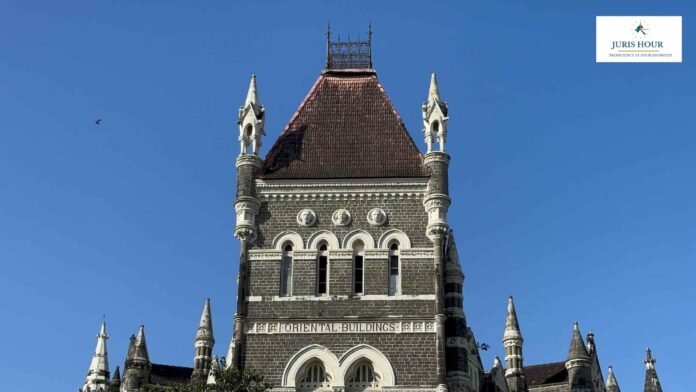
The Bombay High Court has reaffirmed the supremacy of the Insolvency and Bankruptcy Code (IBC) over belated tax recovery claims, holding that the Income Tax Department cannot pursue recovery of tax demands after the approval of a corporate insolvency resolution plan if those claims were never lodged before the Committee of Creditors (CoC) or included in the approved Resolution Plan.
The Bench of Justice G.S. Kulkarni and Justice Aarti Sathe observed that the controversy was squarely covered by recent Supreme Court decisions, particularly Samarth Lifters Pvt. Ltd. v. DBM Geotechnics & Construction Pvt. Ltd., Vaibhav Goel v. Deputy Commissioner of Income Tax, and Ghanshyam Mishra & Sons Pvt. Ltd. v. Edelweiss Asset Reconstruction Co. Ltd. The Supreme Court has already authoritatively held that once a resolution plan is approved, every claim not forming part of that plan stands extinguished. Allowing fresh or belated statutory claims after approval would defeat the very objective of insolvency resolution by preventing the successful resolution applicant from restarting the corporate debtor’s business on a “clean slate.”
Buy Now: Think Before You Pay Cash: 50+ Landmark Rulings on Section 40A(3) Of The Income Tax Act, 1961
The bench noted that Section 31(1) of the Insolvency and Bankruptcy Code makes an approved resolution plan binding upon all stakeholders, including the Central Government, State Governments and statutory authorities.
The case arose from an appeal filed by the Principal Commissioner of Income Tax under Section 260A of the Income Tax Act challenging an order of the Income Tax Appellate Tribunal (ITAT), Mumbai, relating to Assessment Year 2012-13.
The original assessment under Section 143(3) of the Income Tax Act had resulted in additions to the assessee’s income, including disallowance of subcontract charges amounting to over ₹15.37 crore allegedly paid to a subcontractor. The Revenue contended that the assessee had failed to discharge the burden of proving the genuineness of these subcontract expenses and challenged the relief granted by the Commissioner of Income Tax (Appeals), which had subsequently been affirmed by the ITAT.
While the tax litigation was pending, the company entered insolvency proceedings under the Insolvency and Bankruptcy Code, 2016.
An operational creditor initiated proceedings under Section 9 of the IBC, following which the National Company Law Tribunal (NCLT) admitted the petition and commenced the Corporate Insolvency Resolution Process (CIRP) in August 2019.
The Committee of Creditors approved a Resolution Plan in February 2021, which received NCLT approval in January 2023.
During these insolvency proceedings, the Income Tax Department did not lodge the disputed tax demand before the Resolution Professional or ensure that the claim formed part of the approved Resolution Plan. The assessee argued that once the appellate authority had substantially granted relief against the assessment order, no enforceable tax demand survived, and in any event, no tax claim had been incorporated into the resolution process. Consequently, after approval of the Resolution Plan, the Revenue could not revive or enforce such claims.
The Bombay High Court further noted that the Supreme Court had dismissed a review petition against its decision in Vaibhav Goel on 29 January 2026, thereby lending additional finality to the legal position that statutory dues omitted from an approved resolution plan cannot subsequently be enforced.
Applying these principles, the High Court held that since the Income Tax Department had failed to lodge its claim before the Committee of Creditors or the NCLT during the Corporate Insolvency Resolution Process, it was barred from seeking recovery thereafter.
The Court observed that even if the Revenue had ultimately succeeded in overturning the relief granted by the Commissioner (Appeals), any revived tax demand would still be legally unenforceable because it had never been included in the approved Resolution Plan.
In other words, a successful tax appeal cannot resurrect a claim that stood extinguished under the Insolvency and Bankruptcy Code once the resolution plan received judicial approval.
The Bench concluded that the questions raised by the Revenue had become entirely academic. Since the statutory claim itself could no longer be enforced after approval of the Resolution Plan, no substantial question of law survived for consideration under Section 260A of the Income Tax Act.
Accordingly, the Bombay High Court dismissed the Income Tax Department’s appeal without costs.
Membership Required to Access Case Details & Order Copy
To view the complete Case Details and Download Order Copy, you must have an active membership. Please subscribe to continue.

