
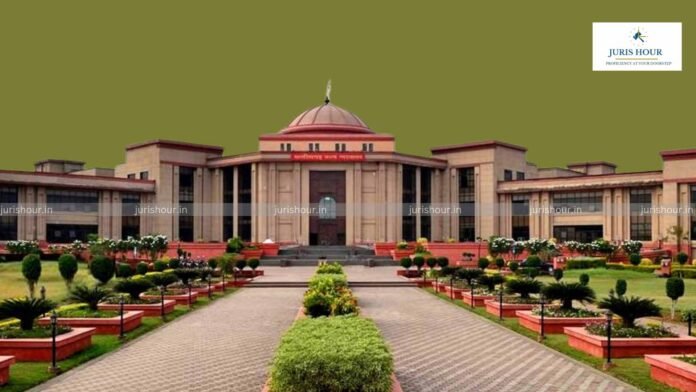
The Chhattisgarh High Court has dismissed an appeal filed by the Income Tax Department and upheld the decision of the Income Tax Appellate Tribunal (ITAT), Raipur Bench, holding that a reassessment order passed against an assessee engaged in construction and real estate business was barred by limitation and therefore unsustainable in law.
The Bench of Justice Parth Prateem Sahu and Justice Sachin Singh Rajput found no substantial question of law warranting admission of the department’s appeal under Section 260A of the Income Tax Act, 1961.
The assessee had filed its return of income for Assessment Year 2010-11 declaring a loss of ₹27,135. Subsequently, following a survey conducted under Section 133A at the premises of the Goldbricks Infrastructure Pvt. Ltd. group in February 2016, the Income Tax Department reopened the assessee’s case by issuing a notice under Section 148 on March 28, 2017.
The reassessment proceedings culminated in an order dated December 31, 2018, under Sections 143(3) read with 147, whereby the Assessing Officer made an addition of ₹5.40 crore and determined total income at ₹5.39 crore. The assessee challenged the reassessment order before the Commissioner of Income Tax (Appeals), who allowed the appeal on the issue of limitation. The Revenue’s further appeal before the ITAT was also dismissed.
The department contended that both the CIT(A) and the ITAT had failed to properly account for the effect of interim orders passed by the High Court in earlier writ proceedings filed by the assessee challenging the reopening. According to the Department, the period during which the reassessment proceedings remained stayed by judicial orders ought to have been excluded while computing the limitation period under Section 153 of the Income Tax Act.
It was argued that once the excluded period and the directions issued by the High Court in the writ proceedings were considered, the reassessment order could not be treated as time-barred. The Revenue therefore sought admission of the appeal on the question whether the ITAT had erred in holding the reassessment order barred by limitation.
The ITAT examined the statutory limitation provisions and the chronology of events. The notice under Section 148 had been issued on March 28, 2017, and the original limitation for completing reassessment expired on December 31, 2017. The High Court granted interim protection on December 14, 2017 and finally disposed of the writ petition on July 10, 2018.
After excluding the stay period and applying the benefit available under Explanation 1 and the proviso to Section 153, the Tribunal concluded that the extended limitation period would expire much earlier than December 31, 2018. Even if the Revenue’s interpretation regarding additional time granted by the High Court was accepted, the reassessment ought to have been completed by November 18, 2018. Since the assessment order was ultimately passed on December 31, 2018, it remained beyond the permissible period.
The High Court agreed with the Tribunal’s reasoning and observed that the writ court had merely directed the Assessing Officer to furnish reasons and dispose of objections within a reasonable time. There was no specific judicial direction extending the statutory limitation period for completion of reassessment proceedings.
The Bench noted that the Tribunal had carefully considered the Revenue’s submissions and had even examined the matter from the Department’s perspective. Despite granting the benefit of additional time argued by the Revenue, the reassessment order was still found to have been passed beyond the limitation period.
The Court also took note of the Tribunal’s reliance on the Supreme Court’s decisions in Union of India v. Ashish Agarwal and Union of India v. Rajeev Bansal, which emphasize strict adherence to statutory limitation provisions in reassessment proceedings.
Concluding that the findings recorded by the ITAT were based on a proper interpretation of the limitation provisions and the factual record, the High Court held that no substantial question of law arose for consideration under Section 260A of the Income Tax Act. Accordingly, the department’s appeal was dismissed.
Membership Required to Access Case Details & Order Copy
To view the complete Case Details and Download Order Copy, you must have an active membership. Please subscribe to continue.

