
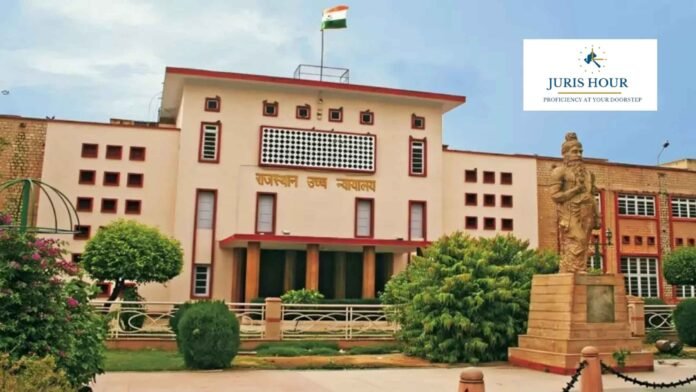
The Rajasthan High Court has dismissed a tax department appeal filed after a delay of 304 days, holding that a mechanical explanation citing administrative procedures and a change of counsel did not establish sufficient cause for condonation.
The Bench of Justice Arun Monga and Justice Ashutosh Kumar rejected both the application for condonation of delay and the appeal against an order. The court emphasised that government departments are bound by limitation laws and cannot claim a different standard merely because the State is a litigant.
Buy Now: 80+ Judgements Indirect Tax – September 2026 E-Magazine
The appeal arose from a January 31, 2025 order of the Customs, Excise and Service Tax Appellate Tribunal (CESTAT). The tribunal had allowed the company’s appeals and set aside the Rajasthan Tax Board’s orders and the assessment orders imposing Central Sales Tax and penalties on the inter-State movement of alcohol.
The Commercial Tax Officer, Anti-Tax Evasion, Bhiwadi, and the Commissioner of the Rajasthan Commercial Tax Department sought to challenge that decision before the High Court. However, their appeal was accompanied by an application seeking condonation of a 304-day delay under Section 5 of the Limitation Act, 1963.
The department submitted that the delay was bona fide and unintentional. It attributed the late filing to the time taken by the competent authority to examine the facts and decide whether to appeal.
It also referred to orders dated July 28, 2025 and October 3, 2025 issued by the Rajasthan Department of Law and Legal Affairs, which resulted in a change of counsel representing the department. According to the application, shifting of departments and changes in the administrative framework caused further delay.
The department tendered an unconditional apology and requested that the appeal be heard on merits.
The bench found the explanation inadequate. It observed that the application was mechanical, reflected no application of mind and failed to provide specific particulars or a day-to-day explanation of why the matter had remained pending.
While acknowledging that courts may adopt a liberal approach in deserving cases, the bench held that the present case did not warrant such indulgence.
The High Court explained that the expiry of the prescribed limitation period creates a legally recognised benefit in favour of the successful litigant. That benefit cannot be disturbed unless the party seeking condonation demonstrates sufficient cause.
Relying on Ramlal and Others v. Rewa Coalfields Ltd., the bench noted that courts must balance the finality acquired by a favourable decision with their discretion to condone delay where sufficient cause is established.
The court also referred to Ajit Singh Thakur Singh v. State of Gujarat, which explains that the cause for failing to file an appeal within time must arise before the limitation period expires. Events occurring afterwards may explain additional delay, but cannot by themselves justify the initial failure to appeal within the prescribed period.
The bench relied on Government of Maharashtra (Water Resource Department) v. Borse Brothers Engineers and Contractors Private Limited, which reiterates that government involvement does not justify applying a different yardstick for condonation.
The Supreme Court principles reproduced in the order stress that routine references to bureaucratic processes, prolonged file movement and procedural red tape cannot substitute for a plausible explanation supported by bona fide efforts.
The High Court further referred to Shivamma (Dead) by LRs v. Karnataka Housing Board & Others, in which the Supreme Court cautioned against condoning delays caused by administrative lethargy and laxity. The decision emphasises that State authorities must establish sufficient cause and demonstrate that they acted diligently throughout.
Applying these principles, the bench declined to grant judicial latitude to the tax department.
The High Court concluded that the appeal could not proceed because of the unexplained delay. It therefore dismissed both the condonation application and the main appeal, disposing of all pending applications.
Membership Required to Access Case Details & Order Copy
To view the complete Case Details and Download Order Copy, you must have an active membership. Please subscribe to continue.

