
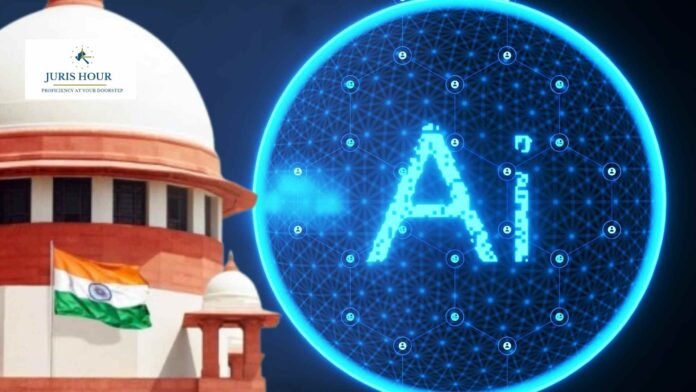
The Supreme Court has emphatically ruled that courts and tribunals cannot rely on fake or AI-generated “hallucinated” judgments while deciding cases.
Holding that such reliance strikes at the very foundation of judicial integrity, the bench of Justice Pamidighantam Sri Narasimha and Justice Alok Aradhe set aside the orders passed by both the National Company Law Tribunal (NCLT) and the National Company Law Appellate Tribunal (NCLAT), after discovering that the adjudicating authorities had relied upon non-existent and fabricated judicial precedents generated through Artificial Intelligence.
At the outset, the Supreme Court acknowledged the transformative potential of Artificial Intelligence in improving efficiency across professions, including law. The Court noted that AI has become capable of performing not only routine tasks but also sophisticated intellectual functions, and referred to recent developments in the United Kingdom, including the approval of an AI-driven law firm.
Buy Now: Supreme court Judgements E-Compilation – JUNE 2026
However, the Bench cautioned that while AI can be an important aid to legal professionals and judges, adjudication must always remain under complete human control.
The Court observed that AI is fundamentally different from previous technological innovations because it is capable of influencing human reasoning itself. If left unchecked, dependence on AI could gradually replace independent legal thinking and judicial reasoning.
Accordingly, the Court declared that adjudication must always retain “a human in the loop” at every stage of judicial decision-making.
AI Hallucinations Compared to a Legal Disaster
The Supreme Court devoted a substantial part of its judgment to explaining the danger posed by AI “hallucinations”—instances where AI systems confidently generate completely false or fabricated legal authorities.
In one of the strongest observations made by the Court, it compared fake AI-generated precedents to the release of methyl isocyanate, describing them as invisible, insidious, and catastrophic for the justice system.
The Court observed that once fabricated precedents enter judicial reasoning, they contaminate the very foundation of adjudication and undermine public confidence in courts.
According to the Bench, such fake authorities are not merely technical mistakes but threaten the rule of law itself.
Supreme Court Declares Zero Tolerance Policy
Laying down an important principle of law, the Supreme Court announced a policy of zero tolerance towards the citation or use of fabricated AI-generated judgments.
The Court held that advocates commit professional misconduct if they cite AI-generated precedents without verifying their authenticity. Judges and tribunals commit a serious judicial lapse if they rely upon fake or hallucinated authorities. Any judicial decision based on fabricated precedents becomes legally unsustainable. Such decisions are liable to be set aside irrespective of whether the fake material materially influenced the final outcome.
The Court categorically held that even the slightest infiltration of fabricated AI material into judicial reasoning compromises the sanctity of adjudication.
Bar Council of India Directed to Frame AI Guidelines
Recognising that judicial observations alone would not sufficiently address the growing challenge, the Supreme Court directed the Bar Council of India (BCI) to constitute a committee for examining the issue.
The Court instructed the BCI to formulate guiding principles governing the use of Artificial Intelligence by advocates and prescribe appropriate disciplinary consequences for lawyers who submit fabricated AI-generated legal authorities before courts.
The Bench observed that regulation of AI usage in legal practice requires close cooperation between the Bench and the Bar.
Background of the Insolvency Dispute
The appeal arose from insolvency proceedings initiated by Jammu & Kashmir Bank Ltd. against Essel Infraprojects Ltd. (EIL) under Section 7 of the Insolvency and Bankruptcy Code, 2016.
The appellant, Pooja Ramesh Singh, a suspended director of EIL, challenged the admission of the corporate insolvency resolution process. She argued before the NCLAT that corporate restructuring, including demerger and amalgamation, had shifted liabilities to another entity and that subsequent sanction documents no longer reflected the guarantee.
The NCLAT dismissed the appeal after affirming the findings of the NCLT.
Fake Judgments Detected During Supreme Court Hearing
Before the Supreme Court, senior advocate Madhavi Divan, appearing for the appellant, pointed out that the authorities cited by the NCLT did not actually exist.
She argued that while some citations corresponded to genuine Supreme Court cases, the quoted paragraphs attributed to those judgments were entirely fabricated. Other citations referred to cases that never existed.
Upon independent verification, the Supreme Court found that some citations were wrongly attributed to unrelated judgments. Some cited paragraphs never existed in the reported decisions. Several judgments relied upon by the NCLT were entirely fictitious. The fabricated authorities subsequently escaped scrutiny before the NCLAT as well.
The Court also noted that Jammu & Kashmir Bank filed an affidavit stating that its counsel had never cited these authorities and that the NCLT had independently relied upon them during its own research.
The Supreme Court held that judicial decisions founded upon fake authorities amount to a subversion of the rule of law.
According to the Court, once judicial reasoning becomes tainted by fabricated precedents, the resulting judgment ceases to possess legal validity.
The Bench therefore quashed both the NCLT’s admission order dated 28 August 2024, and the NCLAT judgment dated 11 September 2025.
The insolvency application has now been restored before the NCLT for fresh adjudication in accordance with law, without expressing any opinion on the merits of the underlying insolvency dispute. The NCLT has been requested to dispose of the restored application expeditiously, preferably within two weeks, while maintaining status quo in the meantime.
Membership Required to Access Case Details & Order Copy
To view the complete Case Details and Download Order Copy, you must have an active membership. Please subscribe to continue.
Read More: JURISHOUR | TAX LAW DAILY BULLETIN : 02 July, 2026

