
The Madras High Court has quashed the criminal prosecution initiated by the Serious Fraud Investigation Office (SFIO) against a statutory auditor, holding that allegations of negligence or failure to exercise due care during an audit cannot, by themselves, amount to criminal offences under the Companies Act, 1956 unless the prosecution specifically establishes a wilful default.
The bench of Justice Sunder Mohan has observed that criminal proceedings against the company’s principal accused and other directors had already been quashed by the High Court in an earlier batch of cases on grounds including limitation and defects in the order taking cognizance, although that decision is presently under challenge before the Supreme Court.
The SFIO had launched prosecution against the company’s Managing Director, directors, company secretary and statutory auditors, alleging large-scale financial irregularities, diversion of funds, falsification of accounts and fraudulent conduct of business. According to the prosecution, the company had inflated sales and purchases, concealed related-party transactions, maintained multiple sets of books, and obtained loans from financial institutions by presenting misleading financial statements.
Buy Now: 50+ PMLA JUDGEMENTS : CASE LAWS
The auditor was accused of failing to verify sales, purchases and related-party transactions, failing to conduct audit procedures properly, and omitting to report non-compliance with accounting standards. Based on these allegations, the SFIO sought to prosecute him under Sections 211, 227, 233 and 628 of the Companies Act, 1956.
The petitioner challenged the criminal proceedings under Section 482 of the Code of Criminal Procedure, seeking quashing of the complaint pending before the Special Court in Chennai.
The prosecution alleged that the statutory auditor failed to verify basic records and supporting documents while auditing the company’s accounts. It further alleged that he failed to investigate suspicious high-value related-party transactions involving entities controlled by the Managing Director’s family and neglected to report violations of Accounting Standard-18 dealing with related-party disclosures.
The complaint also asserted that these omissions facilitated the management in presenting financial statements that did not reflect the true and fair state of the company’s affairs.
The High Court carefully examined the statutory framework governing auditors’ liability under the Companies Act, 1956.
The Court first observed that Section 211 deals with the form and contents of a company’s balance sheet and profit and loss account and specifies the categories of persons who can be prosecuted for violations. Those categories include the managing director, manager, directors and specified officers of the company. Since the petitioner was merely the statutory auditor and was neither an officer nor a person entrusted by the company with compliance under Section 211, prosecution under that provision was legally unsustainable.
The Court also found that the prosecution had incorrectly attempted to invoke Sections 211 and 628 together without explaining how the statutory ingredients of either offence were independently satisfied.
While examining Section 628, which penalises knowingly making false statements or omitting material facts in documents required under the Companies Act, the Court noted that the prosecution had never alleged that the auditor himself made any false statement in his audit report.
Instead, the allegations merely suggested that he had failed to record certain observations regarding non-compliance with accounting standards. The Court held that such allegations do not automatically amount to making a false statement or knowingly suppressing a material fact within the meaning of Section 628.
The Court observed that where the Companies Act specifically provides a separate provision dealing with auditors’ failures under Section 233, resorting to Section 628 without satisfying its ingredients was impermissible.
The High Court emphasised that Section 233 imposes criminal liability on auditors only where non-compliance with statutory audit obligations is wilful.
Significantly, the Court found that the complaint nowhere alleged that the auditor’s conduct was wilful. Instead, the allegations merely accused him of failing to conduct adequate verification and enquiries during the audit.
The Court further noted that the auditor’s own audit reports had already qualified the company’s financial statements by recording that proper records of fixed assets were not maintained and that deficiencies existed in the company’s accounting records. Those very audit observations had been relied upon by the SFIO while prosecuting the principal accused.
According to the Court, these circumstances demonstrated that the auditor had not concealed those deficiencies altogether.
The Court held that even if the allegations in the complaint were accepted at face value, they could at best indicate lack of due care, caution or professional diligence.
However, criminal prosecution requires much more than negligence.
Justice Sunder Mohan observed that mere dereliction of professional duty cannot be elevated into a criminal offence in the absence of specific allegations showing intentional or wilful misconduct. Since the complaint lacked any assertion that the auditor had deliberately failed to discharge his statutory duties, continuation of the prosecution would amount to abuse of the process of law.
While the present judgment principally rested on the auditor-specific grounds, the Court observed that the benefit of those earlier findings would also enure to the petitioner, subject to the outcome of the pending Special Leave Petition before the Supreme Court.
The Madras High Court quashed the criminal complaint against the Deloitte partner in Special C.C. No. 2 of 2018 pending before the XV Additional City Civil and Sessions Court, Chennai, holding that none of the penal provisions invoked by the SFIO were attracted on the facts alleged against him. Consequently, all connected miscellaneous petitions were also closed.
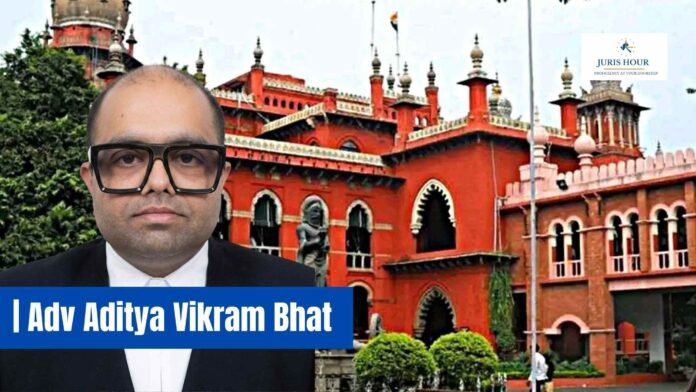
Appearance: Senior Advocate J. Sivanandaraaj, instructed by Aditya Vikram Bhatt and S. Sakthivel, appeared for the petitioner. The respondent, Union of India (Serious Fraud Investigation Office), was represented by Additional Solicitor General A.R.L. Sundaresan, assisted by Special Public Prosecutor K. Subbu Ranga Bharathi.
Membership Required to Access Case Details & Order Copy
To view the complete Case Details and Download Order Copy, you must have an active membership. Please subscribe to continue.
Read More: JURISHOUR | TAX LAW DAILY BULLETIN : 29 JULY, 2026

