
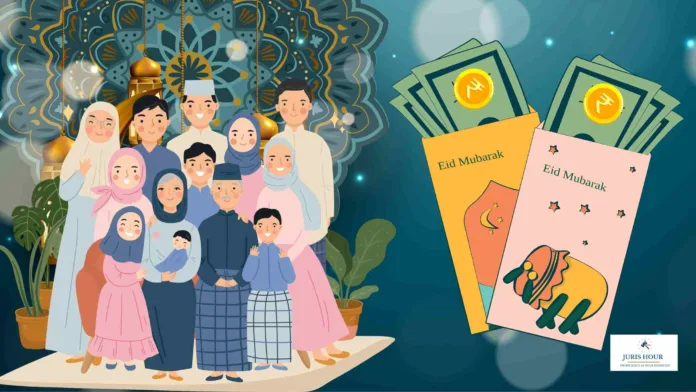
What is Eidi?
Eidi, also known as Eidiyah or Eidhi, is a traditional gift given during the Islamic festivals of Eid al-Fitr and Eid al-Adha. Typically, it is money given by elders to younger family members as a token of love and blessings. While Eidi is most commonly given in cash, it can also include gifts such as clothes, toys, or other valuables.
Taxability of Eidi Under Indian Tax Laws
The tax treatment of Eidi in India is governed by the Income Tax Act, 1961, particularly under the provisions related to gifts.
1. Section 56(2)(x) – Gift Taxation Rule
According to Section 56(2)(x) of the Income Tax Act, any sum of money received by an individual or Hindu Undivided Family (HUF) without consideration is taxable if the total amount exceeds Rs. 50,000 in a financial year. This rule applies to gifts received in cash or kind, including Eidi.
Exemptions Applicable to Eidi
However, certain exemptions apply that may prevent Eidi from being taxed:
Eidi Received from Relatives
The Income Tax Act exempts gifts received from specified relatives, regardless of the amount. The term ‘relative’ includes:
- Parents, grandparents, and great-grandparents
- Siblings (brothers and sisters)
- Spouse
- Siblings of the spouse
- Siblings of parents (uncles and aunts)
- Lineal ascendants or descendants of self or spouse (children, grandchildren, etc.)
- Spouse of any of the above relatives
Since Eidi is usually received from close family members, it is generally not taxable under this exemption.
Threshold of ₹50,000 for Non-Relatives
If Eidi is received from non-relatives, it will be taxed only if the total gifts from all non-relatives exceed rs. 50,000 in a financial year. If the total amount is within this limit, it remains exempt.
Tax Treatment of Eidi Received in Cash
The mode of receiving Eidi (cash, bank transfer, or digital payment) does not impact its taxation. However, cash transactions are subject to scrutiny by tax authorities. If large sums of money are deposited in a bank account, the Income Tax Department may inquire about the source of funds. To avoid issues:
- For small cash gifts like Eidi, no tax implications arise.
- If large cash transactions occur, it’s advisable to maintain a record to justify the source.
Practical Considerations
- Small Eidi amounts (such as ₹500 or ₹1,000 per child) are usually not taxable.
- If receiving substantial Eidi from non-relatives, ensure the total does not exceed ₹50,000 annually to remain tax-free.
- For significant cash transactions, keep records to avoid tax scrutiny.
Read More: GST Amnesty Scheme: Deadline Approaches for Waiver on Penalty & Interest

