
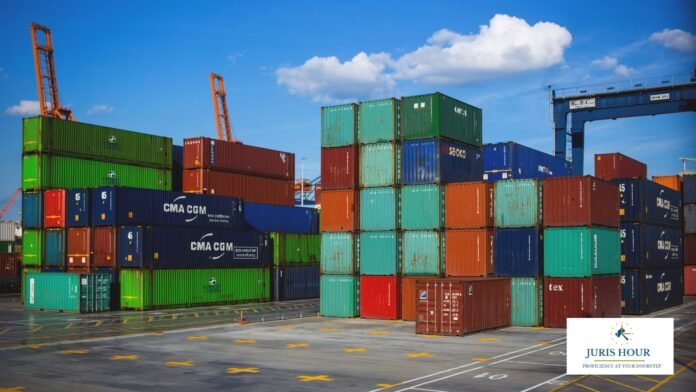
Re-export is an important aspect of international trade that allows imported goods to be exported again from India without being consumed, sold, or substantially altered in the domestic market. Businesses engaged in exhibitions, repair and return services, temporary imports, project imports, testing activities, leasing arrangements, and global trading frequently use the re-export mechanism to reduce customs duty burdens and maintain smooth cross-border movement of goods.
Indian customs law provides several procedures and benefits for re-export transactions under the Customs Act, 1962, Foreign Trade Policy (FTP), and various customs notifications. However, failure to comply with procedural requirements can result in denial of duty refunds, confiscation of goods, penalties, or prolonged litigation.
This guide explains the legal framework, customs procedures, documentation requirements, timelines, and practical compliance measures for re-export from India.
BUY NOW: 50+ Judgements on Customs Valuation
Understanding Re-Export Under Indian Customs Law
Re-export refers to the export of goods that were previously imported into India. These goods may either be exported in the same condition or after limited processing, repair, testing, refurbishment, or use permitted under customs regulations.
Common examples include:
- Machinery imported for repair and returned abroad
- Goods imported for exhibitions and later re-exported
- Defective products returned to foreign suppliers
- Containers and packing materials sent back overseas
- Imported equipment used temporarily for projects
- Goods imported under ATA Carnet arrangements
- Imported samples or prototypes re-exported after demonstration
The legal framework primarily flows from:
- The Customs Act, 1962
- Customs Tariff Act, 1975
- Foreign Trade Policy
- Customs notifications issued by CBIC
- Re-export drawback provisions under Section 74 of the Customs Act
Key Legal Provisions Governing Re-Exports
Section 74 of the Customs Act, 1962
Section 74 is the most significant provision governing re-export benefits. It allows refund of customs duty paid on imported goods when such goods are re-exported from India.
Under this provision:
- Up to 98% of customs duty may be refunded
- Goods must be identifiable as the same imported goods
- Re-export should generally occur within two years from the date of import
- Proper documentation and examination are necessary
The period may be extended by customs authorities upon sufficient cause.
Section 20 of the Customs Act
Section 20 deals with re-importation and subsequent re-export scenarios. It becomes relevant where exported goods are brought back into India for repairs, reconditioning, or other permitted purposes.
Customs and Central Excise Duties Drawback Rules
The Drawback Rules prescribe the manner in which duty drawback claims are processed for re-exported goods.
Categories of Re-Exports
Re-Export of Goods Imported for Temporary Use
Businesses often import machinery, event equipment, testing devices, or exhibition material temporarily. Customs may allow duty exemptions subject to execution of bonds and subsequent re-export within prescribed timelines.
Examples include:
- Film shooting equipment
- Exhibition goods
- Event infrastructure
- Scientific instruments
Re-Export After Repair or Testing
Goods imported for repair, calibration, maintenance, or testing may be re-exported after completion of the work.
This is common in sectors such as:
- Aviation
- Electronics
- Heavy engineering
- Medical equipment
- Defence components
Re-Export of Defective Goods
Imported goods found defective, damaged, or not meeting contractual specifications may be returned to foreign suppliers.
In such cases, importers may seek refund of customs duties under Section 74.
Re-Export Under Bond
Goods may be imported without payment of duty under bond for specified purposes and later re-exported.
Failure to re-export within the permitted period may trigger duty demands along with interest and penalties.
Step-by-Step Procedure for Re-Export from India
Step 1: Determine Eligibility for Re-Export Benefits
The importer must first determine:
- Whether the goods qualify for re-export
- Whether duty drawback under Section 74 is available
- Whether the goods remain identifiable
- Whether any processing carried out affects eligibility
Certain substantial manufacturing activities may disqualify the transaction from Section 74 benefits.
Step 2: Maintain Proper Import Documentation
The importer should preserve all import-related documents, including:
- Bill of Entry
- Import invoice
- Packing list
- Duty payment challans
- Import licenses, if applicable
- Insurance documents
- Bond or undertaking executed at import stage
These records are crucial for establishing identity of goods during re-export.
Step 3: File Shipping Bill for Re-Export
The exporter must file the appropriate shipping bill through the customs electronic system.
The shipping bill should clearly mention:
- Nature of re-export
- Original Bill of Entry details
- Duty drawback claim, if any
- Serial numbers and identification marks of goods
The customs authorities may require physical examination of the goods.
Step 4: Customs Examination and Verification
Customs officers verify:
- Identity of goods
- Correlation with original import documents
- Quantity and specifications
- Compliance with export restrictions
Photographs, serial numbers, machine numbers, and unique identifiers become extremely important during this stage.
Step 5: Obtain Let Export Order (LEO)
Once customs formalities are completed, the customs officer grants the Let Export Order, permitting export of the goods.
The goods are then loaded and exported through the port, airport, ICD, or land customs station.
Step 6: File Drawback Claim Under Section 74
If claiming refund of customs duty, the exporter must file the drawback claim with supporting documents.
The claim generally includes:
- Import documents
- Export documents
- Proof of duty payment
- Examination report
- Proof of identity of goods
The customs department scrutinizes the claim before sanctioning refund.
Time Limits for Re-Export
Standard Time Limit
Goods should generally be re-exported within:
- Two years from date of import under Section 74
Extension of Time
Customs authorities may extend the period if the importer demonstrates valid reasons such as:
- Technical delays
- Repair completion issues
- Litigation
- Project extensions
- Supply chain disruptions
Applications for extension should be filed before expiry of the original timeline.
Rate of Duty Drawback Available
Goods Re-Exported Without Use
If imported goods are re-exported without being used in India, importers may receive up to 98% refund of customs duties paid.
Goods Re-Exported After Use
Where goods have been used after import, drawback is reduced according to the duration of use.
The depreciation is calculated as per prescribed customs rules.
Longer use generally results in lower refund eligibility.
Important Documentation for Re-Export Compliance
Businesses should maintain a comprehensive documentation trail including:
Import Documents
- Bill of Entry
- Commercial invoice
- Packing list
- Duty payment proof
Export Documents
- Shipping bill
- Export invoice
- Airway bill or Bill of Lading
- Packing list
Technical Records
- Serial numbers
- Photographs
- Inspection certificates
- Repair certificates
- Testing reports
Financial Records
- Foreign exchange remittance records
- Bank realization certificates where applicable
Proper record maintenance significantly reduces disputes during drawback processing.
Special Procedures and Schemes
ATA Carnet System
India permits temporary import and export under ATA Carnet for:
- Trade fairs
- Exhibitions
- Professional equipment
ATA Carnet simplifies customs formalities and avoids repeated duty payments.
EPCG and Advance Authorization Cases
Capital goods imported under Export Promotion Capital Goods (EPCG) schemes or raw materials imported under Advance Authorization may also involve re-export situations.
Businesses must ensure compliance with DGFT obligations and customs conditions before re-exporting such goods.
SEZ and FTWZ Re-Exports
Special Economic Zones (SEZs) and Free Trade Warehousing Zones (FTWZs) provide additional flexibility for re-export operations.
Goods stored in FTWZs may be re-exported without entering the domestic tariff area.
Common Compliance Challenges
Identity Verification Issues
One of the most common disputes involves inability to establish that exported goods are the same as imported goods.
Missing serial numbers or altered goods frequently result in rejection of drawback claims.
Delay in Re-Export
Failure to re-export within prescribed timelines may lead to:
- Recovery of customs duty
- Interest liability
- Penalties
- Bond enforcement
Improper Documentation
Incomplete shipping bills, mismatch in invoice descriptions, or missing examination reports can create significant delays.
Classification and Valuation Disputes
Incorrect tariff classification or valuation inconsistencies may trigger investigations and reassessment proceedings.
Practical Compliance Tips for Businesses
Maintain Product Identification Records
Businesses should maintain:
- Serial number registers
- Photographic records
- RFID or barcode tracking systems
- Engineering certificates
This helps establish identity during customs verification.
Use Detailed Contracts
Import and repair agreements should clearly mention:
- Nature of temporary import
- Re-export obligation
- Ownership of goods
- Repair scope
- Return timelines
Conduct Internal Compliance Reviews
Regular customs compliance audits help identify procedural gaps and reduce litigation risk.
Coordinate With Customs Brokers
Experienced customs brokers and trade consultants can help ensure accurate filing and documentation.
Penalties for Non-Compliance
Non-compliance with customs procedures may attract action under various provisions of the Customs Act, including:
- Confiscation of goods
- Monetary penalties
- Recovery of duty and interest
- Suspension of import-export privileges
- Investigation for misdeclaration or fraud
Serious violations may also invite prosecution in certain cases.
Recent Trends in Re-Export Compliance
Indian customs administration is increasingly relying on:
- Electronic documentation
- Risk management systems
- Data analytics
- Faceless assessments
- Automated drawback processing
Businesses engaged in frequent re-export transactions should adopt digital compliance systems and maintain audit-ready records.
Global supply chain restructuring, repair economies, and cross-border equipment mobility are also increasing the importance of efficient re-export mechanisms.
Conclusion
Re-export procedures play a vital role in facilitating international trade, repair services, temporary imports, and global supply chain operations. Indian customs law provides substantial benefits, including refund of customs duties under Section 74, but these benefits are closely tied to procedural compliance and documentation discipline.
Businesses must carefully manage import records, maintain identity of goods, adhere to timelines, and ensure accurate customs filings to avoid disputes and financial exposure. With increasing digitization and stricter customs scrutiny, proactive compliance and robust documentation practices are becoming essential for smooth re-export operations from India.
Read More: JURISHOUR | TAX LAW DAILY BULLETIN : 28 May, 2026

