

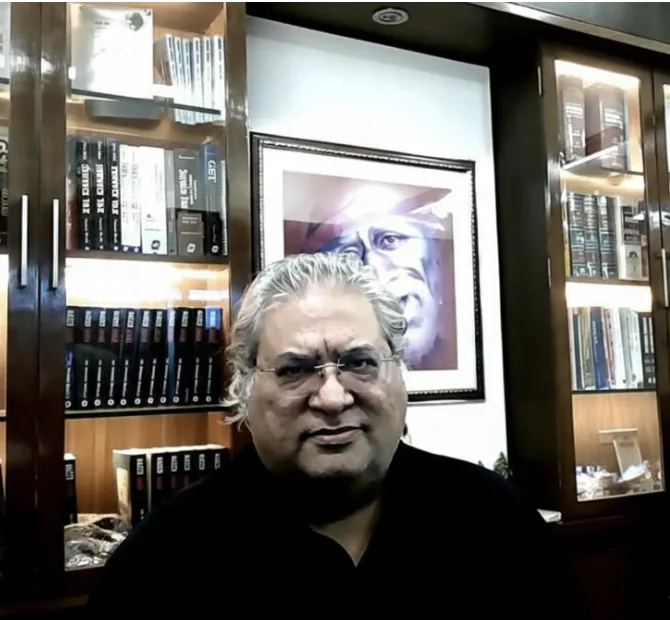
This Article pertaining to “Proper Officer and Section 122 – Will CBIC’s New Circular Alter the Fate of 1000s of GST Penalty Proceedings?” is written by Dr Monish Bhalla. He is a distinguished author, legal expert, and former officer of India’s Narcotics Control Bureau (NCB). With 37 years in public life, Dr. Bhalla has been a key figure in drug law enforcement and indirect taxation in India. His expertise in the fields of GST, Customs, and narcotics control has made him a leading voice in legal reforms and national policy. He is also a well-known columnist and has authored several books on GST, drug trafficking, and legal matters.
When I wrote last month about the practice of issuing Show Cause Notices (SCNs) directly under Section 122 of the CGST Act, 2017, the article stirred wide debate in the tax community. it was not just another technical observation—it was a red flag that shook the very foundation of GST enforcement. The article ignited a storm of debate within the tax community. Senior officers, legal experts, and practitioners began whispering in agreement. Many senior officers of the department privately acknowledged the concern, and the matter eventually travelled to the highest corridors of policy-making. The very foundation of my argument was simple—Section 122 is a penal charging section, not a machinery provision. It prescribes what constitutes an offence and what penalty may be levied, but it does not lay down how the penalty is to be imposed. That procedural framework lies in Sections 73 and 74. Hence, issuing SCNs solely under Section 122 was not only flawed but also ultra vires the law.
A Story of Statutory Oversight, Legal Debate, Policy Correction
I also pointed out another glaring illegality: no “Proper Officer” had ever been assigned powers for Section 122 since the inception of GST. Circulars of 2017 and 2018, which distributed functions among officers, were silent on this provision. This meant that any SCN or penalty order issued directly under Section 122 lacked jurisdictional authority. My article stressed that such actions strike at the root of the law itself—any order passed without jurisdiction is a nullity in the eyes of courts.
And what followed proved the point beyond doubt. Within weeks of the debate, the CBIC itself, through its GST Policy Wing—was compelled to acknowledge the very flaw that had been brushed aside for years. Circular No. 254/11/2025-GST, issued on 27th October 2025, stands as an official admission that no “Proper Officer” had ever been assigned powers under Section 122 of the CGST Act since the inception of GST. In plain words, the Board has now confessed what I highlighted earlier which infers that show cause notices issued solely under Section 122 were issued without jurisdiction. In a rare but welcome acknowledgment, the Board has now designated Additional/Joint Commissioners, Deputy/Assistant Commissioners, and Superintendents of Central Tax as “Proper Officers” for Section 122, with clear monetary limits. Superintendents can handle penalty cases up to ₹10 lakh in CGST (₹20 lakh in IGST), Deputy/Assistant Commissioners up to ₹1 crore (₹2 crore in IGST), and beyond that, jurisdiction rests with Additional/Joint Commissioners without any ceiling.
This new circular is more than just an administrative order—it is a corrective step that validates the concern I raised. It shows that the earlier practice of issuing SCNs under Section 122 was not merely irregular, it was without jurisdiction because no officer had been empowered to act under that section. The belated assignment of “Proper Officers” now cures the defect prospectively, but it also confirms that past actions suffered from a fundamental flaw.
The larger message is clear: GST enforcement must respect constitutional and statutory boundaries. Penal provisions cannot be stretched beyond their legislative design. Transparency and certainty in tax administration require that officers act only within the authority vested by law. The CBIC circular of October 2025, prompted by these debates, is a much-needed correction—but it also raises questions about the validity of thousands of penalty proceedings issued under Section 122 over the last eight years without jurisdiction.
For taxpayers, the principle remains unshaken: whenever the authority itself is flawed, the very foundation of the proceedings collapses. It is not just about procedure, but about jurisdiction, natural justice, and the rule of law.

