
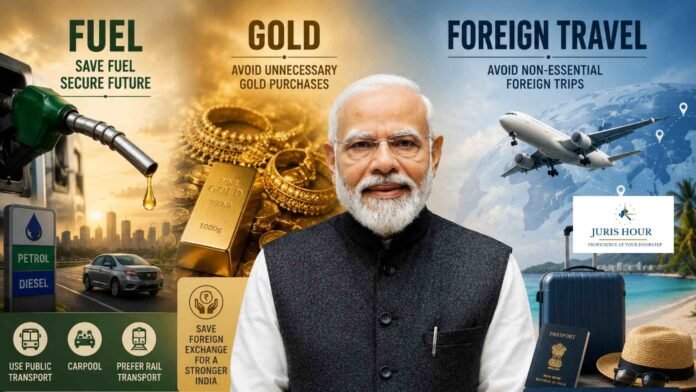
Prime Minister Narendra Modi has urged citizens to adopt restraint in fuel consumption, reduce avoidable foreign exchange outflow and revive Covid-era practices such as work-from-home and virtual meetings, as India faces economic pressure from global energy disruptions linked to the West Asia crisis.
Addressing a public meeting in Hyderabad, the Prime Minister appealed to people to use petrol, diesel and gas “with great restraint” and said citizens should prefer public transport, metro services, carpooling and rail-based transport wherever possible. He said these measures would help reduce dependence on imported petroleum products and conserve foreign currency.
Modi also called for the return of work-from-home arrangements, virtual meetings and video conferencing wherever feasible. Referring to the systems widely adopted during the Covid-19 period, he said the country had already developed and become accustomed to such methods, and the present global situation required resuming them.
The Prime Minister further appealed to citizens to postpone non-essential foreign travel for at least one year. He specifically referred to the growing trend of overseas vacations and destination weddings among the middle class, saying such expenditure leads to outflow of foreign exchange at a time when the country must prioritise national economic stability.
In another major appeal, Modi asked people to avoid non-essential gold purchases for one year, particularly during festivals and weddings. Gold imports are a significant component of India’s foreign exchange outgo, and the Prime Minister’s appeal was framed as part of a larger call for voluntary national discipline during a period of international uncertainty.
He also urged citizens to prefer India-made goods and reduce dependence on foreign products. The appeal aligns with the government’s broader “Make in India” and self-reliance messaging, under which domestic consumption of Indian products is projected as both an economic and patriotic contribution.
The Prime Minister’s remarks come amid fears that the West Asia conflict could affect global crude oil supplies and raise fuel prices. India, being heavily dependent on imported crude oil, remains vulnerable to sharp movements in international energy markets. News reports said Modi’s suggestions were aimed at reducing fuel use, conserving foreign exchange reserves and cushioning the economy from external shocks.
The appeal was not presented as a legal ban or government restriction, but as a public call for voluntary behavioural change. The Prime Minister’s message was that households, offices, businesses and consumers can collectively help the country by cutting avoidable fuel use, delaying luxury foreign expenditure, reducing gold purchases and supporting domestic products.
The key takeaway from Modi’s address is that the government wants citizens to treat energy conservation and foreign exchange saving as a national responsibility during the ongoing global crisis.

