
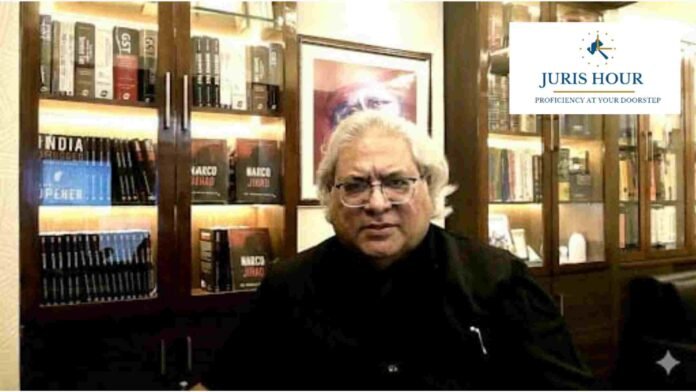
This Article pertaining to “Justice Cannot Be Outsourced: Why India’s Tax Tribunals Need Structural Safeguards Now” is written by Dr Monish Bhalla. He is a distinguished author, legal expert, and former officer of India’s Narcotics Control Bureau (NCB). With 37 years in public life, Dr. Bhalla has been a key figure in drug law enforcement and indirect taxation in India. His expertise in the fields of GST, Customs, and narcotics control has made him a leading voice in legal reforms and national policy. He is also a well-known columnist and has authored several books on GST, drug trafficking, and legal matters.
Institutions survive on credibility. Credibility survives on transparency. And transparency requires courage — the courage to accept concerns and fix them before they grow.
The Honorable Chief Justice has sounded the bell. The system must now respond — calmly, firmly, and responsibly.
When the Honorable Chief Justice of India says in open court that tribunals are functioning in a constitutional “no-man’s land,” accountable to none, it is not a casual remark. It is a serious warning. The concern became even more grave when the Honorable Chief Justice revealed that a technical member of a Tribunal had become infamous for outsourcing judgment writing. The Honorable Supreme Court issued a stern warning. The Honorable Chief Justice openly said he was “really perturbed” and that he was waiting for the appropriate time to sack the member. He even reflected that in the anxiety to reduce the burden on constitutional courts, “what mess have we created.”
When such words come from the highest judicial office in the country, the system must pause and reflect.
Tribunals in India were created to strengthen justice delivery. They were constitutionally enabled under Articles 323A and 323B. Article 323A deals with service matters. Article 323B empowers Parliament and State Legislatures to create tribunals for other matters, especially taxation — levy, assessment, collection, and enforcement of tax. Both CESTAT and GSTAT are constituted under Article 323B.
CESTAT functions under the Customs Act, the Central Excise Act, and the Finance Act. GSTAT is established under Section 109 of the CGST Act, 2017, and became fully operational after the notification of the GSTAT (Procedure) Rules, 2025. Appeals from these tribunals lie before the Honorable High Courts and, in appropriate cases, before the Honorable Supreme Court. These tribunals are not small administrative bodies. They decide major fiscal disputes. Their orders affect government revenue, businesses, and the economy itself.
That is why the issue of outsourced judgment writing is so serious. A judgment is not just a typed order. It is the reasoning of the adjudicator. When an Honorable Member signs an order, it carries a presumption that the member has independently applied his or her mind. If the drafting is outsourced or influenced by someone else, that presumption is shaken. Justice cannot be subcontracted. Judicial reasoning cannot be delegated.
This is not about clerical help. It is about authorship. If someone else is writing the reasoning, then who is actually deciding the case? Who is responsible? These are not negative questions. They are basic constitutional questions. And when the Honorable Chief Justice himself highlights such a problem, it shows the matter is real and serious.
Another major concern is the routine practice of reserving orders. Reservation of judgment is perfectly valid in complex matters where the Bench needs time to think. But it should be rare. It should not become routine. In several forums, particularly in many CESTAT benches, reserving orders has become common. Matters are argued fully. Then months pass without pronouncement.
For taxpayers and businesses, this delay is not harmless. Refunds remain blocked. Credits remain stuck. Financial planning becomes uncertain. While delay does not automatically mean wrongdoing, long unexplained delays create doubt. Justice must not only be fair; it must appear fair. Silence after a full hearing should not become normal practice.
The issue becomes even more important now that GSTAT has started functioning across the country. GST disputes involve huge financial stakes — often running into crores and even hundreds of crores. These decisions directly impact state revenues and corporate finances. Where stakes are high, the risk of influence attempts increases. This is not an allegation against any Honorable Member. It is a structural reality. High-value litigation always carries higher risk. That is why safeguards must be strong from the beginning.
If weaknesses are not addressed early, they become habits. And habits become culture. Any possibility of corrupt practices or manipulation must be stopped at the very beginning. It must be hit in the bud.
The structure of tribunals also adds complexity. They are statutory bodies linked administratively to ministries, yet they perform quasi-judicial functions similar in impact to the Honorable High Courts. Technical members often come from departments that are themselves frequent litigants before these tribunals. This design requires strong safeguards. Judicial review by the Honorable High Courts and the Honorable Supreme Court is available, but that happens after the order is passed. What we need is preventive monitoring, not only corrective review.
Also Read: Supreme Court Flags “Serious Breakdown” in Tribunal System, Seeks Urgent Structural Reforms
Reform India’s Tax Tribunals Before It’s Too Late
Authorship integrity, time-bound orders, and structural vigilance for GSTAT and CESTAT
A foolproof mechanism must therefore be put in place.
First, authorship integrity must be protected through secure digital systems. The Honorable Member signing an order must demonstrably be its author. Technology , especially with advent of AI can help ensure this without interfering with independence.
Second, strict timelines must be fixed for pronouncing reserved orders. Reservation should be used only in rare and genuine cases. If an order is not pronounced within a defined period, there should be automatic administrative review. Routine reservation should end.
Third, an independent oversight system should review patterns — how long orders are reserved, how many are set aside by higher courts, and whether there are abnormal trends in high-value cases. Data-based monitoring strengthens institutions.
Fourth, vigilance mechanisms must be clear and transparent. Complaint systems must work. Whistleblowers must be protected. Even one ignored complaint can damage trust.
Fifth, in the early years of GSTAT, extra care is necessary. Institutional culture is shaped at the beginning. Strong foundations now will prevent problems later.
It must be clearly said that most Honorable Members perform their duties with integrity and dedication. The call for reform is not an attack. It is a safeguard. Independence without accountability can create opacity. Accountability without independence can create interference. Both must go together.
The Honorable Chief Justice’s remarks should be seen as an opportunity to strengthen the system. Tribunals were created to reduce burden and deliver specialised justice. But if oversight mechanisms are weak, the system must be corrected.
Tax justice is not a routine administrative exercise. It determines liabilities, penalties, and financial consequences that can change the fate of businesses. The power exercised under Article 323B is significant. With great power comes great responsibility.
We are at an important moment. GST tribunals are operational. Fiscal litigation is increasing. Economic stakes are rising. With rising stakes, institutional safeguards must also rise.
Justice must be independently reasoned. Orders must be timely. Reserving orders must remain an exception, not the norm. Vigilance oversight must be preventive. Mechanisms to detect and deter manipulation must be built into the system.
Institutions survive on credibility. Credibility survives on transparency. And transparency requires courage — the courage to accept concerns and fix them before they grow.
The Honorable Chief Justice has sounded the bell. The system must now respond — calmly, firmly, and responsibly.

