
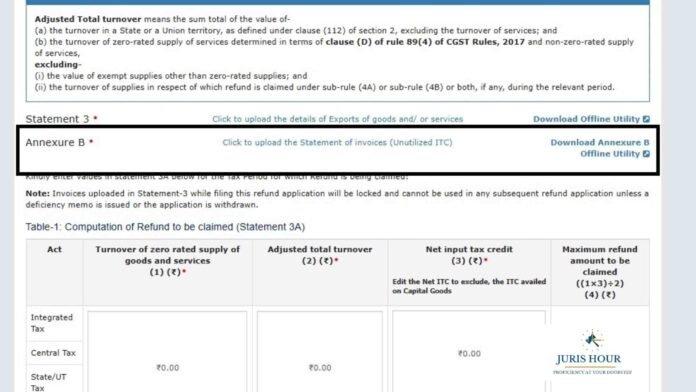
The GST system has now started requiring taxpayers to upload Annexure-B through the prescribed utility in JSON format while filing refund applications. The move is aimed at enabling system-driven validation of refund invoices directly with GSTR-2B data.
The latest development is expected to tighten scrutiny of Input Tax Credit (ITC)-based refund claims, particularly in cases involving exports, inverted duty structure refunds, and accumulated ITC claims.
Under the revised process, taxpayers are now required to prepare Annexure-B using the designated offline utility and upload the generated JSON file while filing the refund application on the GST portal. The system will automatically validate invoice details with the recipient’s GSTR-2B data.
Tax professionals say the change marks a shift towards deeper automation and invoice-level verification in GST refunds. Earlier, refund claims largely relied on manual reconciliation and document uploads. With the new mechanism, the portal itself will cross-check invoice eligibility and matching status.
One of the most important aspects of the new requirement is that taxpayers must now also specify the exact GSTR-2B period in which a particular invoice is reflected. This means merely mentioning invoice details may no longer be sufficient. Applicants will have to ensure that every invoice claimed in refund applications is traceable to the corresponding month’s GSTR-2B.
The system-driven validation is expected to reduce mismatches, duplicate claims, and disputed ITC claims. However, professionals warn that taxpayers may face practical difficulties where suppliers have delayed filing returns or where invoices appear in GSTR-2B in a different tax period.
The change is likely to increase the compliance burden on exporters and businesses claiming regular refunds, as they will now need more detailed reconciliation between purchase registers, GSTR-2B data, and refund statements before filing applications.
Experts are advising taxpayers to conduct invoice-wise matching of ITC records with GSTR-2B prior to preparing Annexure-B. Any discrepancy in invoice number, GSTIN, tax amount, or reflected period may result in validation failure or delay in refund processing.
The development also signals the GST Network’s continued push towards fully automated compliance verification and reduced manual intervention in refund sanction processes. Businesses are expected to increasingly rely on robust reconciliation systems and accurate vendor compliance tracking to avoid refund disruptions.
Read More: ICSI Urges MCA To Fix Login Errors

