
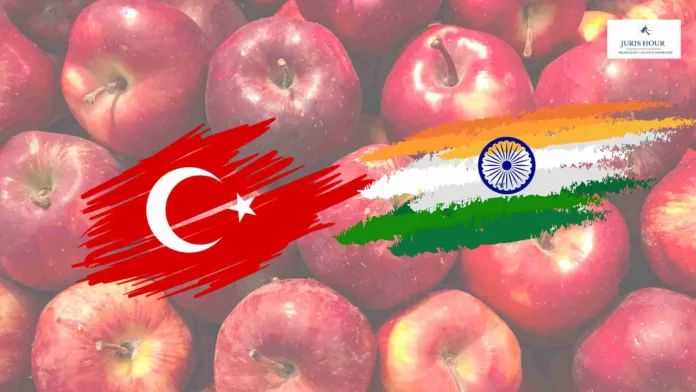
In a strong response to Turkey’s support for Pakistan during the recent India-Pakistan tensions, traders at the Vashi Agricultural Produce Market Committee (APMC) have unanimously decided to boycott Turkish apples and other imported fruits from Turkey. This move comes despite the popularity of Turkish apples, which are known for their high quality, crispness, and sweetness.
Each year, the wholesale market in Vashi receives substantial consignments of Turkish apples, typically priced at ₹140 per kilogram—higher than the ₹90–₹120 per kilo price range of apples from other regions. These imports usually begin in October and continue until mid-year.
Former APMC fruit division director Sanjay Pansare stated, “Turkish apple imports had surged significantly over the last few years. However, given Turkey’s political stance siding with Pakistan, we have collectively decided not to engage in any trade with them going forward.”
Apple Import Dynamics Shift
According to fruit trader Vijay Bhende, India imported approximately 1.18 million tonnes of Turkish apples this season, valued at over ₹1,000 crore. Mumbai alone accounted for nearly 1,000 containers. However, with the current Turkish apple season nearing its end and limited stock remaining, traders are refusing to place any new orders for the upcoming season.
“Typically, orders for Turkish fruits such as apples and cherries are placed starting June, often during trade visits to Turkey,” said Pansare. “But this year, no such deals will be made.”
Retailers and Consumers Join Boycott
Retailers across Mumbai are echoing the sentiment. Rizwan Shaikh, a local fruit vendor, explained that while Turkish apples had become increasingly popular for their vibrant red appearance and sweet taste, the recent geopolitical developments have altered consumer preferences. “Customers now actively ask if the apples are from Turkey—and they refuse to buy if they are,” he said.
To manage existing inventory, some traders are attempting to pass off Turkish apples as imports from South Africa. However, seasoned retailers can distinguish between the two due to taste and appearance differences. “Because of this, we’re forced to lower prices on Turkish stock and blend them with other varieties just to clear the shelves,” said another trader.
Alternative Import Sources on the Rise
To bridge the expected supply gap, traders are shifting their focus to apple imports from South Africa, the United States, and Iran. These regions are known to produce apples that align with Indian taste preferences and are expected to see a rise in demand following the Turkish boycott.
“This is not just about trade; it’s about taking a stand,” said Bhende. “We cannot continue business with a country that stands against India. This is our way of sending a message—through economic disengagement.”
Read More: Customs Arrest and Seizure Reporting with New Digital Tracking System: CBIC

