
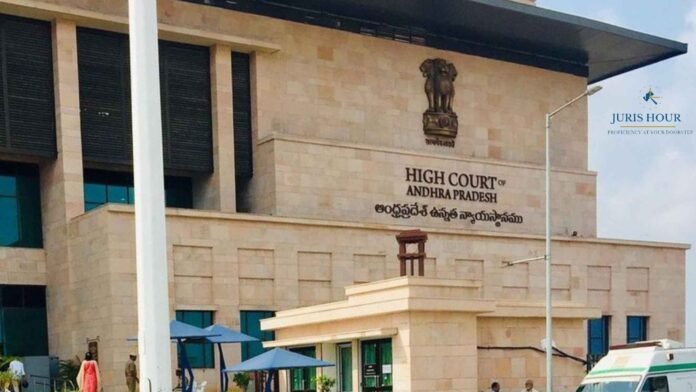
The Andhra Pradesh High Court has refused to cancel bail granted to an accused in an alleged fake input tax credit racket involving ₹264.87 crore, holding that the seriousness of an economic offence cannot, by itself, justify taking away liberty already granted by a court.
The bench of Justice Dr. Y. Lakshmana Rao dismissed the Directorate General of GST Intelligence’s petition challenging the regular bail granted to the accused. The Court found neither perversity in the original bail order nor sufficient evidence of subsequent misconduct warranting cancellation.
Buy Now: 160+ GST E-Magazine September 2026
The bench emphasises the distinction between challenging an allegedly illegal bail order and seeking cancellation because an accused has misused liberty after release.
The DGGI, Vijayawada Regional Unit, alleged that the case concerned an organised network of 92 fictitious firms operating across Andhra Pradesh and Telangana. According to the agency, the network fraudulently availed approximately ₹264.87 crore in input tax credit and passed on approximately ₹260.54 crore.
The department alleged that the accused was the mastermind and principal beneficiary of the operation. It claimed that the network procured identity documents, created shell entities, opened bank accounts, obtained GST registrations and generated bogus invoices.
Investigators relied on statements of alleged associates, forensic extraction of seized devices, and the recovery of about 30 cheque books and passbooks, along with four keypad phones allegedly used for receiving one-time passwords. The agency also alleged that the network operated through WhatsApp groups named “HYD GST” and “VIJAYAWADA GST”.
These allegations remain matters under investigation; the High Court’s decision concerned the continuation of bail and did not determine guilt.
The accused was arrested on May 14, 2026, and granted regular bail by the Special Judge for Economic Offences-cum-IV Additional District and Sessions Judge, Visakhapatnam, on May 27, 2026.
Challenging that order under Sections 483(3) and 528 of the Bharatiya Nagarik Suraksha Sanhita, 2023, the DGGI argued that the Special Judge had inadequately considered the scale of the alleged fraud, the accused’s alleged role, and the continuing investigation.
The agency submitted that he had failed to appear in response to four summonses issued under Section 70 of the Central Goods and Services Tax Act, 2017. It also relied on an alleged statement dated May 14, 2026, concerning the destruction of physical and electronic evidence after he learnt of the investigation.
The department further argued that the investigation had expanded after bail. Analysis of digital material allegedly revealed 16 additional entities, increasing the linked GST registrations from 92 to 108. Another 106 firm or trade names without GSTIN details reportedly appeared in chats.
According to the DGGI, the accusedhad also failed to provide details of firms, bank accounts, suppliers, recipients and transporters that he had undertaken to furnish.
The accused argued that he was neither a proprietor nor an employee of the alleged firms and that his name did not appear in their GST registrations. The defence disputed the department’s description of him as the mastermind.
It submitted that the evidence was predominantly documentary and electronic, including GST returns, bank statements, e-way bill information and seized digital records already available to the investigating agency.
The defence also pointed out that the prosecution had not sought custodial interrogation before the Special Judge. After release, the accused appeared before investigators on June 5, June 9 and June 15, 2026, and gave statements.
On witness interference, his counsel argued that no specific post-release threat, inducement or contact had been attributed to him through a complaint or sworn material.
The High Court acknowledged the Supreme Court authorities recognising economic offences as a distinct class requiring serious consideration.
However, it held that those decisions do not establish that bail must invariably be refused in every economic offence. The gravity of the accusation must be considered alongside the nature of the evidence, prescribed punishment, custody already undergone, investigation requirements and the likelihood of securing the accused’s presence.
The Court explained that the purpose of bail is to secure attendance in the proceedings, rather than impose punishment before trial.
Examining the original order, it found that the Special Judge had considered the relevant circumstances, including the documentary and electronic character of the evidence and the prosecution’s position that custodial interrogation was unnecessary. Consequently, the exercise of discretion was not perverse.
The Court rejected the argument that the Special Judge had wrongly treated the entire investigation as complete.
It explained that the finding was confined to the seizure of records and collection of material. Devices, bank records and GST data had been secured, and forensic extraction had been undertaken.
Further verification of firms, tracing beneficiaries and analysing financial transactions could continue without keeping the accused in custody, the Court held. The department’s possession of the principal documentary and electronic evidence also reduced the risk of post-release tampering.
Similarly, the identification of additional entities and trade names represented developments in an expanding investigation. Those discoveries did not, on the material presented, justify cancellation of bail.
The High Court noted that the alleged statement concerning destruction of evidence was dated May 14, 2026—before the bail order.
That circumstance was available when the Special Judge considered bail and could not subsequently be characterised as a supervening circumstance.
The judgment distinguished two grounds for interference: an original bail order may be set aside if it ignores relevant material or rests on irrelevant considerations, while cancellation based on subsequent conduct requires evidence that the accused has misused liberty. The Court found neither ground established in this case.
Addressing the allegation of non-cooperation, the Court recorded that the accused had appeared before investigators after release and had not violated any bail condition.
It recognised that an accused is entitled to remain silent and cannot be compelled to furnish self-incriminating material.
Failure to produce records within the time sought could be addressed through lawful investigative procedures. By itself, however, it did not warrant cancellation of bail.
The Court nevertheless expressly directed the accused to attend before the investigating officer whenever required and cooperate with the investigation.
The Court described witness intimidation as the most serious allegation but found that the material relied on inference rather than proof.
The DGGI had cited the non-appearance of proprietors and recipient firms, along with an allegation that another person had instructed a proprietor not to appear before investigators.
However, no specific post-release act of threat, inducement or contact was attributed to the accused. Some summonses had also been returned undelivered.
The Court observed that non-appearance could have several explanations, including non-service, fear of prosecution or the persons’ own involvement. No complaint or sworn material established that the accused had contacted or influenced a witness.
Existing bail conditions already prohibited threats, inducement and evidence tampering, providing the department with a remedy if an actual violation occurred.
Dismissing Criminal Petition No. 4939 of 2026, the High Court held that the bail order suffered from no perversity, illegality or non-application of mind. It also found no sufficiently grave subsequent circumstance warranting cancellation.
All existing bail conditions will continue. The DGGI remains free to seek cancellation afresh before the competent court if it produces material showing breach of a bail condition, tampering with evidence or influencing witnesses.
Membership Required to Access Case Details & Order Copy
To view the complete Case Details and Download Order Copy, you must have an active membership. Please subscribe to continue.

