
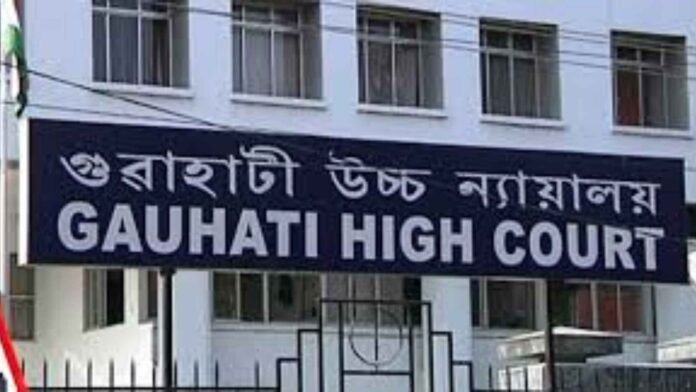
The Gauhati High Court has set aside a GST demand proceeding involving alleged under-declaration of tax liability of ₹1.12 crore, holding that the department cannot bypass the scrutiny procedure under Section 61 and Rule 99 when the demand originates from discrepancies identified through examination and comparison of GST returns.
The bench of Justice Arun Dev Choudhury held that communicating such discrepancies through Form GST ASMT-10 is a substantive statutory safeguard. A taxpayer’s subsequent participation in proceedings under Section 73 does not substitute for that requirement or amount to its waiver.
Buy Now: 210+ GST Judgments E-Magazine – October 2026
The judgment, delivered on November 4, 2026, quashed the notice issued in Form GST DRC-01 on January 9, 2024, and the consequential adjudication order dated April 30, 2024. The Court left the authorities free to proceed afresh in accordance with law, subject to statutory limitation and other applicable requirements.
The petitioner, M/s R Ess Iron and Steel Pvt. Ltd., a registered dealer under the Assam Goods and Services Tax Act, 2017, challenged proceedings determining tax, interest and penalty for the financial year 2018-19.
According to the Court’s examination of the DRC-01 notice, the department had compared the company’s annual return with information in GSTR-9, GSTR-2A, GSTR-3B, e-way bills and other departmental records. On that basis, the proper officer alleged that the company had failed to declare its correct tax liability and quantified the alleged under-declaration at ₹1,12,11,503.
The company argued that, because the proceedings arose from scrutiny of its returns, the department was required to first communicate the discrepancies through Form GST ASMT-10 under Section 61 of the AGST Act read with Rule 99 of the Assam GST Rules, 2017. No such notice had been issued.
The petitioner also submitted that it had requested a personal hearing in its reply dated February 9, 2024, but the adjudication order was passed without granting that opportunity. It contended that this violated Section 75 and the principles of natural justice.
The Finance and Taxation Department did not file an affidavit despite several opportunities granted by the Court.
Its counsel nevertheless argued that the petitioner had responded to Form GST DRC-01 and participated in the proceedings, and therefore could not subsequently challenge them for non-issuance of Form GST ASMT-10. The department also relied on the statutory appeal available under Section 107 and submitted that an ASMT-10 notice was not necessary in every case.
Examining Section 61, the Court explained that the proper officer may scrutinise returns and related particulars to verify their correctness. Where discrepancies are noticed, the registered person must be informed in the prescribed manner and given an opportunity to explain them.
If the explanation is acceptable, the taxpayer must be informed and no further action is to be taken in that regard. Further action, including proceedings under Sections 73 or 74, is contemplated where a satisfactory explanation is not furnished within the stipulated period or an accepted discrepancy is not corrected.
Rule 99 prescribes Form GST ASMT-10 for communicating the discrepancies and seeking an explanation. The taxpayer may respond in Form GST ASMT-11, which the proper officer must consider under the prescribed procedure.
The Court described the ASMT-10 requirement as more than a procedural formality. Its purpose is to enable the taxpayer to explain or rectify discrepancies and thereby avoid unnecessary tax determination and recovery proceedings.
The Court relied on the coordinate bench decision in PepsiCo India Holdings Pvt. Ltd. v. Union of India and Others, W.P.(C) No. 6960/2023, reported in 2025 SCC OnLine Gau 5406. That decision held that an officer cannot directly initiate Section 73 proceedings for discrepancies identified during return scrutiny without first following Section 61 and Rule 99.
The Court clarified that Section 73 can operate on independently available information or material, subject to compliance with its requirements. The ruling therefore does not make ASMT-10 a prerequisite for every Section 73 proceeding.
However, where the demand is founded on discrepancies noticed during scrutiny of returns, the prescribed scrutiny procedure must be followed. The source and foundation of the proposed demand determine whether Section 61 and Rule 99 apply.
In this case, DRC-01 itself showed that the alleged under-declaration arose from examining the annual return and comparing it with other returns and related particulars. The department had not demonstrated that the proceedings originated from an independent investigation or material unconnected with that exercise. It admittedly had not issued ASMT-10.
The Court held that a reply to the subsequent Section 73 show cause notice cannot replace compliance with the earlier statutory scrutiny procedure. Participation also cannot be treated as waiver of a safeguard the officer was bound to follow.
The Court further held that the alternative remedy under Section 107 did not bar judicial review under Article 226 where proceedings disregarded the statutory procedure governing jurisdiction and the consequential order was vitiated by violation of the statutory mandate of natural justice.
The Court set aside both the DRC-01 notice and the consequential adjudication order. No costs were awarded.
The Court expressly left the correctness of the alleged tax liability and the merits of the taxpayer’s explanation undecided. Accordingly, the judgment grants relief against the defective proceedings; it does not determine whether the alleged under-declaration is factually correct. Any fresh action remains subject to limitation and the other requirements of the Act.
Membership Required to Access Case Details & Order Copy
To view the complete Case Details and Download Order Copy, you must have an active membership. Please subscribe to continue.
Read More: Govt. Funding Doesn’t Establish Eligibility For 12% GST On Spinning Mill Construction: GSTAT

