
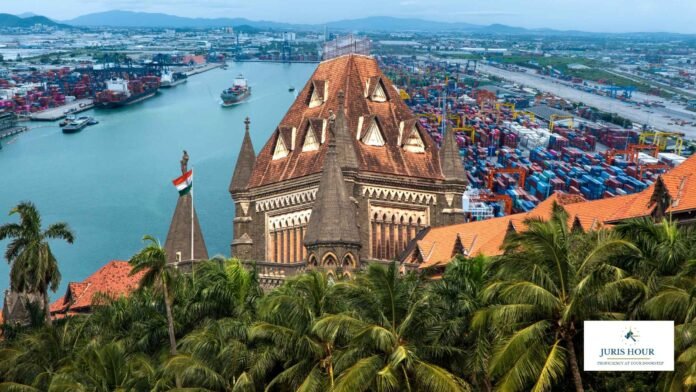
The Bombay High Court has set aside a customs adjudication order after a logistics company alleged that the Commissioner of Customs had relied on two non-existent Supreme Court judgments that appeared to have been generated by artificial intelligence.
A Division Bench of Justice M. S. Karnik and Justice Sandesh D. Patil quashed the order by consent of both parties and remanded the matter to the Commissioner of Customs (Import-I) for fresh adjudication.
Buy Now: Indirect Tax Judgments E-Compilation – October 2026
The Court directed that the proceedings be completed within eight weeks from November 5, 2026.
The appellant/assessee approached the High Court challenging an Order-in-Original dated August 11, 2026.
The company contended that the Commissioner had taken recourse to artificial intelligence without independently applying his mind. Its counsel pointed to two purported Supreme Court judgments relied upon in the adjudication order as examples supporting this allegation.
According to the petitioner, those judgments could not, to the best of its knowledge, be found in any law report or database. The references therefore appeared to be hallucinations of artificial intelligence, the company argued.
The petitioner had written to the Commissioner on September 1, 2026, requesting copies of the judgments. However, the High Court’s ruling records that the copies were not provided.
The four-page judgment does not identify the two disputed judgments or disclose the underlying customs allegations, demand amount, or substantive merits of the adjudication.
The petitioner relied upon the Supreme Court’s judgment in Vijay Ghanshyam Gadiya v. Union of India & Anr., cited as 2026 INSC 947, particularly its discussion of artificial intelligence in adjudicatory proceedings.
The passages reproduced by the High Court refer, in turn, to Pooja Ramesh Singh v. Jammu & Kashmir Bank Ltd., concerning the use of AI-generated precedents in judgments.
As reproduced in the Bombay High Court ruling, the Supreme Court’s observations call for zero tolerance towards producing, citing, or using AI-generated precedents without verification.
The passage characterises an advocate’s citation of such judgments without verification as misconduct. It also describes judicial reliance on fake or hallucinated AI-generated precedents as a serious lapse.
The reproduced observations explain that the entry of fabricated material into the decision-making process undermines the sanctity of adjudication. They state that such decisions are liable to be set aside even where the false material has only an indirect bearing on the determination.
At the same time, the passage clarifies that the concern is the presentation or use of fabricated material as an authentic judicial precedent. It does not prohibit the rightful use of artificial intelligence.
The extracts from Vijay Ghanshyam Gadiya also recognise the potential role of artificial intelligence as an assistive tool to accelerate adjudicatory work.
However, they emphasise that assistance cannot substitute for adjudication. The responsibility for deciding a dispute must remain with the adjudicating authority.
The reproduced discussion records that reliance on dubious material in that Supreme Court case proved fatal to the sustainability of the penalty order under challenge and required remand.
These observations formed part of the precedent placed before the Bombay High Court by the petitioner. The High Court ultimately resolved the customs challenge by consent, without issuing a separate, detailed finding on the alleged use of AI in the Commissioner’s order.
The department submitted that the impugned order could be quashed and the matter remanded to the Commissioner for a fresh order.
Recording the consent of both parties, the Bench set aside the August 11, 2026 Order-in-Original.
The Court directed the petitioner to appear before the Commissioner on November 5, 2026, at 11 a.m., after which the authority was to fix the next hearing date.
Membership Required to Access Case Details & Order Copy
To view the complete Case Details and Download Order Copy, you must have an active membership. Please subscribe to continue.
Read More: GST Appeal Pre-Deposit Must Be Refunded After Demand Attains Finality: Bombay High Court

