
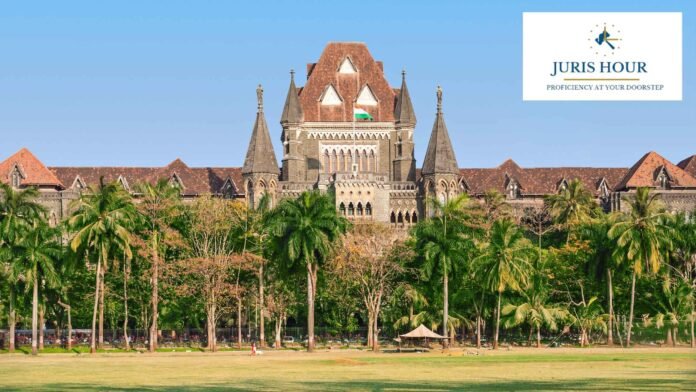
The Bombay High Court has quashed an order rejecting a GST refund claim and directed the tax authorities to refund ₹19,61,750 after the demand against the taxpayer was substantially reduced in appeal and rectification proceedings.
The Bench of Justice M. S. Karnik and Justice Sandesh D. Patil noted that the rectification order reducing the demand to ₹5,648 had attained finality. Relying on its earlier ruling concerning the character of an appellate pre-deposit as a security deposit, the court directed payment within six weeks from communication of its order.
Buy Now: 210+ GST Judgments E-Magazine – October 2026
The dispute arose from an adjudication order dated December 31, 2024, issued in Form GST DRC-07 for the financial year 2020-21, raising a demand of ₹3,66,03,378 against Mihika Pharmaceuticals.
The taxpayer challenged the order through an appeal under Section 107 of the Maharashtra Goods and Services Tax Act, 2017. According to the factual narrative recorded in the judgment, it deposited ₹19,64,722 as the statutory pre-deposit for pursuing the appeal.
On March 10, 2026, the First Appellate Authority passed an order in Form GST APL-04 reducing the total demand to ₹3,81,771. The authority also directed the Proper Officer to consider the pre-deposit and recover or refund the final amount accordingly.
The taxpayer subsequently filed a rectification application under Section 161 of the MGST Act. On April 16, 2026, the appellate authority accepted the application and further reduced the confirmed demand to ₹5,648.
On May 4, 2026, the taxpayer filed a refund application in Form GST RFD-01 seeking ₹19,61,750. It submitted that the final demand of ₹5,648 had been paid and compliance communicated to the tax officer.
However, the officer did not sanction the refund. As recorded in the judgment, a second show cause notice in Form GST RFD-08 raised the ground that the appellate and rectification orders did not themselves direct sanction of the refund.
The officer also required the taxpayer to independently establish through documentary evidence that the amount had become refundable.
The taxpayer filed its reply in Form GST RFD-09 on July 8, 2026. Nevertheless, the refund application was rejected by an order dated July 14, 2026, issued in Form GST RFD-06.
Before the High Court, the taxpayer also complained that the rejection order had been passed without granting a personal hearing, contrary to the requirement under Rule 92(3) of the CGST/MGST Rules, 2017. The Revenue opposed the petition.
The taxpayer relied on the Bombay High Court’s judgment dated August 28, 2026, in IBM India Pvt. Ltd. v. Union of India and Others, Writ Petition (L) No. 38052 of 2025.
The passage reproduced from that decision explained that, under the erstwhile indirect tax regime, an amount deposited as a statutory condition for hearing an appeal bore the character of a security deposit rather than duty.
That decision recognised that such an amount needed to be returned when the appellant succeeded fully or partly. It referred to Nelco Limited v. Union of India in support of this principle.
The taxpayer argued that, once the rectification proceedings under Section 161 had attained finality, its refund application ought to have been granted.
The Bench observed that the rectification application had been finally decided on April 16, 2026, and the demand had been reduced to ₹5,648.
There was no case before the court that the rectification order had been challenged further. Consequently, the court held that finality attached to those proceedings.
Taking into account the principle recognised in IBM India and the fact that the pre-deposit remained with the tax authorities, the Bench allowed the writ petition.
The High Court quashed the refund rejection order dated July 14, 2026, and directed the respondents to sanction and disburse ₹19,61,750 pursuant to the taxpayer’s refund application.
The amount must be refunded within six weeks from communication of the court’s order.
The Bench granted direct refund relief rather than sending the application back for reconsideration. Although denial of a personal hearing formed part of the taxpayer’s challenge, the court’s stated reasoning centred on the finality of the rectification proceedings and the principle governing appellate pre-deposits.
Membership Required to Access Case Details & Order Copy
To view the complete Case Details and Download Order Copy, you must have an active membership. Please subscribe to continue.

