
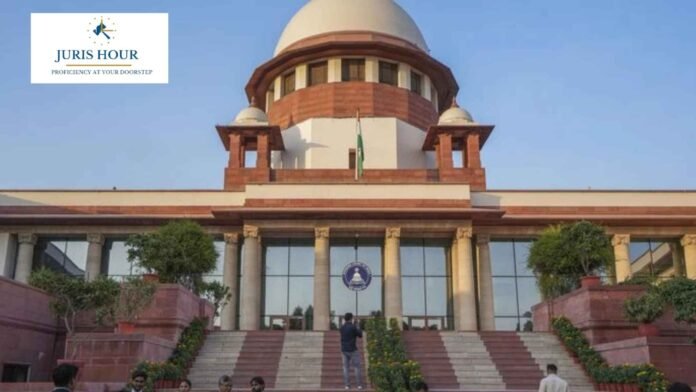
The Supreme Court has directed the Uttar Pradesh government to pay ₹6 lakh as compensation to a man who spent six years in prison as an undertrial in a kidnapping and murder case built on an investigation that failed to establish even basic links between him and the alleged crime.
The Bench of Justices J. B. Pardiwala and K. Vinod Chandran ordered payment within one month, stipulating that the amount would carry 18% annual interest if it was not paid within the prescribed period. The Court described the compensation as inadequate compared with the years the man had spent in custody.
Buy Now: 90+ Supreme Court Judgments – September 2026
The central issue was the State’s responsibility for prolonged incarceration resulting from an investigation that produced no reliable evidence against the accused. The Court stressed that investigating and prosecuting agencies must ensure justice to the accused as well as to victims and complainants.
Arun had been in custody since November 14, 2019, in connection with FIR No. 367 of 2019 registered at Achhnera police station in Agra district. The case concerned offences under Sections 364, 302 and 201 of the Indian Penal Code, relating to kidnapping or abduction to murder, murder and disappearance of evidence.
On March 23, 2026, the Supreme Court directed the trial court to complete the proceedings within three months, taking into account his prolonged detention and the fact that the prosecution rested entirely on circumstantial evidence.
The trial subsequently concluded in acquittal. The Supreme Court then called for the trial court’s judgment, which ran to more than 100 pages in Hindi and required translation.
On examining it, the Bench found that Arun had not been named in either the FIR or the statement recorded under Section 161 of the Code of Criminal Procedure. He had been implicated on the basis of CCTV footage and a co-accused’s confession, neither of which provided a legally proved foundation for the prosecution’s case.
The case began with a father reporting that his son had gone missing after leaving his workplace at Kiraoli Tehsil on October 18, 2019, at approximately 3.30 p.m. The son was reportedly travelling home on a motorcycle.
A further report on October 19 alleged that unknown persons had abducted him from the tehsil gate. Police subsequently arrested Arun and another accused, Lalit Kishore.
During his testimony, the father alleged that the two men, accompanied by Lalit Kishore’s mother, Shalini, had visited his house on November 13, 2019, and demanded ₹50 lakh. According to him, they threatened to kill his son if the money was not paid, and Shalini showed him his son’s Aadhaar card and State Bank of India passbook.
However, the alleged ransom demand was never reported to the police. The trial court found that this allegation surfaced for the first time during testimony in court.
The Supreme Court also noted that the father’s allegation of an existing enmity with Shalini had not appeared in his earlier police statements. The accused were not arrested on his identification; he identified them at the police station after their arrest.
The prosecution relied on the recovery of a motorcycle and a bundle containing a skull and other partly burnt bones near a drain in front of Radha Rani flats.
Other articles, including an Aadhaar card, bank passbook and personal belongings, were reportedly recovered from Lalit Kishore’s house and its vicinity. The Supreme Court emphasised that these recoveries were not from Arun.
The doctor who examined the bones could not determine the time or cause of death. Although the material had been sent for forensic DNA examination, no result establishing that the bones belonged to the missing person was produced during trial.
Investigators also failed to obtain the father’s DNA sample for comparison. This omission was significant because the doctor had specifically indicated the need for such examination.
Even the recovered motorcycle was not produced during trial, shown to witnesses for identification, or proved to belong to the missing man.
The investigating officer described a sequence in which the accused allegedly administered sleeping pills to the missing man and taped his mouth, causing him to suffocate.
The Supreme Court found no medical evidence supporting this account.
Police further alleged that the accused purchased 55 litres of petrol in two cans on October 20, 2019, burnt the body and disposed of the remaining bones near the drain.
However, investigators did not identify the place where the body was allegedly burnt or arrange a forensic examination of that location. They also failed to identify the petrol pump or collect evidence substantiating the alleged purchase.
The recovered cans were not chemically examined to determine whether they had contained petrol.
These omissions left the prosecution’s account of the alleged killing and disposal of the body without essential corroboration.
The prosecution’s electronic evidence consisted of CCTV footage and call detail records. Neither was supported by the certificate required under Section 65B of the Indian Evidence Act.
The trial court also found that the CCTV footage was unclear and that it was difficult to identify the persons travelling on the motorcycle.
Although investigators obtained call records relating to certain mobile numbers, they did not establish the identities of the subscribers in whose names the SIM cards had been issued.
The Supreme Court consequently noted that the prosecution had failed to establish its last-seen theory through reliable evidence.
The Bench also examined whether the recoveries could be connected to information supplied by the accused under Section 27 of the Evidence Act.
It found that no statement concerning concealment had been recorded before the recoveries. Nor did the witnesses or investigating officer establish that the accused had led police to the places from which the articles were seized.
Instead, the father’s testimony indicated that police had led him and the accused to the relevant locations.
The Court further observed that a confession made to police could not be relied upon in the manner attempted by the prosecution. The alleged ransom demand, meanwhile, could not be treated as an extrajudicial confession.
The trial court ultimately found that none of the four circumstances advanced by the prosecution—the alleged ransom demand, confessions, last-seen evidence and electronic evidence—had been proved. Lalit Kishore had died, Shalini was absconding, and Arun alone faced trial.
The Supreme Court strongly criticised the deprivation of Arun’s liberty despite the absence of evidence against him.
It observed that six years had been erased from his life on the strength of a concocted account founded on speculation. Even a rudimentary investigation had not been conducted, and the investigating agency had failed to take steps to expedite his trial.
The Bench stressed that the State could not avoid its responsibility to protect citizens, particularly when an accused person is presumed innocent until proved guilty.
Investigating and prosecuting agencies, it said, are essential participants in the justice system. Their role requires them to secure justice for victims, complainants and injured persons while also ensuring justice to those accused of offences.
In the circumstances, the Court regarded Arun himself as a victim of the system requiring reparation.
The Supreme Court directed the State to pay Arun ₹6 lakh within one month, with annual interest at 18% if payment was delayed beyond that period.
Membership Required to Access Case Details & Order Copy
To view the complete Case Details and Download Order Copy, you must have an active membership. Please subscribe to continue.

