
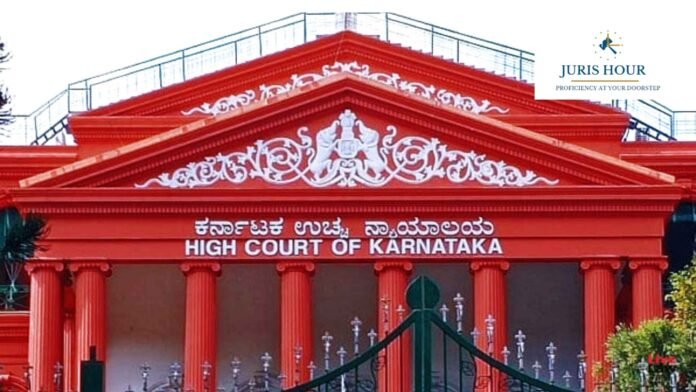
The Karnataka High Court has refused to quash criminal proceedings against two individuals facing allegations of non-cooperation with a company investigation, holding that their claims of having appeared before investigators and furnished the required information must be examined during trial.
The bench of Justice H.P. Sandesh dismissed a petition challenging the Special Court for Economic Offences, Bengaluru’s order taking cognizance of alleged non-compliance with Section 217(4) of the Companies Act, 2013, punishable under Section 217(6). The proceedings arose from an investigation into a company allegedly operating a Ponzi scheme involving approximately two lakh members.
Buy Now: Legal & Taxation Combo – 4 Premium E-Magazines – September 2026
The High Court held that the complaint and accompanying documents disclosed a prima facie case. It emphasised that a court taking cognizance cannot conduct a mini-trial or evaluate competing evidence to determine whether the accused’s explanations establish a defence.
The case concerned M/s Super Royal Holidays (India) Pvt. Ltd. The Ministry of Corporate Affairs, through an order dated November 15, 2017, directed an investigation under Section 216 read with Section 210(1)(c) of the Companies Act.
According to the Registrar of Companies’ complaint, investigators found that the company was allegedly running a Ponzi scheme with around two lakh members. The inspectors sought further information about the scheme and its functioning and summoned three persons described in the complaint as directors and officers in default.
Two of them appeared and gave statements on oath in response to the summons requiring attendance on December 15, 2017. The third accused allegedly failed to appear.
The complaint further stated that the directors were summoned again in January 2018. The director appeared on January 24, 2018, and allegedly assured the investigators that he would provide the information sought.
A subsequent letter dated January 25, 2018, called upon the company to furnish information. The company sought additional time in February 2018. According to the prosecution, however, the information was not supplied as promised, leading to the complaint.
On March 15, 2019, the Special Court took cognizance and directed the issuance of summons against the three accused.
The directors approached the High Court under Section 482 of the Code of Criminal Procedure, seeking to quash the cognizance order.
They argued that the Special Court had itself recorded that they appeared before the inspectors and gave statements on oath. According to them, they had answered the investigators’ queries and supplied the relevant documents, leaving no basis for prosecution for non-compliance.
Counsel also submitted that the second petitioner, who had a physical disability, attended the investigation at Hyderabad whenever required. It was argued that the investigating officer had exempted him from appearing on two occasions after considering his condition.
The petitioners relied on statements, lists of documents submitted, correspondence and explanations furnished during the investigation. They also referred to communications from the company’s auditor in October 2018, which, according to them, clarified discrepancies and supplied the necessary statements of account.
Their further contention was that no opinion had been formed explaining why their replies or documents were unsatisfactory.
Opposing the petition, the Registrar of Companies relied on the investigation report, subsequent official correspondence and a show-cause notice alleging violations of the Companies Act.
The respondent maintained that the directors had not cooperated adequately despite repeated opportunities to provide information.
The respondent’s submissions also referred to the company’s financial statements as of March 31, 2017. According to those submissions, the company earned ₹45.61 crore from membership fees and service charges, paid ₹31.06 crore as commission to members or agents, and paid a further ₹2.09 crore as achievers’ awards.
The investigation material alleged that approximately 73% of the revenue was returned to commission agents through commission and awards. It also described a chain-based recruitment arrangement in which members allegedly earned commission by bringing additional persons into the scheme.
The respondent further referred to alleged acceptance of cash deposits exceeding ₹20,000 in contravention of Section 269SS of the Income Tax Act, suggesting examination by the Income Tax Department. These were allegations cited from the investigation material; the High Court was deciding whether the prosecution should proceed, rather than determining their ultimate truth.
The High Court acknowledged that the petitioners had produced documents showing that information and explanations were furnished, including correspondence from October 2018.
However, it also noted the respondent’s allegation that the replies were unsatisfactory and that the directors had failed to cooperate despite being given sufficient time.
The Court held that the Special Court had considered the complaint and supporting documents before finding sufficient grounds to proceed. The petitioners’ documents and explanations could be relied upon as their defence during trial.
“There cannot be any mini trial at the time of taking cognizance,” the Court observed.
It explained that, at that stage, the court must examine whether the complaint and accompanying documents disclose a prima facie case. It need not undertake an assessment of the evidence that would properly belong to the trial.
The High Court also rejected the contention that the cognizance order lacked application of mind. It found that the Special Court had passed a reasoned order referring to the allegations and documents, rather than merely issuing a single-line direction.
The High Court upheld the Special Court’s decision to take cognizance and issue process.
Membership Required to Access Case Details & Order Copy
To view the complete Case Details and Download Order Copy, you must have an active membership. Please subscribe to continue.

