
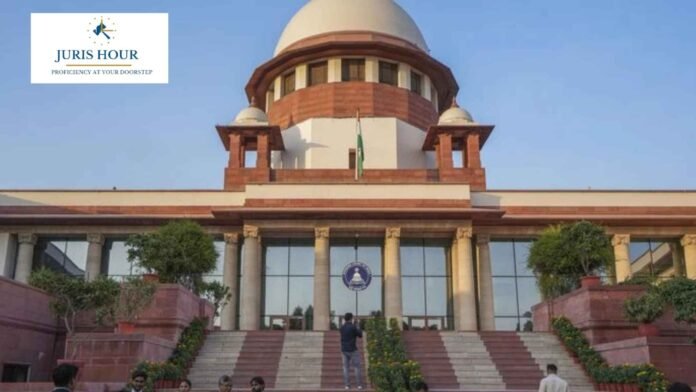
The Supreme Court has granted a coaching institute operator four weeks to file a statutory appeal in a dispute concerning the refund of ₹1.96 crore paid towards GST, interest and penalty during search proceedings. The taxpayer alleged that the payment was extracted through coercion, while the Gujarat High Court had rejected that allegation after examining the search records.
A bench of Justice J.B. Pardiwala and Justice K. Vinod Chandran, on October 13, 2026, dismissed the special leave petition as not pressed after counsel sought permission to pursue the statutory appellate remedy. The Supreme Court granted the requested liberty and four weeks to prefer the appeal.
Buy Now: 160+ GST E-Magazine September 2026
The taxpayer, along with other persons, operated “Alpha-1 Tuition Classes and Hostel”, providing coaching to students studying in Classes IV and V in Gujarati medium.
State GST authorities searched the premises between October 6 and October 10, 2023, under Section 67(2) of the Gujarat Goods and Services Tax Act, 2017. During the search, officials seized documents, recorded statements and prepared panchnamas.
According to the High Court judgment, the institute was operating without GST registration. The department maintained that the records disclosed taxable coaching services and that the taxpayer accepted the liability after officials examined the student strength and fees collected.
The taxpayer paid a total of ₹1,96,25,330, comprising tax of ₹1,12,74,296, interest of ₹66,59,890 and penalty of ₹16,91,144, relating to financial years 2018-19 to 2023-24. He subsequently alleged that the payment had been made under threat and duress, without adjudication, and that the protest was reflected in Form GST DRC-03.
The taxpayer filed a refund application in Form GST RFD-01 under Section 54(1), selecting the “any other” category.
The department issued Form GST DRC-04 on November 19, 2025, acknowledging the payment as voluntary. It subsequently issued a refund rejection show cause notice on January 6, 2026. Following the taxpayer’s response and an opportunity of hearing, the refund application was rejected through an order in Form GST RFD-06 dated February 3, 2026.
Challenging the rejection, the taxpayer argued that the department could not retain the amount without issuing a notice under Section 73 or Section 74. He also questioned the issuance of DRC-04 more than two years after payment and alleged irregularities in the creation of a temporary GST registration for depositing the amount.
The department opposed the petition, arguing that the search records showed voluntary acceptance of liability. It also pointed to the absence of any contemporaneous complaint alleging coercion and the availability of an appeal under Section 107.
The Gujarat High Court bench of Justice A.S. Supehia and Justice Vaibhavi D. Nanavati examined the panchnamas and concluded that the taxpayer had voluntarily agreed to pay the quantified liability.
The bench relied on the recorded undertaking and the taxpayer’s acceptance of the number of students and the fees collected. It found that the liability had been calculated from material examined during the search, rather than being an unquantified demand.
The High Court also considered the taxpayer’s subsequent conduct. It noted that he had not complained to any authority about threats or coercion before seeking a refund almost two years later. In the circumstances, it treated the coercion allegation as an afterthought.
Relying on the Bombay High Court’s decision in Innovators Facade Systems Ltd., the bench observed that disputed questions concerning whether a payment was voluntary or coerced could not ordinarily be conclusively determined in proceedings under Article 226 where appreciation of evidence was necessary.
The High Court rejected the argument that the delayed issuance of Form GST DRC-04 rendered the retention of the payment unlawful.
It observed that DRC-04 acknowledges voluntary payment and that the applicable rules did not prescribe a specific time limit for its issuance. On the facts before it, the bench found that the delay had caused no prejudice because the taxpayer had voluntarily accepted and discharged the liability.
On refund eligibility, the court held that the taxpayer had to establish that the amount was not payable or had been paid in excess, in accordance with Section 54 read with Rules 89 and 92. It found no illegality in the refund rejection order.
The High Court therefore dismissed the writ petition, noting that the taxpayer had requested a decision on merits despite being asked to pursue the statutory appeal.
When the matter reached the Supreme Court, counsel stated, after arguing for some time, that the taxpayer did not wish to press the special leave petition and sought liberty to approach the appellate authority.
The Supreme Court dismissed the petition as not pressed, granted liberty to file the statutory appeal and allowed four weeks for doing so. Its order contains no direction granting a refund and no determination of the underlying tax liability or coercion dispute.
Membership Required to Access Case Details & Order Copy
To view the complete Case Details and Download Order Copy, you must have an active membership. Please subscribe to continue.
Read More: GST on Electrical Items: Rates, Key Notifications and Latest Developments

