
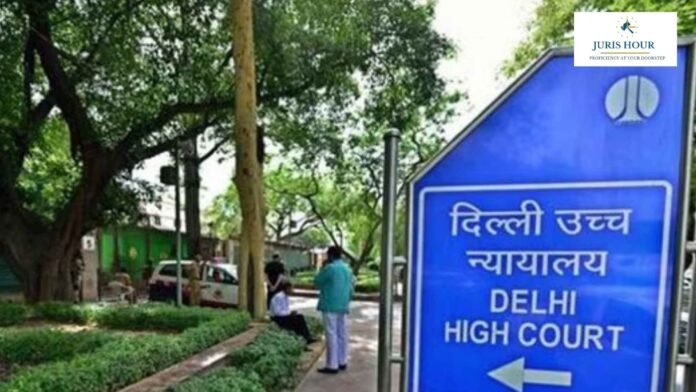
The Delhi High Court has dismissed an importer’s writ petition seeking release of bank guarantees worth ₹19.19 lakh over alleged delay in finalising provisional customs assessments, holding that the dispute must now be pursued through the statutory appellate mechanism after adjudication orders were passed.
The Division Bench of Justice Anil Kshetarpal and Justice Amit Mahajan held that the petition could not be kept pending merely because the Supreme Court was examining the broader issue of delay in customs adjudication in Union of India & Ors. v. GMR Airport Infrastructure Ltd.
Buy Now: 80+ Judgements Indirect Tax – September 2026 E-Magazine
The court, however, expressly left open the importer’s objections concerning the delay and the validity of the adjudication orders. It granted liberty to challenge the orders before the competent appellate authority under Section 128(1) of the Customs Act, 1962.
The importer had filed nine Bills of Entry for goods imported from China, including Christmas lights, sunlight bulbs, rope lights, LED rope lights, LED strips and assorted iron buckles.
One Bill of Entry was dated October 17, 2014, while the remaining eight were dated May 7, 2015. According to the importer, Customs provisionally assessed the goods under Section 18(1) of the Customs Act and permitted clearance for home consumption after it furnished personal bonds and bank guarantees.
The total value of the bank guarantees was ₹19,19,400.
The importer alleged that the provisional assessments had remained unresolved for more than nine years, leaving the guarantees outstanding. It sought a direction requiring Customs to issue a No Objection Certificate and permit their release. It also sought to prohibit the authorities from initiating proceedings to finalise the provisional assessments.
Before approaching the court in 2024, the importer had sought information through an RTI application dated July 19, 2022. Following an RTI appeal, it received a response stating that the bank guarantee matter remained pending because the Bills of Entry were provisional. It subsequently wrote to Customs on May 14, 2024, seeking release of the guarantees.
The High Court found that an Order-in-Origina had already been passed concerning the October 2014 Bill of Entry, before the writ petition was instituted.
That order directed absolute confiscation of the imported goods under Sections 111(d) and 111(m) of the Customs Act. It also imposed penalties under Sections 112(b)(i) and 114AA.
The order imposed penalties of ₹3 lakh under Section 112(b)(i) and ₹10 lakh under Section 114AA on each of three persons: proprietor Jitin Arora, Nitin Jindal and Amarnath Jindal.
The court noted that the importer had not disclosed this adjudication order in its writ petition, despite claiming that the assessment concerning the same Bill of Entry remained pending.
During the writ proceedings, Customs passed two further Orders-in-Original, dated March 31, 2026, and June 15, 2026, concerning the remaining Bills of Entry.
The bench consequently held that the factual foundation of the petition had materially changed. The proceedings could no longer be examined on the assumption that all nine assessments remained awaiting adjudication.
The importer contended that the absence of an express time limit under Section 18, as argued in the proceedings, did not give Customs unlimited power to keep provisional assessments pending.
It relied on Customs Manual instructions, the Customs (Finalization of Provisional Assessment) Regulations, 2018, and decisions of the Punjab and Haryana High Court concerning Gupta Smelters to argue that finalisation must take place within a reasonable period.
The importer maintained that the delay was unexplained and that it should not continue to suffer the consequences of administrative inaction.
It also relied on the Supreme Court’s May 2, 2025, order in the GMR Airport Infrastructure matter, arguing that the High Court should defer the petition until the larger issue concerning adjudication delay was decided.
Customs opposed that request, submitting that adjudication orders had already been passed and that the importer could raise its objections, including those concerning delay, in statutory appeals.
The High Court explained that the Supreme Court’s direction in the GMR Airport Infrastructure proceedings had to be understood against the background of the controversy being examined there.
According to the bench, that direction could not be interpreted as requiring every proceeding involving an allegation of delay at an earlier stage to remain pending, irrespective of subsequent developments.
In the present case, the dispute had progressed beyond the stage of pending adjudication. The surviving controversy concerned adjudication orders already passed by Customs and the remedies available against them.
The court therefore declined to retain the writ petition solely to await the outcome of the Supreme Court proceedings.
The bench held that the request for release of the bank guarantees could not be considered independently of the adjudication orders, which now governed the parties’ rights and liabilities.
It observed that the orders were more than formal decisions recording finalisation of provisional assessments. The January 2022 order, for instance, involved confiscation and penalties.
The legality and correctness of those determinations should ordinarily be examined first by the statutory appellate authority. The court found no exceptional circumstance warranting departure from that mechanism.
The prayer to prohibit finalisation or adjudication had also substantially become infructuous because the orders had already been passed.
The High Court clarified that the passing of adjudication orders did not prevent the importer from questioning the delay preceding them.
The importer could raise all permissible grounds before the appellate authority, including the period for which the provisional assessments remained pending, the applicability of statutory provisions, regulations and administrative instructions, and any legal consequences arising from the delay.
The bench expressly refrained from deciding either the merits of the three Orders-in-Original or whether the preceding delay affected their validity.
It also emphasised that a person invoking extraordinary writ jurisdiction must make full and candid disclosure of material facts. The omission of the January 2022 order was significant because the importer had sought to prohibit finalisation concerning a Bill of Entry already covered by adjudication.
The court dismissed the writ petition as not maintainable in its present form, granting liberty to appeal against the Orders-in-Original dated January 21, 2022, March 31, 2026, and June 15, 2026.
It directed that the pendency of the writ proceedings be taken into consideration when examining any application for condonation of delay in filing an appeal. Such an application must be decided in accordance with law; the judgment did not itself condone the delay or express an opinion on the merits of an appeal.
Membership Required to Access Case Details & Order Copy
To view the complete Case Details and Download Order Copy, you must have an active membership. Please subscribe to continue.
Read More: ITC Mismatch Demand Quashed Over Incomplete Notice And Inadequate Hearing: GSTAT

