
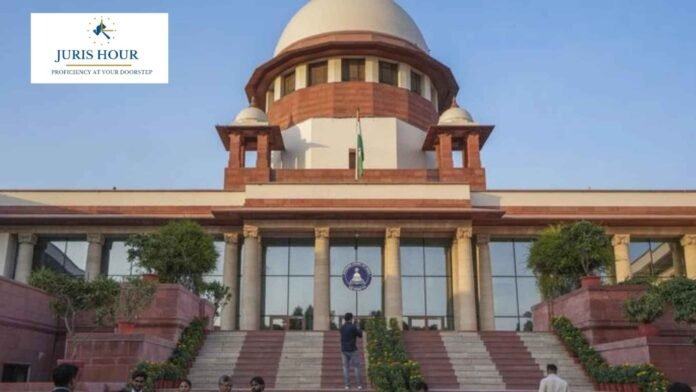
The Supreme Court has dismissed the Uttar Pradesh Government’s special leave petition challenging an Allahabad High Court judgment that quashed a GST confiscation notice and the related seizure order against a taxpayer.
A bench comprising Justice Manoj Misra and Justice Vijay Bishnoi has observed that the proceedings initiated under Section 130 of the Uttar Pradesh Goods and Services Tax Act, 2017, for an alleged violation of Section 35 were without jurisdiction.
Buy Now: E-Magazine: 1000+ Landmark GST Judgments (2017–2026)
The dispute also involved a claim for refund of ₹2,15,74,527, which the taxpayer alleged had been recovered illegally. The High Court did not direct repayment of this amount and instead permitted the taxpayer to pursue the refund in accordance with law.
The assessee approached the Allahabad High Court’s Lucknow Bench challenging a notice dated September 17, 2025, issued under Section 130 of the UPGST Act, and a seizure order dated September 6, 2025, issued in Form GST INS-02.
The taxpayer contended that the confiscation notice was without jurisdiction and violated the principles of natural justice. It also sought refund of two amounts—₹91,74,527 and ₹1,24,00,000—allegedly recovered without authority under Section 74A(9) of the Act.
The central issue was whether the department could initiate the impugned confiscation proceedings for alleged violations of Section 35 without first determining the tax liability under the applicable provisions.
Before the High Court, the taxpayer argued that a notice under Section 130 could not be issued for an alleged violation of Section 35, which concerns accounts and records.
Relying on earlier decisions, including M/s Metenere Ltd. v. Union of India, M/s Maa Mahamaya Alloys Pvt. Ltd. v. State of U.P. and M/s Dayal Product v. Additional Commissioner Grade-2, the taxpayer submitted that the department was required to determine the liability to pay tax under Section 73 or Section 74 before initiating the confiscation proceedings in question.
The taxpayer also maintained that the High Court could examine the matter at the show-cause notice stage because the challenge concerned the issuing authority’s jurisdiction. It relied on Whirlpool Corporation v. Registrar of Trade Marksand other decisions to support the maintainability of the writ petition.
The State primarily opposed the petition on the ground that it challenged proceedings at the show-cause notice stage.
A division bench comprising Justice Shekhar B. Saraf and Justice Prashant Kumar, in its judgment rejected the State’s objection.
The bench held that the legal position concerning the initiation of the proceedings in question under Section 130, without determination of tax under Section 73 or Section 74, was settled. It consequently found that the impugned show-cause notice issued under Section 122 read with Section 130 was without jurisdiction.
The High Court further concluded that the Section 130 notice could not be issued for the alleged violation of Section 35 in the case before it. Once the notice was found to be without jurisdiction, the bench held that judicial intervention was warranted.
The High Court quashed the impugned action dated September 17, 2025, and also set aside the consequential seizure order dated September 6, 2025.
However, it expressly allowed the GST department to proceed afresh in accordance with law by issuing show-cause notices under the relevant provisions of the UPGST Act.
The relief therefore addressed the legality of the proceedings challenged before the court while preserving the department’s ability to take lawful action against the taxpayer.
On the taxpayer’s request for refund of ₹2,15,74,527, the High Court granted liberty to pursue the claim in accordance with law.
It did not order an immediate refund or finally adjudicate the taxpayer’s entitlement to repayment. Accordingly, the quashing of the confiscation notice and seizure order did not itself result in a direction to return the disputed amount.
The State of Uttar Pradesh and other authorities challenged the High Court judgment
The Supreme Court condoned the delay in filing and refiling the petition. It then noted the High Court’s observation in paragraph 12 that the department remained free to proceed against the taxpayer in accordance with law.
Having regard to that reservation of liberty, the bench found no good reason to interfere and dismissed the special leave petition. Pending applications were also disposed of.
The Supreme Court’s dismissal leaves the High Court’s order quashing the impugned confiscation notice and seizure order undisturbed. Its brief order rests expressly on the fact that the department retained the liberty to initiate lawful proceedings.
The decision does not grant the taxpayer immunity from further GST action, nor does it direct refund of the disputed ₹2.15 crore. Any further departmental proceedings and the taxpayer’s refund claim must be pursued through the applicable legal process.
Membership Required to Access Case Details & Order Copy
To view the complete Case Details and Download Order Copy, you must have an active membership. Please subscribe to continue.
Read More: Customs Imposes Rs. 89.91 Crore Penalty on Ranya Rao in Alleged Gold Smuggling Case

