
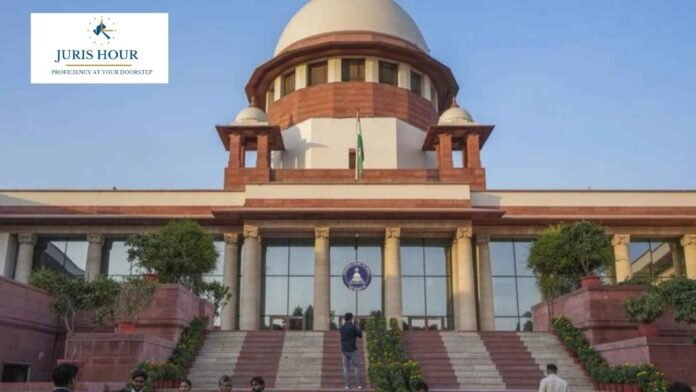
The Supreme Court has observed that disputes involving the comparative evaluation of competing bidders in a tender process ordinarily should not be pursued through a Public Interest Litigation (PIL), while granting a contractor three months to complete a road upgradation project in Himachal Pradesh under the Pradhan Mantri Gram Sadak Yojana (PMGSY).
The Bench of Justice Dipankar Datta and Justice Sheel Nagu considered appeals arising from a Himachal Pradesh High Court judgment that had quashed the award of work relating to the upgradation of the Matiana–Mahori–Chhaila Road under PMGSY Package No. HP-09-694. The High Court had directed the authorities to re-tender the remaining work within one month.
Buy Now: Supreme Court Judgments E-Magazine – 5 Month Combo (2026) (1st February – 30th June 2026)
The central question was whether the validity of a tender process, particularly where competing bidders’ claims require comparative assessment, can appropriately become the subject matter of a PIL. The Court expressed reservations about such challenges, noting that the grounds raised before the High Court largely involved inter-se comparisons between the competing bidders.
The Bench further observed that the project value of approximately ₹23 crore was not of such a magnitude as to automatically justify a PIL on the basis of alleged wastage of public resources.
The High Court’s decision was based on several concerns relating to the tender process. These included alleged contradictions regarding whether a complaint filed by another bidder had been received and subsequently withdrawn, questions about whether the successful bidder’s experience had been gained as a subcontractor or principal contractor, and concerns over the bidder allegedly operating under two different names contrary to tender conditions.
The High Court had also examined whether the successful bidder satisfied conditions relating to subcontracting and whether the nature of the work reflected in the bidder’s experience certificates matched the actual work executed in the past.
While examining the matter, the Supreme Court noted that the PIL petitioner appeared to be acting as the alter ego of the unsuccessful bidder. The Court recorded that the unsuccessful bidder had earlier lodged a complaint against the successful bidder but had subsequently withdrawn it.
These observations assume significance in the context of judicial scrutiny of tender matters, where courts have often emphasized that commercial and technical evaluations are generally best left to expert authorities unless there is evidence of arbitrariness, mala fides, or public interest concerns of a substantial nature.
During the hearing, the contractor informed the Court through an affidavit dated September 3, 2026, that approximately three kilometres of road construction, along with retaining and breast walls, had already been completed. The contractor also expressed willingness to complete the remaining work at the same rates at which the contract had originally been awarded on March 15, 2024, and assured the Court that quality standards would not be compromised.
Taking note of this assurance, the Supreme Court granted a further period of three months to complete the entire project at the original contract rates. The Court clarified that if the work is not completed within the stipulated period, subject to verification of quality by the authorities, the official respondents would be free to re-tender the remaining work at prevailing market rates.
The Court directed that the matter be listed in the first week of December 2026 for submission of a compliance report by the contractor. The order was also made applicable to the connected appeal filed by the State of Himachal Pradesh.
Additionally, the Supreme Court modified its earlier interim order dated March 7, 2025, which had restrained the authorities from creating third-party rights during the pendency of the appeal.
Membership Required to Access Case Details & Order Copy
To view the complete Case Details and Download Order Copy, you must have an active membership. Please subscribe to continue.

