
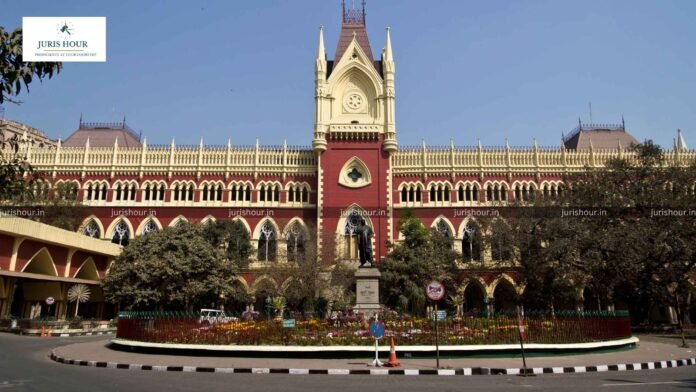
The Calcutta High Court has set aside a show cause notice proposing cancellation of GST registration where the authorities had suspended the taxpayer’s registration over an alleged excess Input Tax Credit (ITC) mismatch without adequately considering the supplier particulars and documents furnished by the taxpayer.
The bench of Justice Smita Das De has observed that, at the prima facie stage, the taxpayer had made out a case warranting judicial interference and directed the GST authorities to reconsider the underlying ITC dispute after examining the taxpayer’s detailed reply and affording an opportunity of personal hearing.
BUY NOW: E-Magazine: Top 100 Gst ITC Judgements (2024–25)
The petitioner/assessee is engaged in executing works contracts, including assembly and erection of prefabricated structures and construction work. The company is registered under the GST law and undertakes contracts both as a contractor and as a sub-contractor for main contractors executing government projects.
The dispute arose in connection with a works contract awarded by P.C.P. International Limited pursuant to a letter of award dated August 21, 2021.
The State GST authorities issued a notice under Section 151 read with Rule 56(18) of the CGST Rules, pointing out discrepancies in the taxpayer’s GSTR-3B returns.
According to the notice, there was an alleged excess ITC mismatch amounting to ₹8,04,31,198.54 for the financial years 2023-24, 2024-25 and 2025-26. The ITC was alleged to be inadmissible under Section 16(2)(c) read with Section 41 of the CGST and WBGST Acts.
The taxpayer submitted a detailed reply on April 30, 2026 and also sought an adjournment.
The taxpayer’s authorised representative subsequently furnished relevant documents, including particulars of the suppliers, to enable the authorities to properly adjudicate the issue.
However, the authorities subsequently issued a show cause notice dated May 22, 2026 proposing cancellation of the GST registration. The registration was suspended with effect from April 1, 2023.
The taxpayer challenged the cancellation proceedings before the High Court, contending that suspension of its GST registration had effectively stalled its business operations and caused substantial financial hardship.
The taxpayer argued that the authorities had acted arbitrarily despite having been provided with the details of all relevant suppliers.
According to the petitioner, GST registration could not be suspended merely on the basis of an alleged excess ITC mismatch without first verifying and quantifying the discrepancy. It was argued that the action was beyond the statutory mandate and jurisdiction of the authorities.
A significant part of the petitioner’s argument was based on the Calcutta High Court Division Bench decision in Suncraft Energy.
The judgment, as reproduced in the present proceedings, dealt with ITC denial where the supplier’s details were not reflected in the recipient’s records.
The Court in Suncraft Energy noted that the taxpayer had produced valid tax invoices and bank statements evidencing payment to the supplier. It also observed that the authorities had not conducted an enquiry against the supplier.
The judgment further recorded that non-reflection of supplier details in GSTR-1 and corresponding availability in GSTR-2A could not, by itself, result in an automatic reversal of ITC. It referred to exceptional circumstances in which action against the recipient may become relevant, including situations involving a missing supplier, closure of business, inadequate assets or possible collusion.
The Division Bench had consequently observed that, before directing the recipient to reverse ITC, the authorities ought to have taken action against the selling dealer, unless circumstances such as collusion or the supplier being unavailable or without assets were established.
The petitioner also relied upon the Madras High Court’s decision in D.Y. Beathel Enterprises.
The judgment highlighted the statutory requirement concerning receipt of goods or services and payment of the tax charged on the supply. It further observed that where tax had not reached the Government, the eventual liability could have to be borne by either the seller or buyer depending on the circumstances.
The petitioner argued that the authorities should therefore examine the supplier-side transactions rather than proceeding against the recipient without completing such verification.
The petitioner also relied upon the Allahabad High Court decision in M/s Shreyash Enterprises.
In that matter, the Court considered a challenge to a cancellation notice alleging utilisation and passing on of bogus ITC when the underlying adjudication proceedings were still pending.
The judgment, as reproduced in the Calcutta High Court order, records that where no final conclusion had been reached by the adjudicating authority that bogus ITC had been availed and no demand had been raised on that count, the allegation in the cancellation notice could be considered an unascertained fact.
The State authorities opposed the petition.
The department relied upon a letter dated July 3, 2026 and an email submitted by the petitioner, contending that the taxpayer had already accepted the jurisdiction of the State authorities.
The State also pointed out that the petitioner had undertaken to deposit an admitted amount of ₹1,54,00,575, effective from May 22, 2026, while agreeing to abide by the decision concerning the disputed ITC.
After considering the rival submissions and examining the materials on record, the High Court held that the petitioner had made out a prima facie case warranting interference at that stage.
The Court specifically noted that it had taken judicial notice of the relevant documents, including the GSTRs annexed to the writ petition.
A significant observation concerned the supplier particulars furnished by the taxpayer.
The Court held that, since the petitioner had brought the names of the suppliers to the notice of the authorities, the statutory mechanism under Section 76(1) and (2) of the CGST Act, 2017 became relevant. The provision contemplates issuance of a notice to the person liable to pay an amount to the Government where the required amount has not been paid.
The Court considered the earlier decision in Suncraft Energy as well as M/s Shreyash Enterprises while arriving at its decision.
The High Court consequently quashed and set aside the show cause notice dated May 22, 2026, by which cancellation of the GST registration had been proposed and the registration had been suspended with effect from April 1, 2023.
However, the Court did not finally adjudicate the underlying ITC dispute in favour of the taxpayer.
Instead, it directed the taxpayer to submit a comprehensive and detailed reply to the earlier notice dated April 10, 2026, issued under Section 61 read with Rule 99 of the CGST/WBGST Act and Rules. The taxpayer was given three weeks from the date of the order to submit the reply.
The respondent authority was directed to consider and dispose of the taxpayer’s reply within four weeks thereafter, keeping in view the judicial precedents referred to in the judgment.
The Court directed that the authority must provide an opportunity of personal hearing; pass a speaking and reasoned order; and communicate the decision within one week thereafter.
The High Court also made it clear that the concerned authority would have to take an independent decision and should not be influenced by the observations made by the Court in the writ proceedings.
Membership Required to Access Case Details & Order Copy
To view the complete Case Details and Download Order Copy, you must have an active membership. Please subscribe to continue.
Read More: Speaking Refund Order Can’t Be Reopened Through S. 73 Without Appeal U/s 107: Bombay High Court

