
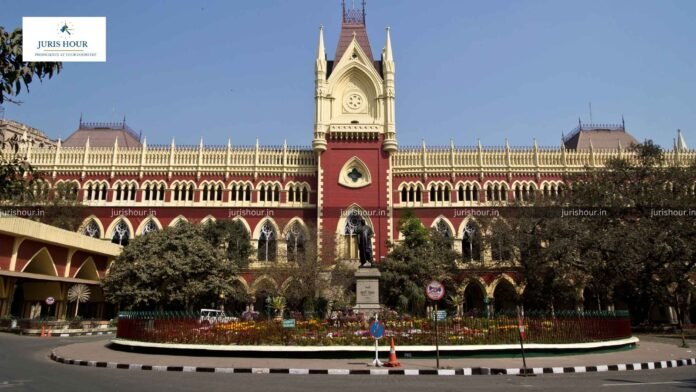
The Calcutta High Court has restored a Goods and Services Tax appeal dismissed on limitation, observing that the appellate remedy cannot be rendered illusory when the taxpayer has paid the mandatory pre-deposit and demonstrated sufficient cause for the delay.
The bench of Justice Smita Das De held that dismissing the appeal solely on the ground of limitation, without considering the explanation for the delay and the taxpayer’s substantial compliance with Section 107(6) of the Central Goods and Services Tax Act, 2017, amounted to a hyper-technical approach.
Buy Now: GST Case Laws E-Magazine Combo (January – June 2026)
An adjudication order under Section 73 of the CGST Act was passed against the company on March 13, 2023. The order was communicated through the GST portal.
The company subsequently filed an appeal before the First Appellate Authority on August 21, 2023, disputing the quantum of interest charged by the GST authorities.
The appellate authority, however, dismissed the appeal after holding that it had been filed beyond the statutory period prescribed under Sections 107(1) and 107(4) of the CGST Act. The authority concluded that the application seeking condonation of delay could not be entertained and consequently issued Form GST APL-02.
The company contended that the delay was neither deliberate nor wilful. It explained that the person entrusted with handling and communicating matters concerning the company’s business affairs had fallen seriously ill.
As a result, the company remained unaware of the adjudication order despite its communication through the GST portal. The taxpayer submitted that the medical condition constituted sufficient cause for the delay and that the relevant explanation had also been furnished in its reply to the show-cause notice dated October 6, 2023.
The company further pointed out that it had fulfilled the mandatory pre-deposit requirement prescribed under Section 107(6) of the CGST Act. Since the amount had already been deposited and debited, it argued that the appeal ought to have been considered on merits.
According to the petitioner, dismissal of the appeal solely on limitation, despite the explanation and compliance with the pre-deposit condition, defeated the purpose of the statutory appellate remedy and violated the principles of natural justice.
The company consequently sought the setting aside of the appellate order, condonation of the delay and a direction to decide its appeal on merits within a specified period.
The State authorities opposed the writ petition and submitted that the appeal had admittedly been filed beyond the period permitted under the CGST Act.
They argued that Section 107 provides an ordinary limitation period of three months and permits the appellate authority to condone a further delay of only one month. Since the appeal had been filed beyond that period, the First Appellate Authority had no statutory power to condone the delay.
After considering the rival submissions and examining the material placed on record, the High Court found that the company had demonstrated sufficient cause for not filing the appeal within time.
The Court noted that although the March 13, 2023 order had been communicated to the petitioner, the company remained unaware of it because the person entrusted with looking after its business affairs had fallen seriously ill.
The medical documents placed with the writ petition supported the explanation given by the company, the Court observed.
It was also undisputed that the company had paid the mandatory pre-deposit and filed its appeal on August 21, 2023.
Justice Das De observed that refusing to hear the appeal merely on the ground of limitation, without considering the sufficient cause shown and substantial compliance with Section 107(6), would amount to adopting a hyper-technical approach.
“When the mandatory pre-deposit stands satisfied, the appellate remedy cannot be rendered illusory,” the Court observed.
The High Court held that interference was necessary to balance the equities and secure the ends of justice. It accordingly found that the delay in filing the appeal deserved to be condoned.
The High Court quashed the November 29, 2023 order by which the First Appellate Authority had dismissed the appeal.
The delay in filing the appeal against the adjudication order dated March 13, 2023 was condoned. The First Appellate Authority was directed to admit the appeal and decide it on merits.
The Court ordered the appellate authority to hear and dispose of the appeal within three weeks from the date of communication of the High Court’s order. It was directed to pass a reasoned order in accordance with law after providing the company an opportunity of hearing.
The Court clarified that the petitioner must not seek any further adjournment on the date fixed for hearing. In case the company seeks an adjournment or fails to participate, the appellate authority would be entitled to hear the appeal and pass an ex parte final order.
Membership Required to Access Case Details & Order Copy
To view the complete Case Details and Download Order Copy, you must have an active membership. Please subscribe to continue.

