
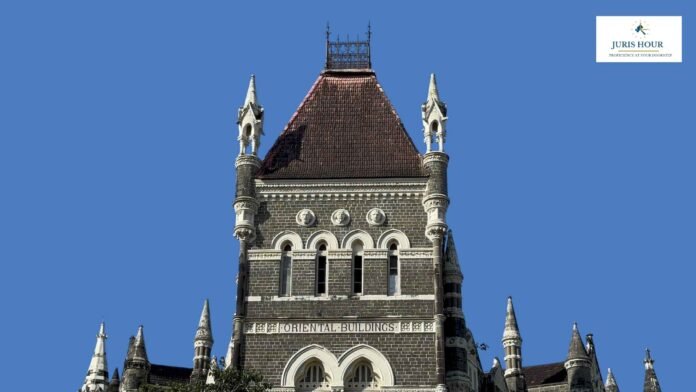
The Bombay High Court has held that once a resolution plan is approved by the National Company Law Tribunal (NCLT) on a “clean slate” basis, past statutory tax claims not forming part of the approved resolution plan stand extinguished, and tax authorities cannot continue or initiate proceedings to recover such dues.
The bench of Justice M. S. Karnik and Justice Sandesh D. Patil directed the refund of a statutory pre-deposit of ₹20,02,999 paid under the Maharashtra Value Added Tax Act, 2002 (MVAT Act).
Buy Now: 100+ Judgements On Customs Classification
The proceedings arose from an assessment order dated March 13, 2019, concerning the period April 1, 2014 to March 31, 2015. The assessment had confirmed a tax liability against Aarem Insights Pvt. Ltd., formerly known as Shop CJ Network Pvt. Ltd., which operated a 24×7 home-shopping television channel under the brand name “Shop CJ”.
The assessment proceedings were conducted under the MVAT Act and culminated in an order under Section 23(2) of the Act. Aggrieved by the assessment, the company preferred an appeal and made the statutory pre-deposit required under Section 26(6A)(c) of the MVAT Act.
The assessment order involved a demand of ₹4,05,59,423. The appellate record also referred to a payment of ₹20,02,999 made on November 6, 2020, in connection with the appeal and stay proceedings.
A crucial development occurred during the pendency of the tax proceedings. The company, in its erstwhile identity as Shop CJ Network Pvt. Ltd., was subjected to Corporate Insolvency Resolution Process (CIRP) proceedings under Section 9 of the Insolvency and Bankruptcy Code, 2016 (IBC), pursuant to an order of the NCLT, Mumbai dated January 19, 2022.
The claims of the MVAT Department relating to Assessment Years 2011-12 to 2016-17 were considered in the resolution plan dated September 15, 2022. The NCLT subsequently approved the resolution plan on March 21, 2023, on a “clean slate” basis.
The NCLT later rectified its order on April 18, 2023, clarifying that the approved resolution plan contemplated payment of ₹1 crore on a proportionate basis in full satisfaction of all disputed government dues, including VAT claims.
An amount of ₹58,58,444 was paid through challan to the Maharashtra GST Department towards full and final settlement against government dues stated to aggregate ₹27,91,64,187.
Following approval of the resolution plan, the company informed the First Appellate Authority through a letter dated May 19, 2023 that the NCLT had approved the resolution plan and that the tax liabilities had been settled in accordance with the plan.
The company requested that the pending MVAT appeal be disposed of on that basis and also sought refund of the statutory pre-deposit.
The MVAT Department had challenged the NCLT’s rectification order before the National Company Law Appellate Tribunal (NCLAT). However, the NCLAT dismissed that challenge on July 26, 2023, thereby affirming the NCLT orders.
Despite the insolvency resolution, the First Appellate Authority passed an order dated May 31, 2023, dismissing the company’s appeal for the relevant assessment year and confirming the assessment order. It further directed recovery of the outstanding tax demand.
The company subsequently approached the Bombay High Court after its requests dated August 22, 2025 and September 23, 2025 seeking refund of the statutory pre-deposit received no response.
The High Court found that the central issue was squarely covered by the Supreme Court’s judgment in Ghanashyam Mishra and Sons Private Limited v. Edelweiss Asset Reconstruction Company Limited and by an earlier decision of the Bombay High Court in Srei Equipment Finance Ltd. v. Assistant Commissioner, DIV-III CGST & C-EX, Navi Mumbai & Ors.
The Court noted that in Srei Equipment Finance, similar proceedings initiated after approval of a resolution plan had been quashed.
The Bench carefully examined the resolution plan, the NCLT’s approval order dated March 21, 2023 and its rectification order dated April 18, 2023.
The Court held that once the NCLT approved the resolution plan on a “clean slate” basis, all past claims or dues that were not part of the resolution plan stood extinguished. By virtue of Section 31 of the IBC, the approved resolution plan became binding on all stakeholders, including the tax authorities.
Consequently, the First Appellate Authority lacked jurisdiction to pass an order directing recovery of tax dues after the approval of the resolution plan. The High Court held that such action was contrary to the binding scheme of the IBC.
The High Court placed particular emphasis on Section 31(1) of the IBC. The provision makes an NCLT-approved resolution plan binding on the corporate debtor and its employees, members and creditors, as well as the Central Government, State Governments, local authorities and other stakeholders to whom statutory dues may be payable.
The Court relied upon the Supreme Court’s decision in Essar Steel India Limited v. Satish Kumar Gupta, which explained that the objective of the provision is to enable a successful resolution applicant to take over and operate the corporate debtor on a fresh slate.
The Supreme Court had recognised that a resolution applicant should not subsequently be confronted with undecided claims after approval of the resolution plan, as this would create uncertainty concerning the amount ultimately payable by the resolution applicant.
The Bench also relied upon the Supreme Court’s judgment in Ghanashyam Mishra and Sons Private Limited, under which claims provided for in an approved resolution plan become binding, while claims that are not part of the plan stand extinguished from the date of NCLT approval.
The principle extends to statutory dues owed to the Central Government, State Government or local authorities. Proceedings concerning such pre-approval dues cannot continue if those dues were not incorporated into the approved resolution plan.
The High Court additionally referred to its decisions in Murli Industries Ltd. v. Assistant Commissioner of Income Tax, Uttam Value Steels Ltd. v. Assistant Commissioner of Income Tax and Principal Commissioner of Income Tax v. Patanjali Foods Ltd., which emphasise the objective of the IBC to revive the corporate debtor by bringing finality and certainty to claims against it.
The Court also relied upon the Supreme Court’s decision in Ruchi Soya Industries Limited v. Union of India, reiterating that upon approval of the resolution plan, claims stand frozen and a claim not forming part of the resolution plan does not survive.
A significant aspect of the ruling concerns the statutory pre-deposit made for filing the MVAT appeal.
The Court noted that the pre-deposit under Section 26(6A)(c) of the MVAT Act represented 10% of the disputed tax. Since the underlying tax demands had been extinguished by operation of the NCLT-approved resolution plan, the pre-deposit could not be retained over and above the amount fixed under the resolution plan for settlement of government dues.
The Court held that retaining the pre-deposit would be impermissible and contrary to law.
Accordingly, with the resolution plan having been approved on a clean-slate basis, the proceedings against the company stood abated and the respondents became liable to refund the pre-deposit amount.
The High Court found that this position was also supported by the Supreme Court’s decision in Ruchi Soya Industries and the Bombay High Court’s ruling in Dalmia Cement (Bharat) Ltd. v. Union of India, where refund of the pre-deposit along with applicable interest had been directed.
The State argued that the tax authority possessed jurisdiction to pass the impugned appellate order and that the MVAT Department’s claim was not covered by the resolution plan.
The Bombay High Court rejected the submission, holding that in view of the statutory framework and binding precedents, the continuation of the tax proceedings and recovery could not be sustained after approval of the resolution plan.
The Division Bench ultimately allowed the writ petition.
It set aside the impugned appellate order along with the proceedings pursuant to that order. The Court also issued a direction for refund of ₹20,02,999 paid as pre-deposit, together with applicable interest.
The judgment reinforces the overriding objective of the IBC’s resolution framework: once a resolution plan is approved and a successful resolution applicant takes over the corporate debtor on a “clean slate” basis, historical statutory claims that do not form part of the approved plan cannot subsequently be revived by tax authorities through pending or fresh recovery proceedings.
For tax authorities, the ruling underscores the importance of giving full effect to an NCLT-approved resolution plan and Section 31 of the IBC. For resolution applicants and companies emerging from insolvency, it reiterates that the statutory finality attached to an approved resolution plan protects them from subsequent claims relating to pre-resolution liabilities that were not included in the plan.
Membership Required to Access Case Details & Order Copy
To view the complete Case Details and Download Order Copy, you must have an active membership. Please subscribe to continue.

