
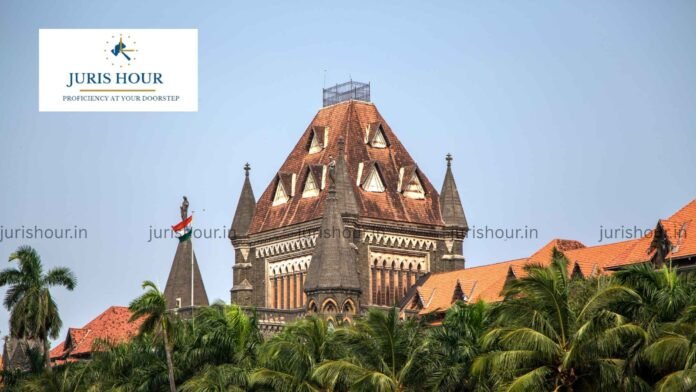
The Bombay High Court has partly set aside an order of the Income Tax Appellate Tribunal (ITAT), holding that the Tribunal’s doubts regarding the filing of a paper book were prima facie unsustainable when the relevant paper book and accompanying affidavit were found in the Tribunal’s own records.
The bench of Justice B. P. Colabawalla and Justice Farhan P. Dubash remanded the matter to the ITAT to determine whether the paper book was duly filed in compliance with Rule 29 of the Income Tax (Appellate Tribunal) Rules, 1963 and, if so, whether the documents contained therein were relevant to the appeal.
The matter originated from assessment proceedings for Assessment Year 2010-11. An assessment order was passed on March 25, 2013, following which the taxpayer approached the Commissioner of Income Tax (Appeals), Mumbai. The CIT(A) partly allowed the appeal by order dated January 4, 2016.
Both sides thereafter approached the ITAT. The Revenue filed ITA No. 2579/Mum/2016, while the taxpayer filed ITA No. 3044/Mum/2016.
During the appellate proceedings, the taxpayer initially filed Paper Book Nos. I-A and I-B on June 13, 2018. According to the taxpayer, two further paper books, Paper Book Nos. II and II-A, were filed during the course of oral arguments around October 5, 2018. Paper Book II-A was accompanied by an affidavit of the taxpayer’s Director dated October 4, 2018.
The ITAT subsequently disposed of both appeals through a common order dated December 19, 2018.
The taxpayer contended that Paper Book Nos. II and II-A had been relied upon during oral arguments but were inadvertently not considered by the ITAT while passing its December 19, 2018 order.
Consequently, on April 15, 2019, two Miscellaneous Applications were filed under Section 254(2) of the Income Tax Act, 1961, seeking recall of the ITAT’s order. One application, MA No. 275/Mum/2019, arose from the Revenue’s appeal, while MA No. 276/Mum/2019 arose from the taxpayer’s appeal.
The ITAT disposed of the applications by order dated February 20, 2023. It dismissed MA No. 275/Mum/2019 as devoid of merit. MA No. 276/Mum/2019 was partly allowed, with the earlier order recalled only to the limited extent of considering an additional ground filed by the taxpayer on October 10, 2018.
The ITAT rejected the taxpayer’s other contentions.
Before the Bombay High Court, the principal grievance was that the ITAT had proceeded on the premise that Paper Book Nos. II and II-A had not been properly filed because they were not accompanied by a separate petition under Rule 29 of the Income Tax (Appellate Tribunal) Rules, 1963.
The taxpayer argued that this approach was incorrect, particularly in relation to Paper Book II-A. It pointed out that the paper book was accompanied by an affidavit of its Director, which expressly sought permission under Rule 29 to place the relevant material on record.
The High Court examined the paper books and the affidavit placed before it. It noted that the covering pages of both paper books carried the ITAT’s rubber stamp and signature. Although the affidavit itself did not carry a similar stamp, the index to Paper Book II-A specifically recorded that the documents contained in it had been submitted as an enclosure to the affidavit.
The Court also noted that the affidavit itself sought permission under Rule 29.
A significant factor before the High Court was an affidavit filed by an Associate of the Chartered Accountants representing the taxpayer. According to the affidavit, the deponent had inspected the original records and proceedings of the two income-tax appeals and the two Miscellaneous Applications before the ITAT on August 29, 2023.
During that inspection, all four paper books, including Paper Book Nos. II and II-A, were found in the ITAT’s records.
The taxpayer, however, fairly conceded that Paper Book II-A had not been accompanied by a separate petition under Rule 29. Its case was that the accompanying affidavit itself contained the necessary averments and expressly sought permission under Rule 29.
As regards Paper Book II, the taxpayer accepted that it was not accompanied either by a similar affidavit or by the requisite petition seeking leave or permission to rely upon additional documents or evidence at the appellate stage.
The Bombay High Court made an important distinction between the two paper books.
With respect to Paper Book II-A, the Court was prima facie satisfied that the affidavit and accompanying paper book had been filed before the ITAT and were available on the Tribunal’s record.
However, in relation to Paper Book II, the Court declined to record a similar finding because the taxpayer itself had admitted that the paper book was filed without the requisite Rule 29 petition. The Court held that, to that extent, the ITAT was justified in proceeding on the basis that Paper Book II had not been duly filed in accordance with the Rules.
The Court further examined the ITAT’s observation that the paper book and affidavit were not before it even when the Miscellaneous Applications were heard.
The High Court found that the affidavit and Paper Book II-A were in fact available in the ITAT’s records at the relevant time. In these circumstances, it held that the ITAT’s observations expressing doubt as to whether those documents had ever been filed could not, prima facie, be sustained.
The Court therefore considered it appropriate, in the interests of justice, to partly set aside the impugned ITAT order.
The Tribunal has been directed to first determine whether Paper Book II-A was duly filed in compliance with Rule 29, particularly considering that it was accompanied by the Director’s affidavit.
If the ITAT concludes that Paper Book II-A was duly filed, it must then examine whether the documents contained in that paper book were relevant for deciding the controversy in the taxpayer’s appeal.
If the Tribunal finds that the documents were relevant, it would then have to allow the Miscellaneous Application to the extent that Paper Book II-A had not been considered while disposing of the taxpayer’s appeal, and pass consequential orders.
The High Court made it clear that it had not expressed any opinion on the other grounds considered and rejected by the ITAT. Those findings remain undisturbed.
Membership Required to Access Case Details & Order Copy
To view the complete Case Details and Download Order Copy, you must have an active membership. Please subscribe to continue.

