
The Bombay High Court has held that no interest could be levied on the repayment of additional customs duty, including Integrated Goods and Services Tax (IGST), made by an exporter to reverse the benefit of duty-free imports under the Advance Authorisation Scheme.
The Bench of Justice M.S. Karnik and Justice Sandesh D. Patil observed that Rule 96(10) of the Central Goods and Services Tax Rules, 2017, having been deemed to be omitted from its inception, created no legal obligation upon the exporter to repay the additional customs duty in the first place.
The bench directed the customs authorities to expeditiously process the company’s refund application and return approximately ₹43 lakh collected as interest on the repayment of the additional customs duty.
Buy Now: 150 + Judgments On GST – E-Compilation For August 2026
The petitioner had imported raw materials under the Advance Authorisation Scheme and claimed exemption from payment of additional customs duty leviable under Section 3(7) of the Customs Tariff Act, 1975.
The imported raw materials were used to manufacture products that were subsequently exported from India. At the time of export, the company opted to pay IGST and thereafter claimed a refund of the tax under Section 16 of the Integrated Goods and Services Tax Act, 2017.
Between October 4, 2018 and November 27, 2020, the company undertook 25 such imports while availing exemption from additional customs duty. It later exported the manufactured products on payment of IGST and obtained a refund of the export tax.
An explanation to Rule 96(10) of the CGST Rules had been introduced retrospectively with effect from October 23, 2017. Under the provision as it then stood, exporters were restricted from simultaneously retaining the benefit of import duty exemption and claiming a refund of IGST paid on exports.
Consequently, Leben Laboratories was required to surrender one of the two benefits. The company opted to repay the additional customs duty from which it had earlier obtained exemption at the import stage.
For this purpose, it requested the customs authorities to recall and reassess the relevant Bills of Entry. Following the reassessment and recomputation of duty, the company paid the additional customs duty in March and April 2022.
Along with the duty, the customs authorities also collected interest of approximately ₹43 lakh.
The imported subsequently approached the customs authorities seeking the return of the interest amount. The company contended that the Customs Tariff Act, as it existed during the relevant period, contained no substantive provision authorising the levy of interest on delayed payment of additional customs duty.
In its writ petition, the company sought a declaration that the levy, collection and retention of interest on IGST paid on imports under Section 3(7), read with the unamended Section 3(12) of the Customs Tariff Act, for the period before August 16, 2024, was without authority of law and contrary to Article 265 of the Constitution.
Article 265 provides that no tax can be levied or collected except by authority of law.
The company relied upon the Bombay High Court’s rulings in Mahindra & Mahindra Ltd. v. Union of India and A.R. Sulphonates Pvt. Ltd. v. Union of India. In those decisions, the High Court held that the Customs Tariff Act did not, during the relevant period, authorise customs authorities to levy and collect interest on the delayed payment of additional customs duty.
The customs authorities opposed the petition and contended that the company had not submitted its refund application to the proper officer.
They further argued that the decision in Mahindra & Mahindra Ltd. might not apply to the facts of the present case. On that basis, the authorities maintained that there was no requirement to process the refund application or grant a refund of the interest amount.
The High Court, however, was not persuaded by the objections.
The Bench also relied upon the Supreme Court’s decision in Goodluck India Ltd. v. Union of India, which held that Rule 96(10) of the CGST Rules must be treated as having been omitted from its inception.
Applying the Supreme Court’s ruling, the High Court found that there was no legal requirement for Leben Laboratories to repay the additional customs duty in March and April 2022.
The Court observed, “Since Rule 96(10) is deemed to have been omitted since inception, there was no legal requirement or obligation on the petitioner to have made the repayment of the additional duties of customs in March/April, 2022.”
The Bench consequently held that when there was no legal obligation to repay the additional customs duty itself, the question of imposing interest on such repayment could not arise.
The High Court directed the concerned customs authorities, including the proper officer, to process the company’s application for refund of the interest specified in the petition.
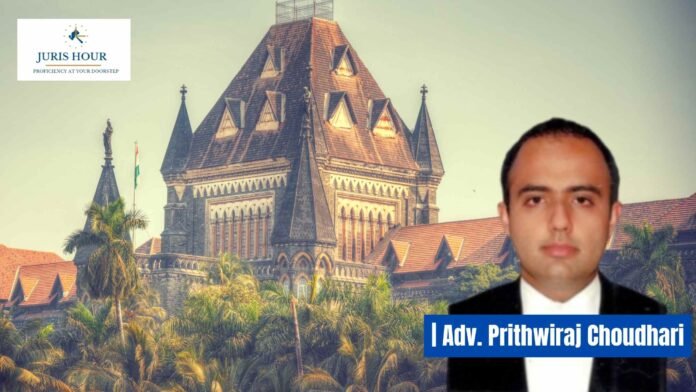
The importer was represented by Advocate Prithwiraj Choudhari.
Membership Required to Access Case Details & Order Copy
To view the complete Case Details and Download Order Copy, you must have an active membership. Please subscribe to continue.

