
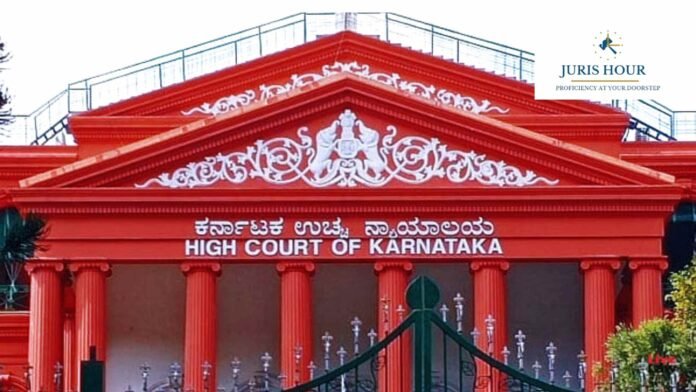
The Karnataka High Court has granted significant relief to a large group of serving and retired Central Tax officials by setting aside the Central Administrative Tribunal’s restriction limiting their consequential arrears from revised pay scales to only three years preceding the filing of their original applications.
A Division Bench comprising Justice S.G. Pandit and Justice K. Manmadha Rao allowed a batch of seven writ petitions and held that the petitioners would be entitled to consequential benefits flowing from the revised pay granted to them from April 21, 2004.
The Court relied, among other authorities, upon the Supreme Court’s ruling in Union of India Through its Secretary and Others v. SGT Girish Kumar and Others and the treatment accorded to similarly situated employees in proceedings originating before other Benches of the Central Administrative Tribunal.
Buy Now: E-Magazine: 1000+ Landmark GST Judgments (2017–2026)
The Central Administrative Tribunal, Bengaluru Bench, had accepted the substantive claim relating to upgraded pay scales. It had extended the higher pay scale under the Office Memorandum dated April 21, 2004 notionally from January 1, 1996 and actually from April 21, 2004.
However, while granting the main relief, the Tribunal restricted the consequential recovery of arrears to three years preceding the filing of the respective original applications.
It was this restriction—not the underlying entitlement to the upgraded pay scale—that the employees challenged before the Karnataka High Court.
Significantly, the Union of India and its authorities had not challenged the portion of the Tribunal’s orders extending the benefit of upgraded pay scales. The High Court recorded that the authorities had also stated that the relevant portion had already been implemented for some petitioners and was in the process of implementation for others.
The Tribunal had taken a critical view of the delay on the part of the employees in approaching the judicial forum.
According to the Tribunal, despite the issuance of the Office Memorandum dated April 21, 2004, the employees did not challenge the position at the earliest opportunity and approached the Tribunal only around 20 years later, after similarly situated persons who had moved judicial forums earlier had succeeded.
The CAT consequently treated them as “fence sitters”.
Nevertheless, it held that the delay could be condoned for purposes of granting the main relief because extending the revised pay scale would not affect third-party rights. It therefore granted the higher pay-scale benefit notionally from January 1, 1996 and actually from April 21, 2004.
For the monetary arrears, however, the Tribunal invoked the principles governing recurring or successive wrongs and held that the long delay would affect the consequential monetary claim. It accordingly restricted recovery of arrears to three years before the filing of the applications.
Before the High Court, Senior Counsel Puthige R. Ramesh, appearing for the petitioners, argued that once the Tribunal had concluded that the employees were entitled to the revised pay scale from the relevant retrospective date, it could not restrict the resulting arrears merely to three years preceding the filing of their applications.
The petitioners relied upon decisions involving similarly situated employees before different CAT Benches across the country. They contended that such employees had been granted the revised pay scale and consequential benefits without the restriction imposed by the Bengaluru Bench.
Reliance was also placed upon the Supreme Court’s decision in SGT Girish Kumar, which had considered the earlier ruling in Union of India v. Tarsem Singh. The petitioners argued that the principle laid down by the Supreme Court militated against restricting their monetary benefit to three years in the circumstances of the case.
The petitioners further highlighted the Hyderabad CAT proceedings, where the revised pay scale had been granted from January 1, 1996 without a similar restriction on arrears.
The Union of India had challenged that decision before the Telangana High Court in W.P. No. 10490 of 2024. The High Court rejected the Union’s challenge on August 9, 2024. The Union thereafter approached the Supreme Court through SLP (Civil) Diary No. 59005 of 2024, which was dismissed on February 28, 2025.
The Union of India defended the Bengaluru CAT’s approach on the ground that the employees had approached the Tribunal after an approximately 20-year delay.
According to the respondents, such extraordinary delay justified restricting the monetary benefit to the three years immediately preceding the original applications.
The Union, however, did not dispute the dismissal of its Special Leave Petition arising from the Hyderabad CAT matter and the Telangana High Court’s decision.
The respondents additionally pointed out that the grant of arrears for the period January 1, 1996 to 2004 by the Allahabad and Delhi Benches of the CAT had been challenged before the respective High Courts and that stays had been granted in relation to that period.
An important development took place during the hearing.
The petitioners filed a memo dated July 22, 2026 restricting their immediate claim for actual arrears to the period commencing April 21, 2004. They nevertheless reserved liberty to claim benefits from January 1, 1996 if the Union ultimately decided to extend such benefit to other similarly situated employees from that earlier date.
The memo explained that several petitioners had already retired and some had even died. With a view to bringing the prolonged litigation to an end, they did not press their claim for actual revised-pay benefits for the period before April 21, 2004, without prejudice to their right to receive the same treatment if the department subsequently extended the benefit from January 1, 1996 to others.
The High Court accepted this position and proceeded to consider the claim for arrears from April 21, 2004.
The Division Bench noted that the Union and its authorities had not questioned the Tribunal’s direction extending the upgraded pay-scale benefit under the April 21, 2004 Office Memorandum notionally from January 1, 1996.
The Tribunal’s finding concerning the underlying pay-scale entitlement had therefore attained significance in deciding whether consequential monetary benefits could still be curtailed.
The High Court observed that once the petitioners had been held entitled to revised pay scales, the consequential benefits flowing from that determination followed.
It also took note of decisions of CAT Benches in Kerala, Hyderabad and West Bengal, where similarly situated employees had been granted the revised pay scale from January 1, 1996 together with consequential benefits.
A crucial factor in the High Court’s reasoning was parity of treatment.
The Bench noted that the Hyderabad CAT’s decision granting revised pay scales and consequential benefits had been challenged before the Telangana High Court, but the Union’s writ petition was dismissed. Its subsequent Special Leave Petition was also dismissed by the Supreme Court.
Against this backdrop, the Karnataka High Court observed that when other CAT Benches had granted consequential benefits to similarly situated employees, the petitioners before it could not be treated differently.
The Court referred to the Supreme Court’s recent decision in SGT Girish Kumar, observing that where a benefit is recognised by policy and affirmed through judicial pronouncements, its application “cannot be selective or uneven.”
The observation became central to the outcome of the dispute. The Court effectively rejected a situation in which employees occupying a comparable position would receive materially different treatment merely because their proceedings arose before different forums.
Following the Supreme Court’s ruling in SGT Girish Kumar and the Telangana High Court’s decision—which had been affirmed upon dismissal of the Union’s SLP—the Karnataka High Court allowed all the writ petitions.
It specifically quashed the portions of the Bengaluru CAT’s orders that had restricted arrears to only three years before the dates on which the employees filed their respective original applications.
Membership Required to Access Case Details & Order Copy
To view the complete Case Details and Download Order Copy, you must have an active membership. Please subscribe to continue.

