
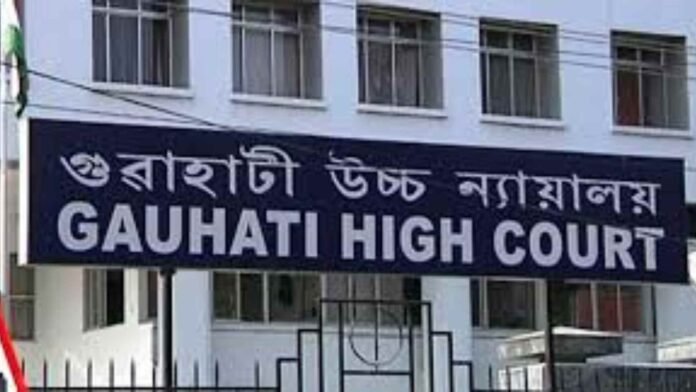
The Itanagar Bench of the Gauhati High Court has rejected an application for anticipatory bail filed by Bhuban Nath in connection with an alleged fake GST invoice and tax-payment fraud case involving government liabilities of ₹3.12 crore.
The bench of Justice Budi Habung, by order dated August 25, 2026, declined to exercise the discretionary jurisdiction under Section 482 of the Bharatiya Nagarik Suraksha Sanhita (BNSS), 2023, and rejected the applicant’s prayer for pre-arrest bail citing that the allegations were serious and that the applicant’s custodial interrogation could be necessary for an effective and proper investigation.
According to the prosecution case recorded by the High Court, the proprietor of M/s Kiko Enterprises, Hissam, had entrusted an aggregate amount of ₹57 lakh to the accused persons, including the applicant, during the period from August 25, 2024 to February 7, 2025.
Buy Now: 130 GST Judgments – E-Magazine July 2026
The money was allegedly entrusted for filing GST returns and making GST and other tax payments on behalf of the firm. The prosecution alleges that instead of making the required tax payments, the accused persons generated and furnished fake GST invoices and inputs, resulting in tax liabilities allegedly amounting to ₹3,12,87,855.
The allegations therefore went beyond a simple dispute concerning repayment of money. The central allegation before the Court was that funds specifically entrusted for discharge of GST and other tax liabilities were allegedly not used for that purpose and that purportedly fake GST documentation was generated instead.
The Court noted that after the outstanding tax liabilities came to light, the parties executed a deed of agreement on February 9, 2026.
Under the agreement, the accused persons acknowledged having received ₹57 lakh from the informant and also acknowledged the outstanding government liability of ₹3,12,87,855. They undertook to discharge the liability within one month from the date of the agreement and agreed to pay the amount with interest in case of default.
As part of the arrangement, a post-dated cheque dated March 30, 2026 for ₹3,12,87,855 was issued to the informant. However, the cheque was subsequently dishonoured and returned unpaid. This led to the lodging of the FIR alleging offences including cheating, criminal breach of trust, forgery and dishonest misappropriation of the amount intended for payment of taxes.
The applicant sought anticipatory bail while submitting that he was attempting to arrange funds for repayment to the informant. His counsel also assured the Court that the applicant was ready and willing to cooperate with the investigation and argued that protection from arrest would enable him to arrange the necessary amount for repayment.
The prosecution opposed the application, contending that the investigation had already yielded prima facie material indicating the applicant’s involvement in the alleged offences.
A significant factor considered by the High Court was the statement allegedly made by co-accused Shayam Ghatani, who had already been arrested and subsequently released on bail.
According to the Additional Public Prosecutor, the co-accused had stated before the investigating officer that the fake GST invoices were generated by the present applicant. The prosecution also informed the Court that the applicant had failed to appear before the investigating officer despite receiving a notice under Section 35(3) requiring his appearance.
The prosecution consequently argued that custodial interrogation was necessary for a proper investigation and that releasing the applicant on bail at that stage could prejudice the prosecution case.
The court observed that the allegations were serious and could not be characterised merely as a failure to repay the amount received from the informant.
The Court specifically noted that ₹57 lakh had allegedly been entrusted for making GST and other tax payments, but the payments were allegedly not made and fake GST invoices were purportedly generated instead.
The Court also attached significance to the subsequent agreement, under which the accused persons acknowledged both receipt of the ₹57 lakh and the ₹3.12 crore outstanding government liability. The issuance and subsequent dishonour of a post-dated cheque for the same amount were also taken into consideration.
The High Court observed that the circumstances disclosed in the record required further investigation. In particular, the Court considered the acknowledgement of the government liability, the post-dated cheque and its dishonour, as well as the statement of the arrested co-accused allegedly implicating the applicant.
The Court also noted that the applicant had not appeared before the investigating officer despite the issuance of a notice requiring his attendance.
These circumstances became relevant to the Court’s assessment of whether pre-arrest protection should be granted while the investigation remained underway.
The High Court took into account several factors: the nature and gravity of the allegations, the substantial amount involved, the alleged use of forged or fake GST invoices, the material collected during investigation, the statement of the arrested co-accused allegedly implicating the applicant, and the applicant’s failure to appear before the investigating officer despite notice.
The Court concluded that the applicant’s custodial interrogation may be necessary for effective and proper investigation of the case.
Accordingly, the Court held that the applicant had failed to make out a case for extending the benefit of pre-arrest bail under Section 482 of the BNSS.
The Gauhati High Court ultimately rejected the prayer for anticipatory bail and disposed of the application. The Court directed that the case diary be returned to the Additional Public Prosecutor, Arunachal Pradesh.
Membership Required to Access Case Details & Order Copy
To view the complete Case Details and Download Order Copy, you must have an active membership. Please subscribe to continue.

