
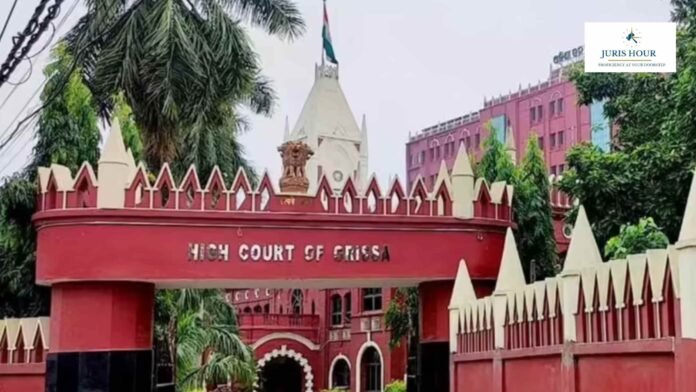
The Orissa High Court at Cuttack has disposed of a writ petition challenging a Service Tax adjudication order for the tax periods 2011-12 to 2014-15, granting the petitioner eight weeks’ time to pursue an appropriate appeal before the Customs, Excise and Service Tax Appellate Tribunal (CESTAT). The High Court’s order came after the Department conceded that the controversy was governed by the Supreme Court’s subsequent decision in Commissioner of Customs v. M/s. Canon India Pvt. Ltd..
The Division Bench comprising Justice Manash Ranjan Pathak and Justice Murahari Sri Raman has directed that matters pending before CESTAT involving the jurisdictional objection should be decided in accordance with its ruling. Where CESTAT orders had been challenged before the Supreme Court or High Courts on the same jurisdictional ground, those proceedings were to be disposed of in accordance with the ruling and the matters restored to CESTAT for adjudication on merits.
Buy Now: 70+ Judgements Indirect Tax – July 2026 | E-Magazine
The petitioner had questioned the adjudication order on several grounds. The order had been passed without jurisdiction and was contrary to the applicable principles governing taxation of works contracts and sub-contracts. The petitioner also contended that the adjudication proceedings were barred by limitation and that the statutory ingredients necessary for exercising jurisdiction under Section 73 of the Finance Act, 1994 were absent.
The dispute had remained pending before the Orissa High Court in view of another legal issue During the present proceedings, the petitioner informed the High Court that the Supreme Court proceedings referred to in the earlier order had since been disposed of and that the decision was reported as Commissioner of Customs v. M/s. Canon India Pvt. Ltd., (2025) 4 SCC 509. The Department, represented by its Senior Standing Counsel, conceded that the present matter was governed by the observations made by the Supreme Court in that decision.
The Supreme Court’s ruling had reviewed its earlier decision in Canon India on the question of whether officers of the Directorate of Revenue Intelligence (DRI) could issue show-cause notices under Section 28 of the Customs Act, 1962. The Court clarified that the earlier decision had not considered certain relevant notifications and circulars that empowered DRI officers, and had also not adequately considered the statutory scheme governing the appointment and functions of “proper officers.”
The Supreme Court accordingly reviewed the earlier ruling to the extent it concerned the jurisdiction of DRI officers to issue show-cause notices. At the same time, it expressly clarified that its earlier findings concerning limitation had neither been considered nor reviewed and therefore remained undisturbed.
The Supreme Court also dealt with the Delhi High Court’s decision in Mangali Impex. It held that the Delhi High Court had not adequately considered the policy followed by the Customs Department since 1999 concerning exclusion of the jurisdiction of other proper officers once a particular proper officer had issued a show-cause notice.
The Supreme Court therefore set aside the Mangali Impex decision and approved the view taken by the Bombay High Court in Sunil Gupta. It further upheld the constitutional validity of Section 97 of the Finance Act, 2022, which retrospectively validated certain show-cause notices issued under Section 28 of the Customs Act.
Importantly, the Supreme Court concluded that DRI officers, Customs Preventive officers, Directorate General of Central Excise Intelligence officers, Commissionerates of Central Excise and similarly situated officers were proper officers for the purposes of Section 28 and were competent to issue show-cause notices.
The Supreme Court’s decision also laid down how pending matters involving challenges to the jurisdiction of the “proper officer” were to be handled.
Where show-cause notices had been challenged directly before High Courts through writ petitions, the concerned High Courts were directed to dispose of such petitions in accordance with the Supreme Court’s ruling and restore the notices for adjudication by the proper officer. Where an order-in-original had already been challenged before a High Court on the ground of lack of jurisdiction, the High Court was directed to grant the assessee eight weeks to prefer an appropriate appeal before CESTAT.
The Orissa High Court did not adjudicate the petitioner’s substantive challenge to the Service Tax demand on merits. Instead, in view of the submissions of both sides and the Department’s concession that the matter was governed by the Supreme Court’s ruling, the High Court disposed of the writ petition by granting the petitioner eight weeks to prefer an appropriate appeal before CESTAT.
Thus, the High Court’s order effectively shifts the dispute to the statutory appellate forum. The petitioner will now have eight weeks from the date of the High Court’s order to take appropriate appellate proceedings before CESTAT.
The Orissa High Court has not recorded a final determination on the petitioner’s substantive objections relating to taxation of works contracts and sub-contracts, limitation, or the alleged absence of jurisdictional ingredients under Section 73 of the Finance Act, 1994.
Membership Required to Access Case Details & Order Copy
To view the complete Case Details and Download Order Copy, you must have an active membership. Please subscribe to continue.
Read More: 365-Day Stay Limit U/s 254(2A) Not Absolute When Assessee Isn’t Responsible for Delay: Allahabad HC

