
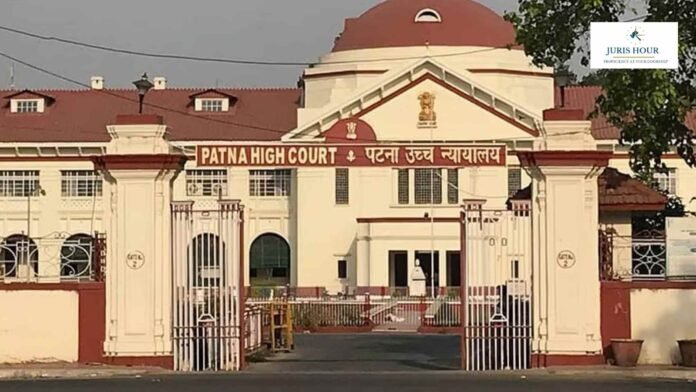
The Patna High Court has set aside income-tax reassessment proceedings initiated against a senior citizen after finding that the very foundation of the proceedings was erroneous information supplied by the assessee’s bank regarding an alleged ₹12.50 crore fixed deposit.
The Bench of Justice Rajeev Ranjan Prasad and Justice Ramesh Chand Malviya has observed that the reassessment action could not be sustained when the information relied upon by the Income Tax Department was admittedly incorrect and the alleged escapement of income did not satisfy the statutory threshold for reopening the assessment beyond three years.
The bench not only set aside the impugned reassessment-related orders but also directed the bank to pay ₹25,000 towards litigation costs to the petitioner, observing that he had suffered mental agony and monetary implications because of the erroneous information furnished by the bank.
Buy Now: 80+ Income Tax Judgments | E-Magazine July 2026
The petitioner, a senior citizen deriving income primarily from salary and bank interest, was subjected to reassessment proceedings after information was received by the Income Tax Department under information code CIB-403. According to the information available with the Department, the petitioner had allegedly made a term deposit of ₹12,50,00,000 during Financial Year 2014-15.
On the basis of this information, the Assessing Officer issued a show-cause notice dated March 23, 2022 under Section 148A(b) of the Income Tax Act, alleging that the petitioner had not filed his return for Assessment Year 2015-16 and that the large term deposit represented income that had escaped assessment.
The Department’s information also showed salary income of ₹4,07,248 and bank interest of ₹73,652. Treating the alleged ₹12.50 crore deposit along with other amounts as unexplained income, the Department proceeded on the premise that approximately ₹12.54 crore had escaped assessment.
The petitioner disputed the basic factual premise underlying the reassessment. According to him, he had never made a ₹12.50 crore investment during the relevant year. His actual fixed deposit was only ₹12.50 lakh, and that too represented a renewal of an earlier investment.
The discrepancy was subsequently confirmed by the bank itself. In a certificate dated September 26, 2024, Union Bank of India stated that the petitioner had an FDR of ₹12,50,000 for FY 2014-15/AY 2015-16. The bank further acknowledged that the ₹12.50 crore figure appearing in the Income Tax proceedings was the result of a “technical error or system fault.”
The High Court noted that the bank’s certificate had not been disputed by the Income Tax Department and that counsel appearing for the bank stood by the certificate.
A significant factor in the High Court’s decision was the Department’s concession regarding the incorrect information. During the hearing, the Senior Standing Counsel for the Income Tax Department did not dispute that the Section 148A(b) notice dated March 23, 2022 had been issued on the basis of wrong information furnished by the bank.
The Court therefore found that the foundation of the reassessment proceedings was demonstrably defective. It recorded that the bank had itself confirmed that the alleged ₹12.50 crore transaction was attributable to a technical or system error.
The error was not merely a numerical discrepancy. According to the Court, it had a direct bearing on whether the Department was legally entitled to reopen the assessment at all.
The petitioner contended that once the alleged ₹12.50 crore investment was corrected to ₹12.50 lakh, the escaped income fell far below the statutory threshold required for invoking the extended period of limitation under Section 149(1)(b).
The petitioner further submitted that the actual amount of escaped income was only ₹17,84,197 and therefore the reopening notice issued in April 2022 was beyond the ordinary three-year limitation period. Under the amended reassessment regime, the extended period could be invoked in specified cases involving evidence of escaped income represented in the form of an asset amounting to ₹50 lakh or more.
The High Court placed considerable reliance on the legislative scheme introduced by the Finance Act, 2021, which substantially changed the law relating to reassessment.
The Court referred to the Supreme Court’s ruling in Union of India v. Rajeev Bansal and the Supreme Court’s decision in Union of India v. Ashish Agarwal, as well as its own earlier decision in Ankit Agarwal v. Principal Chief Commissioner of Income Tax.
The Court explained that the new reassessment framework was intended to reduce uncertainty for taxpayers by reducing the ordinary period for reopening an assessment from six years to three years. The extended period of up to ten years was reserved for specified cases involving evidence of concealed income of ₹50 lakh or more.
Thus, where the alleged escapement was below ₹50 lakh, the normal three-year limitation period would apply.
The judgment also dealt with the requirement of an effective show-cause notice under Section 148A(b).
Following the principles laid down by the Supreme Court, the High Court reiterated that an effective notice under Section 148A(b) must be accompanied by the relevant information and material relied upon by the Revenue. The taxpayer must be provided a meaningful opportunity to respond to the material forming the basis of the proposed reassessment.
The Court referred to its earlier decision in Ankit Agarwal, where it had held that merely issuing a notice and securing no response from the assessee does not automatically make the notice legally compliant.
In the present case, the problem went even deeper because the material forming the basis of the notice itself contained incorrect information.
Following the initial notice, the petitioner did not respond, stating that as a senior citizen he was not familiar with accessing emails and was unaware of the notices being issued electronically.
The Department thereafter proceeded with the reassessment. An ex parte assessment order was passed under Sections 147, 144 and 144B on February 12, 2024, followed by a demand notice under Section 156. Subsequently, penalty proceedings were also initiated.
The Department contended before the High Court that the petitioner had failed to file his return and had also failed to respond to the Section 148 notice. It maintained that the reassessment was based on material available on the Insight Portal and that the assessment ultimately detected concealed income of ₹17,84,197.
The Revenue also disputed the petitioner’s allegation that the Section 148 notice had been issued manually in breach of the faceless reassessment framework.
According to the Department, the notice had been issued online through the Income Tax Business Application using a digital signature. It relied upon the CBDT notification dated March 29, 2022 to contend that reassessment notices were subject to automated allocation and were to be issued in a faceless manner to the extent contemplated by law.
However, the High Court ultimately found it unnecessary to sustain the reassessment proceedings once the fundamental factual basis for the Section 148A(b) notice stood disproved.
The Court concluded that, given the admitted factual position and the applicable law, the notice issued on March 23, 2022 under Section 148A(b) for AY 2015-16 was hit by the reduced limitation period.
Importantly, the Department’s Senior Standing Counsel fairly conceded towards the end of the hearing that, having regard to the legal position emerging from the Supreme Court and Patna High Court decisions, no notice under Section 148A(b) could have been issued on March 23, 2022 in respect of AY 2015-16.
The Court accordingly set aside the impugned orders in terms of the prayers made in the writ petition.
The High Court also took note of the consequences suffered by the petitioner as a result of the erroneous bank information.
The Bench observed that the petitioner had been compelled to undergo mental agony and incur monetary expenditure in contesting proceedings initiated on the basis of incorrect information supplied by the bank.
Consequently, the Court directed the bank to pay ₹25,000 towards litigation costs within six weeks. It clarified that failure to make the payment within the stipulated period would result in recovery in accordance with law.
Membership Required to Access Case Details & Order Copy
To view the complete Case Details and Download Order Copy, you must have an active membership. Please subscribe to continue.

