
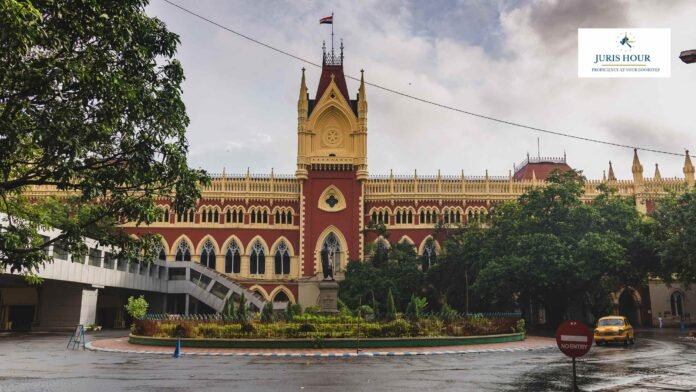
The Calcutta High Court has permitted a registered GST taxpayer to pursue a statutory appeal against an ex parte adjudication order passed under Section 73 of the Central Goods and Services Tax Act, 2017, after taking note of medical exigencies affecting the partners of the firm.
The bench of Justice Smita Das De has observed that although an alternative statutory remedy under Section 107 of the CGST Act was available, the circumstances of the case warranted judicial intervention to protect the petitioner from prejudice.
The petitioner, a partnership firm engaged in events, exhibitions, conventions and trade-show organisation and assistance services, was registered under the West Bengal GST Act, CGST Act and IGST Act.
Buy Now: 130 GST Judgments – E-Magazine July 2026
The tax authorities had initially intimated the petitioner by email on July 4, 2019, regarding an apparent discrepancy between ITC reflected in GSTR-3B and GSTR-2A for FY 2018-19. According to the information available with the Directorate of Commercial Taxes, West Bengal, the petitioner appeared to have availed excess ITC amounting to approximately Rs. 12.55 lakh.
The petitioner subsequently furnished a reconciliation statement. It explained that inward supplies received between January and March 2018 had resulted in ITC of approximately Rs. 13.17 lakh being availed.
The petitioner further explained that ITC of Rs. 60,300 pertaining to FY 2017-18 had been availed in FY 2018-19. After taking that amount into account, the petitioner claimed that its eligible ITC for FY 2018-19 stood at approximately Rs. 12.57 lakh. Against this, the actual ITC claimed was approximately Rs. 12.55 lakh, leaving an unclaimed balance of about Rs. 1,601.64.
According to the record, since the petitioner did not deposit the alleged excess ITC of approximately Rs. 12.55 lakh, the GST authorities issued a show cause notice in Form GST DRC-01 dated December 4, 2023, under Section 73(1) of the CGST Act.
The proceedings culminated in an adjudication order under Section 73(9), issued in Form GST DRC-07 on January 25, 2024. The petitioner challenged this ex parte order before the High Court.
Before the High Court, the petitioner submitted that it could not file a reply to the show cause notice because of medical exigencies involving the partners of the firm.
It was argued that the assessment proceedings had not been conducted in accordance with law and that the petitioner had not received an adequate and effective opportunity to present its case before the ex parte order was passed.
The petitioner therefore contended that the order suffered from gross procedural irregularities and violated the principles of natural justice. It sought permission to pursue the statutory appellate remedy upon complying with the applicable pre-deposit requirement.
The State authorities opposed the petitioner’s submissions. Their case was that sufficient opportunities had been provided to the firm to respond to the show cause notice.
The authorities pointed out that dates had also been fixed for personal hearing on two occasions, but the petitioner failed to avail those opportunities. According to the State, the failure to participate in the proceedings justified the passing of the adjudication order ex parte.
The State further relied on the alternative statutory remedy available under Section 107 of the CGST Act, under which an appeal is required to be filed within three months from the date of communication of the order, subject to a further condonable period of one month.
After considering the submissions and the material on record, the High Court held that the petitioner had made out a prima facie case warranting interference at that stage.
Importantly, the Court took judicial note of the medical documents placed on record concerning the medical exigencies faced by the partners of the petitioner firm.
The Court acknowledged that the petitioner had an alternative statutory remedy of appeal under Section 107 of the CGST Act. However, it held that the availability of such a remedy could not be considered in isolation in the particular circumstances of the case.
The Court specifically took into account the substantial amount of tax, interest and penalty imposed under the impugned order, as well as the medical circumstances pleaded by the petitioner. It observed that relegating the petitioner to the appellate forum without any protection could cause prejudice.
Rather than setting aside the GST demand outright, the High Court adopted a balanced approach. It disposed of the writ petition while permitting the petitioner to avail the statutory appellate remedy subject to specified conditions and safeguards.
The Court directed the petitioner to file an appeal before the appellate authority under Section 107 within four weeks from the date of communication of the High Court’s order. The appeal would have to be accompanied by the statutory pre-deposit as well as a cost of Rs. 30,000 payable in favour of the State Legal Services Authority, High Court, Calcutta.
The appellate authority was directed to entertain the appeal after being satisfied that the cost imposed by the High Court had been paid.
The Court further directed the appellate authority to dispose of the appeal expeditiously, preferably on or before November 30, 2026. At the same time, the petitioner was cautioned against seeking unnecessary adjournments during the appellate proceedings.
The High Court also clarified that its observations should not influence the statutory appellate authority while deciding the matter.
The appellate authority has been directed to independently examine the appeal in accordance with law and on the basis of the material available on record. Thus, the High Court’s order does not amount to an adjudication on the substantive question of whether the petitioner had actually availed excess ITC.
Membership Required to Access Case Details & Order Copy
To view the complete Case Details and Download Order Copy, you must have an active membership. Please subscribe to continue.

