
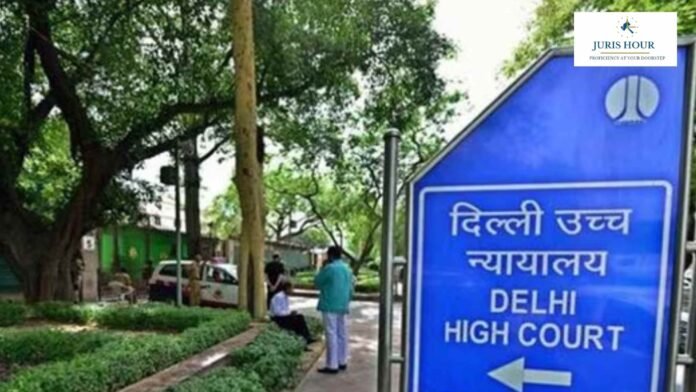
The Delhi High Court has disposed of a batch of 48 writ petitions concerning the validity and service of GST-related notices and orders, permitting the petitioners to avail the remedies laid down by the Punjab and Haryana High Court in Luxmi Traders v. Union Territory of Chandigarh & Ors.
The Bench of Justice Anil Khetarpal and Justice Manmeet Pritam Singh Arora has directed that where an appeal against such an order had already been dismissed on limitation grounds, the appellate order could be set aside and the appeal restored to its original number for adjudication on merits.
The batch of petitions involved challenges to two sets of notifications. According to the High Court’s order, the petitioners challenged Notification No. 09/2023 dated March 31, 2023, issued by the Central Government, along with the corresponding notification dated June 22, 2023 issued by the Government of NCT of Delhi. They also challenged Notification No. 56/2023 dated December 28, 2023 issued by the Central Government and the corresponding Delhi Government notification dated July 11, 2024.
Buy Now: 130 GST Judgments – E-Magazine July 2026
During the hearing, counsel appearing for the parties informed the Court that the validity and correctness of the impugned notifications were already pending consideration before the Supreme Court. The parties consequently agreed that they would remain bound by the ultimate judgment that may be rendered by the Supreme Court on the issue.
A significant aspect of the Delhi High Court’s order concerns the manner in which GST show-cause notices and adjudication orders are served on taxpayers.
The Court considered the judgment of the Punjab and Haryana High Court in Luxmi Traders v. Union Territory of Chandigarh & Ors., reported at (2026) 44 Centax 371 (P&H). That judgment examined the practice of uploading notices and orders on the GST web portal for the purpose of effecting service upon an assessee.
The Punjab and Haryana High Court had held that merely uploading a show-cause notice on the common portal cannot, by itself, be treated as sufficient service unless receipt of the notice is acknowledged or a reply is filed by the assessee.
This principle assumes considerable importance because an assessee who does not become aware of a notice uploaded on the portal may fail to file a response. If the department thereafter proceeds ex parte, the taxpayer may face an adjudication order without having had an effective opportunity to respond to the allegations.
The Luxmi Traders principles, reproduced in the Delhi High Court’s order, provide specific consequences where a show-cause notice was served only by uploading it on the common portal and the assessee did not respond.
Where an ex parte adjudication order has been passed because the assessee did not file a reply to a notice served only through portal upload, the proceedings are to be restored to the stage of issuance of the show-cause notice. The assessee is then permitted to file a reply, after which the department must proceed further while providing the required opportunity of hearing.
The principle therefore prevents the portal-upload mechanism from automatically converting into a basis for an irreversible ex parte adjudication when there is no indication that the taxpayer actually received or acknowledged the notice.
The ruling also addresses the limitation period for filing an appeal against an adjudication order.
According to the principles reproduced by the Delhi High Court, where an order-in-original has been passed after contest but has been served only through uploading on the common portal, the period of limitation for filing an appeal would not be triggered merely on that basis. An aggrieved assessee would consequently retain the right to file an appeal within the period contemplated by the directions in Luxmi Traders.
The directions also cover cases in which the show-cause notice was uploaded only on the portal, an ex parte adjudication order followed for want of a reply, and an appeal against that order was subsequently rejected on the ground of delay.
The adjudication order as well as the appellate order are liable to be set aside under the framework laid down in Luxmi Traders. The proceedings are restored to the stage of issuance of the show-cause notice, enabling the assessee to submit a response, following which the department is required to proceed after granting due opportunity of hearing.
The respondents attempted to distinguish the Punjab and Haryana High Court’s judgment from the cases before the Delhi High Court. However, the Division Bench recorded that the respondents’ counsel, despite making a sincere attempt, was unable to distinguish the judgment.
The Delhi High Court accordingly proceeded on the basis of the legal position emerging from Luxmi Traders.
In view of the position before it and with the consent of counsel appearing for the parties, the Delhi High Court disposed of the entire batch of 48 writ petitions along with the pending applications. Importantly, the Court granted liberty to the petitioners to avail such remedy as may be available to them in terms of paragraph 60 of the Luxmi Traders judgment.
Thus, the Court did not independently decide the validity of the two sets of challenged notifications in this batch. Instead, it recognised that the underlying validity/correctness of the notifications was already before the Supreme Court and directed the parties to remain bound by the Supreme Court’s eventual determination.
Membership Required to Access Case Details & Order Copy
To view the complete Case Details and Download Order Copy, you must have an active membership. Please subscribe to continue.

