
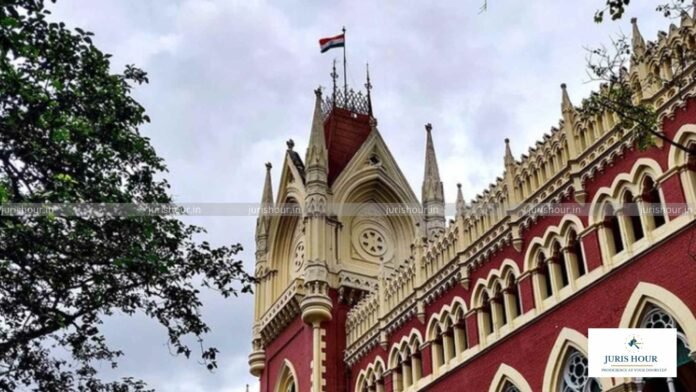
The Calcutta High Court has set aside a GST refund rejection order denying a claim of ₹19,21,153 towards unutilized Input Tax Credit (ITC) under the inverted duty structure, holding that the rejection order suffered from serious legal infirmities.
The bench of Justice Smita Das De directed the GST authorities to reconsider the claim after examining the petitioners’ documents and affording them a proper opportunity of hearing.
The case arose from a refund application filed by the petitioners, who claimed to be engaged in the manufacture of hand pumps and hand tanks, which, according to them, attracted GST at the rate of 5%. For manufacturing these products, they purchased input goods taxable at 8%, resulting in an accumulation of excess ITC because of the inverted duty structure.
Buy Now: 130 GST Judgments – E-Magazine July 2026
The petitioners had sought a refund of ₹19,21,153 for the period April 2023 to September 2023 under Section 54(3) of the CGST/WBGST Act, 2017. They also pointed out that refund of excess ITC had been granted to them for earlier periods.
However, the refund application was rejected by an order dated November 22, 2024. The authorities took the position that the petitioners, being registered taxable persons engaged in trading activity, were not entitled to a refund of unutilized ITC arising from an inverted duty structure.
Before the High Court, the petitioners contended that they had duly responded to the show-cause notices issued on September 6, 2024 and September 18, 2024. They further submitted that all supporting documents had been sent by email to the concerned authority.
According to the petitioners, despite furnishing the replies and supporting documents, the authorities failed to consider the material placed before them and proceeded to reject the refund claim. They argued that the rejection was therefore arbitrary, suffered from non-application of mind and was without jurisdiction.
The GST authorities opposed the petition and maintained that the petitioners had wrongly claimed ITC during the relevant period.
The department relied upon Annexure B submitted with the petitioners’ reply. According to the authorities, the petitioners had purchased goods taxable at 5% under HSN 8413, which were shown as “manufactured goods” in the annexure. The department argued that this indicated that the petitioners were actually engaged in trading activity rather than manufacturing.
The department therefore contended that the petitioners, being engaged in trading, were not eligible for a refund of unutilized ITC under the inverted duty structure.
The authorities also raised another issue concerning compliance with Section 16(2)(b) of the CGST Act, 2017, questioning whether the petitioners had actually made payment to their suppliers within the prescribed 180-day period.
After considering the rival submissions and examining the material on record, Justice Smita Das De found that the petitioners had made out a prima facie case warranting interference by the High Court.
The Court took note of the grounds raised in the writ petition as well as the documents annexed to it. Importantly, the Court concluded that the refund rejection order dated November 22, 2024 was “palpably wrong” and suffered from legal infirmity, irregularity and perversity.
Consequently, the Court held that the impugned order could not be sustained in law and proceeded to quash and set it aside.
Rather than deciding the substantive eligibility for refund itself, the High Court directed the petitioners to submit a comprehensive and detailed reply before the competent authority.
The petitioners have been directed to place on record all relevant documents, including proof of their status as manufacturers, details of their business and particulars of refund claims made during earlier periods. This exercise has to be completed within two weeks from the date of the Court’s order.
The concerned authority has subsequently been directed to examine the fresh reply and dispose of the matter within two weeks from its receipt. The authority must provide the petitioners an opportunity of hearing and pass a reasoned order in accordance with law.
Significantly, the High Court clarified that it was not deciding the ultimate merits of the refund claim. The writ petition was disposed of after quashing the rejection order and directing a fresh examination by the GST authority.
Thus, the Court’s ruling does not conclusively hold that the petitioners are entitled to the ₹19.21 lakh refund. Instead, it requires the GST administration to reconsider the claim after properly examining the petitioners’ manufacturing status, business details, supporting documents and other relevant issues.
Membership Required to Access Case Details & Order Copy
To view the complete Case Details and Download Order Copy, you must have an active membership. Please subscribe to continue.

