
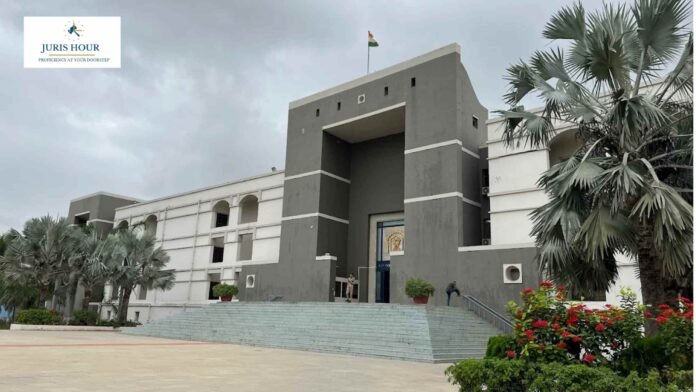
The Gujarat High Court has held that the Assessing Officer (AO) can’t pass assessment order once limit lapses as per Proviso to Section 153(2) of the Income Tax Act, 1961.
The bench of Justice A.S. Supehia and Justice Vaibhavi D. Nanavati found that the Assessing Officer had sufficient opportunity to complete the reassessment proceedings before the cut-off date but failed to do so, and therefore the proceedings arising from the reassessment notice became infructuous.
The dispute arose from reassessment proceedings initiated against the company under the Income-tax Act, 1961. The Assessing Officer had passed an order under Section 148A(d) on March 30, 2023, which was followed by issuance of a notice under Section 148 on the same date.
Buy Now: 80+ Income Tax Judgments | E-Magazine July 2026
The assessee challenged the reopening before the Gujarat High Court. Among other grounds, it contended that the information forming the basis of the reassessment proceedings had not been supplied along with the relevant material, including documents and bank statements, thereby preventing the assessee from effectively responding to the proceedings.
The assessee also argued that the Assessing Officer had failed to properly consider its response and had proceeded on the basis of a prima facie conclusion that income had escaped assessment despite the assessee’s contention that the income had already been properly taxed.
The Court, while initially dealing with the challenge, had on September 29, 2023 clarified that if a final assessment order was passed pursuant to the March 30, 2023 notice, such order would remain subject to the outcome of the writ petition.
During the subsequent proceedings, the department submitted that the limitation period for passing the assessment order for AY 2016-17 had expired on March 31, 2024.
However, the Department sought permission to pass a fresh order by relying on a communication sent by the assessee on October 3, 2023. In that communication, the assessee had requested the Income-Tax Department to keep the proceedings in abeyance until the Gujarat High Court finally decided the writ petition.
The department argued that because of this request, the Assessing Officer had not proceeded to pass the final assessment order and therefore should now be granted liberty to do so.
The Bench rejected the Department’s attempt to rely upon the assessee’s communication as justification for the delay.
The Court noted that its September 29, 2023 order had never restrained the Department from passing the final assessment order. Rather, the Court had expressly clarified that any final order passed during the pendency of the writ petition would remain subject to the outcome of the petition.
According to the Court, there was therefore no legal impediment preventing the Assessing Officer from completing the reassessment proceedings within the prescribed limitation period.
The Bench further pointed out that the assessee’s October 3, 2023 communication itself contained an important qualification. While requesting that the proceedings be kept in abeyance, the assessee had also stated that, if a contrary view was taken, it should be given an opportunity to present its case.
The Court observed that instead of clarifying the position or seeking appropriate advice from the Senior Standing Counsel representing the Revenue before the High Court, the Assessing Officer simply did not pass the assessment order before March 31, 2024.
The Court examined the procedural history and found that the Department had ample opportunity to complete the proceedings.
The order-sheet showed that the matter had been adjourned on January 16, 2024 at the request of the Senior Standing Counsel to enable filing of a reply, and it was subsequently listed on February 14, 2024. Despite these opportunities, no final assessment order was passed before the statutory deadline.
When the matter ultimately came up on July 23, 2026, the assessee raised a specific objection that the reassessment order could no longer be passed because the limitation period had expired.
The Gujarat High Court took a firm view of the Department’s failure to act within time.
The Bench observed that the Assessing Officer had remained “lethargic” in pursuing the matter with the Senior Standing Counsel and in properly interpreting the High Court’s earlier order.
The Court held that the Assessing Officer had sufficient opportunity to pass the final assessment order before the cut-off date of March 31, 2024, but failed to do so. Consequently, the statutory limitation period expired due to the Department’s own inaction.
Ultimately, the High Court disposed of the writ petition by holding that the department could no longer proceed with the impugned show cause notice by passing a final assessment order.
The Court specifically held that the proceedings had become infructuous because of the statutory limitation. Since the prescribed period for completing the assessment had already expired, the Department could not revive the reassessment proceedings by seeking liberty to pass an order after the limitation period had run out.
Membership Required to Access Case Details & Order Copy
To view the complete Case Details and Download Order Copy, you must have an active membership. Please subscribe to continue.

