
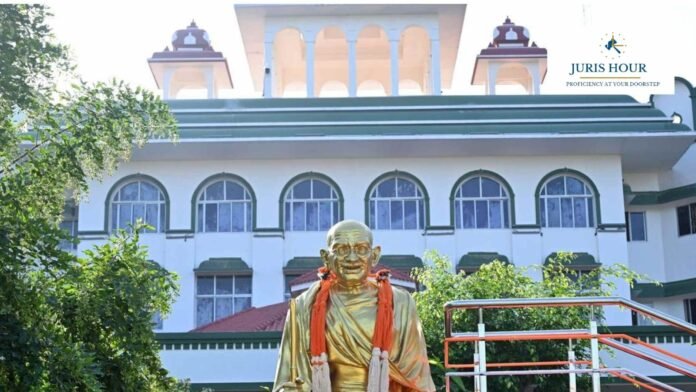
The Madurai Bench of the Madras High Court has set aside the rejection of a taxpayer’s application seeking waiver of interest and penalty under the GST Amnesty Scheme introduced through Section 128A of the Central Goods and Services Tax Act, 2017 has held thar GST Amnesty benefit can’t be denied without awaiting larger ruling on Section 128A.
Holding that the controversy surrounding the scope of the amnesty provision is already pending before the Principal Seat of the High Court, the bench of Justice C. Saravanan directed the tax authorities to reconsider the application after the larger batch of cases is decided.
The writ petition was filed challenging an order dated August 13, 2025, by which the Deputy State Tax Officer rejected the taxpayer’s application submitted in Form GST SPL-02 seeking the benefit of waiver of interest and penalty under Section 128A of the GST Act. The petitioner sought quashing of the rejection order and a direction to the authorities to reconsider the application in accordance with law.
Buy Now: GST Judgements E-Compilation – June 2026
The impugned order relied upon Circular No. 238/2024 dated October 15, 2024, to hold that the amnesty benefit was unavailable where interest had been demanded due to delayed reporting of supplies in GST returns. The authority also observed that the petitioner had failed to appear despite being given sufficient opportunity to prosecute the application.
The bench observed that the Principal Seat of the Madras High Court is already hearing a batch of matters examining whether taxpayers in similar circumstances are entitled to the benefit of the Amnesty Scheme under Section 128A of the GST Act.
Since the larger legal question is awaiting authoritative determination, the Court considered it appropriate not to decide the merits of the petition independently but instead to await the outcome of the pending proceedings.
The Court recorded that there was no dispute regarding the factual position that the petitioner had disclosed the tax liability in GSTR-1 but failed to discharge the corresponding tax liability while filing the monthly GSTR-3B returns.
It further noted that the assessment order appeared to have been passed under Section 73 of the GST enactments. Importantly, the Court observed that, prima facie, there appeared to be no statutory embargo preventing the authorities from entertaining an application under Section 128A, provided the taxpayer satisfies the conditions prescribed under the provision.
The High Court also referred to the background of the legislative amendment introducing Section 128A. It observed that there were indications that the GST Council itself recommended insertion of the provision after taking note of the practical difficulties experienced by taxpayers following the rollout of the GST regime from July 1, 2017.
According to the Court, these legislative considerations are also expected to be examined by the Principal Seat while deciding the pending batch of petitions concerning the scope and applicability of the amnesty scheme.
Without expressing any opinion on the merits of the taxpayer’s claim, Justice Saravanan remitted the matter to the jurisdictional tax authority for fresh consideration after the Principal Seat delivered its judgment on the Section 128A issues.
The Court specifically directed that, once the larger decision is pronounced, the respondent authority must reconsider the petitioner’s application and pass a fresh order strictly in accordance with the law laid down by the Principal Seat. The authority was also directed to give full effect to the judgment that will be rendered in the pending batch of Section 128A cases before Justice Senthilkumar Ramamoorthy. Consequently, the writ petition was disposed of without any order as to costs.
Membership Required to Access Case Details & Order Copy
To view the complete Case Details and Download Order Copy, you must have an active membership. Please subscribe to continue.

