
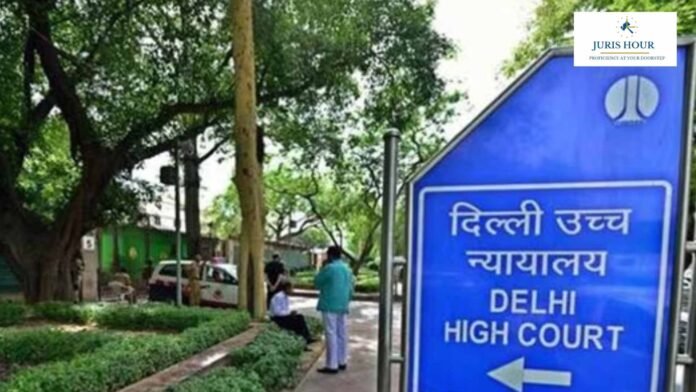
The Delhi High Court has dismissed a writ petition challenging an adjudication order confirming a GST demand of approximately ₹8.75 crore, holding that disputes over appreciation of evidence and factual findings must ordinarily be examined by the statutory appellate authority under Section 107 of the Central Goods and Services Tax (CGST) Act rather than through writ proceedings.
The Bench of Justice Anil Kshetrapal and Justice Shail Jain ruled that once an assessee has been granted adequate opportunity to participate in adjudication proceedings, the adjudicating authority is not under an obligation to repeatedly seek additional documents or clarifications before passing its order.
The bench observed that dissatisfaction with the appreciation of evidence or reasoning adopted by the adjudicating authority cannot, by itself, constitute a violation of the principles of natural justice warranting interference under Article 226 of the Constitution.
Buy Now: GST Judgements E-Compilation – June 2026
The case arose from an Order-in-Original passed under Section 74 of the CGST Act, confirming a GST demand of nearly ₹8.75 crore, along with applicable interest and penalty, against Sodexo India Services Private Limited. The demand covered eleven issues identified during GST audit proceedings.
The principal component of the demand related to the tax department’s allegation that the company’s catering services and sale of pre-packaged food products constituted a composite supply taxable at 18% GST. During the audit and adjudication process, the company had submitted replies to the audit memo, additional audit memo and show cause notice, along with agreements, invoices, reconciliations and other documentary evidence. It also participated in personal hearings before the adjudicating authority.
Before the High Court, the petitioner did not primarily dispute the merits of the tax demand. Instead, it challenged the decision-making process adopted by the adjudicating authority.
The company argued that if the adjudicating authority found the documents and explanations submitted to be inadequate, it ought to have specifically called for additional documents or clarifications before determining the tax liability. It further contended that its replies had not been properly considered and that the adjudication order had been passed mechanically, thereby violating the principles of natural justice. The petitioner relied on earlier Delhi High Court decisions in Malaysia Airlines Berhad and Future Generali India Insurance Company Ltd. in support of its plea.
Rejecting these submissions, the Court reiterated the well-settled principle that where the legislature has created a comprehensive appellate mechanism, constitutional courts ordinarily refrain from entertaining writ petitions challenging original adjudication orders.
The Bench observed that appellate authorities under Section 107 possess wide powers to examine both factual and legal issues, reassess evidence and determine the correctness and legality of adjudication orders. Allowing parties to bypass this statutory framework would undermine the legislative scheme.
The Court referred to the Supreme Court’s judgment in Assistant Commissioner of State Tax v. Commercial Steel Limited, noting that writ jurisdiction may be exercised despite the existence of an alternative remedy only in exceptional circumstances, such as Violation of fundamental rights; Breach of principles of natural justice; Lack or excess of jurisdiction; or Challenge to the constitutional validity of a statute or delegated legislation.
Examining the facts of the present case, the Court found that the petitioner had actively participated throughout the proceedings by filing detailed replies, producing documentary evidence and attending personal hearings.
The Bench held that once adequate opportunity has been provided, natural justice does not require the adjudicating authority to continue seeking further documents before reaching its conclusion.
According to the Court, questions regarding whether the material submitted was sufficient, whether additional documents ought to have been furnished, or whether the adjudicating authority correctly appreciated the evidence are issues going to the merits of the adjudication, which fall squarely within the jurisdiction of the statutory appellate authority rather than the High Court exercising writ jurisdiction.
The Court also distinguished the decisions relied upon by the petitioner, observing that neither Malaysia Airlines Berhad nor Future Generali India Insurance Company Ltd. dealt with the maintainability of writ petitions in the face of an efficacious statutory appeal or considered the Supreme Court’s ruling in Commercial Steel Limited.
Accordingly, those judgments could not be interpreted as permitting writ petitions whenever an assessee alleges inadequate appreciation of its reply or supporting documents.
Concluding that none of the recognised exceptions to the rule of alternative remedy were attracted, the Delhi High Court dismissed the writ petition while granting liberty to the petitioner to pursue the statutory appeal under Section 107 of the CGST Act.
Importantly, the Court directed that the period during which the writ petition remained pending before it shall not be counted for the purpose of limitation if the petitioner files an appeal. It further clarified that the appellate authority shall independently decide the appeal on its own merits, including the issue of limitation, without being influenced by any observations contained in the High Court’s judgment.
Membership Required to Access Case Details & Order Copy
To view the complete Case Details and Download Order Copy, you must have an active membership. Please subscribe to continue.
Read More: Belated Retraction Can’t Override Customs Evidence: Delhi High Court Upholds Gold Confiscation

