
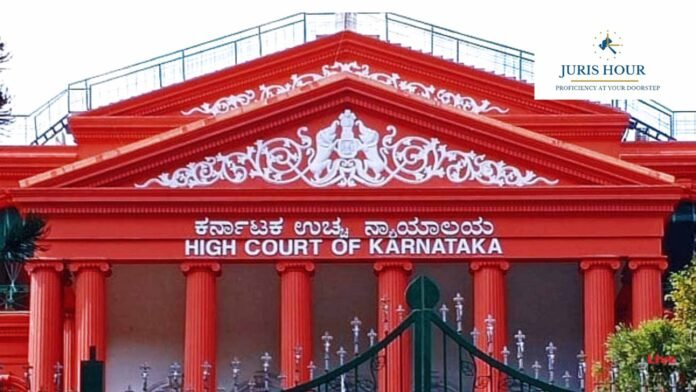
The Karnataka High Court has held that the re-transportation of machinery to the original supplier solely for testing and without any fresh consideration does not constitute a “supply” under the Goods and Services Tax (GST) law.
The bench of Justice S.G.Pandit and Justice Rajesh Rai K has observed that while the movement without an E-Way Bill attracted a statutory penalty, the State department could not levy Integrated GST (IGST) on such transportation.
The Bench dismissed the State’s writ appeal and upheld the Single Judge’s order restricting the liability to a penalty of ₹25,000 while directing the refund of the balance amount recovered from the assessee.
Buy Now: June 2026 Ultimate Legal & Taxation Combo
The appeal arose from a dispute involving assessee which had purchased hydraulic fixtures and tooling body machines from a supplier in Coimbatore in July 2020. After the machinery was delivered to the company’s manufacturing unit in Ahmednagar, Maharashtra, certain customisation was carried out. Thereafter, the machinery was transported back to the supplier in Coimbatore exclusively for testing purposes.
The machinery was transported under delivery challans but without generating the mandatory E-Way Bills. During transit, the vehicle was intercepted by the Commercial Tax Officer, Koramangala, on 3 November 2020. The authorities issued detention proceedings and notices under Section 129(3) of the CGST Act, demanding IGST and penalty. The company deposited the demanded amount, following which an ex parte order confirmed the tax and penalty. The appellate authority upheld the demand, prompting the company to approach the High Court.
The department argued that the assessee had failed to establish that the transportation of machinery back to Coimbatore formed part of the original transaction. According to the Revenue, the movement constituted a separate transaction and therefore amounted to a taxable supply.
The department submitted that Rule 138 of the CGST Rules requires the generation of an E-Way Bill before the commencement of transportation where the value of goods exceeds the prescribed threshold. Since no E-Way Bill had been generated, the authorities contended that the demand of tax and penalty was legally justified.
The company argued that the machinery was merely being sent back for testing after customisation and not pursuant to any sale or transfer involving consideration. It contended that the movement was covered by delivery challans and represented transportation for reasons other than supply.
The assessee also maintained that although there was a bona fide lapse in not generating an E-Way Bill, such procedural non-compliance could not convert a non-taxable movement into a taxable supply attracting IGST.
The Division Bench examined Section 7(1)(a) of the CGST/KGST Act, which defines “supply” as a transaction involving sale, transfer, barter, exchange, licence, rental, lease or disposal made for a consideration in the course or furtherance of business.
The Court observed that the re-transportation of the machinery to Coimbatore was solely for testing and did not involve any fresh consideration. Since consideration is an essential ingredient of a taxable supply under Section 7(1)(a), the transaction could not be treated as a supply liable to GST.
The Bench also referred to Rule 55 of the CGST Rules, which permits transportation of goods under delivery challans in specified situations, including movement for reasons other than supply. However, it clarified that such movement must ordinarily be accompanied by an E-Way Bill under Rule 138 unless specifically exempted.
Accordingly, while the Court accepted that the assessee had violated the E-Way Bill requirement, it held that such procedural breach did not justify the levy of IGST on a transaction that was otherwise outside the scope of “supply.”
Finding no infirmity in the Single Judge’s reasoning, the Division Bench affirmed the earlier order restricting the assessee’s liability to the statutory penalty of ₹25,000 under Section 129(1)(a) of the CGST/KGST Act and directing the tax authorities to refund the remaining amount deposited by the company.
The writ appeal filed by the State of Karnataka was accordingly dismissed.
Membership Required to Access Case Details & Order Copy
To view the complete Case Details and Download Order Copy, you must have an active membership. Please subscribe to continue.

