
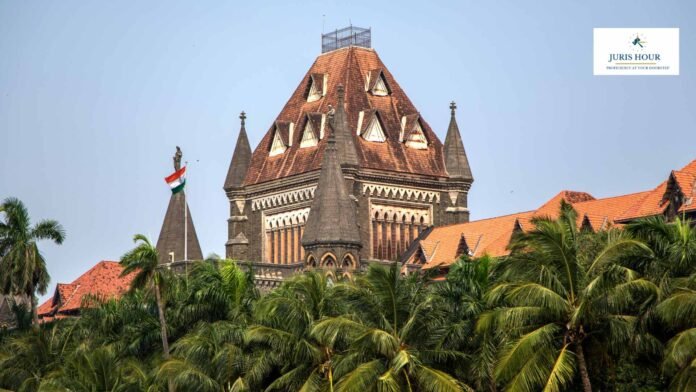
The Bombay High Court has held that a liberal and justice-oriented approach should be adopted while considering applications for condonation of delay, particularly where a charitable educational institution demonstrates bona fide reasons for the delay.
Setting aside the Income Tax Appellate Tribunal’s (ITAT) order, the bench of Justice G.S. Kulkarni and Justice Aarti Sathe condoned a 1,797-day delay in filing appeals and restored the matter to the Commissioner of Income Tax (Appeals) [CIT(A)] for adjudication on merits.
The appellant/assessee is a public charitable trust registered under the Maharashtra Public Trusts Act, 1950 and the Societies Registration Act, 1860. It operates Government-aided primary and secondary schools and a junior college in Mumbai, catering predominantly to students from economically weaker sections. The trust is registered under Section 12A of the Income Tax Act and claimed that it was entitled to exemption under Section 10(23C)(iiiab), which applies to wholly or substantially Government-financed educational institutions.
Buy Now: INCOME TAX E-COMPILATION – JUNE 2026
For AY 2018-19, the trust filed its income tax return declaring nil income. However, while processing the return under Section 143(1), the Income Tax Department assessed the trust’s income at ₹1.88 crore and raised a tax demand of over ₹82 lakh after denying the exemption under Section 10(23C)(iiiab).
According to the trust, the exemption was denied because its Chartered Accountant inadvertently claimed exemption under Section 11 instead of Section 10(23C)(iiiab) and failed to upload the requisite Form 10B along with the return.
The statutory appeal before the CIT(A), National Faceless Appeal Centre (NFAC), was filed on 24 September 2024 instead of within the prescribed limitation period, resulting in a delay of 1,797 days. The trust contended that after excluding the period covered by the Supreme Court’s COVID-19 limitation extension orders, the effective delay was 987 days. It attributed the delay to incorrect professional advice, non-receipt of the intimation under Section 143(1), and subsequent oversight after normal functioning resumed following the pandemic.
Both the CIT(A) and the ITAT declined to condone the delay, holding that the explanations furnished did not constitute “sufficient cause.” The ITAT relied upon various Supreme Court decisions emphasizing that liberal principles of condonation cannot override the law of limitation where negligence or lack of diligence is evident. Consequently, it dismissed the appeals without examining the merits of the exemption claim.
The Bombay High Court disagreed with the approach adopted by the ITAT.
The Bench observed that the Tribunal had adopted an unduly technical and pedantic approach despite the trust having furnished explanations for the delay before both appellate authorities. The Court held that these explanations deserved meaningful consideration, particularly because the case involved a charitable educational institution claiming a statutory exemption and the dispute had never been examined on merits.
The Court relied extensively on the Supreme Court’s decision in Inder Singh v. State of Madhya Pradesh (2025 SCC OnLine SC 600), which reiterates that while “sufficient cause” remains a prerequisite for condonation, courts should adopt a justice-oriented approach where the circumstances warrant adjudication on merits instead of rejecting matters solely on technical grounds of limitation.
The Bench emphasized that the Supreme Court has clarified that, in appropriate cases, the merits of a dispute should not be defeated merely because of delay, especially where substantial justice would be served by hearing the matter.
Allowing both appeals, the High Court quashed the ITAT’s order dated 30 January 2026. It condoned the delay in filing the appeals before the CIT(A) and restored the appeals to the file of the Commissioner of Income Tax (Appeals), directing the appellate authority to decide them on their merits in accordance with law.
Membership Required to Access Case Details & Order Copy
To view the complete Case Details and Download Order Copy, you must have an active membership. Please subscribe to continue.

