
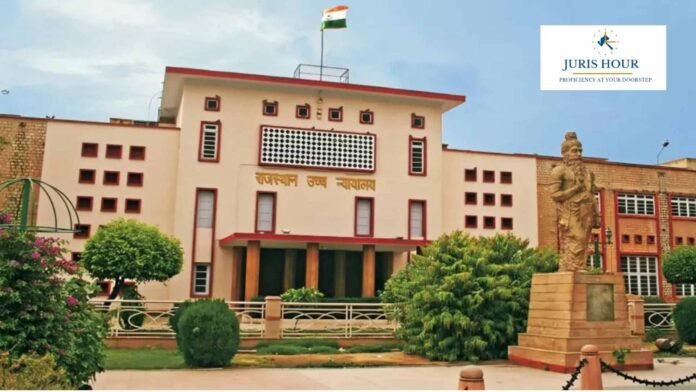
The Rajasthan High Court has held that a single writ petition challenging GST assessments for multiple assessment years is not maintainable.
The bench of Acting Chief Justice Sanjeev Prakash Sharma and Justice Maneesh Sharma exercised its extraordinary jurisdiction under Article 226 of the Constitution to restore delayed statutory appeals, allowing them to be heard on merits despite the expiry of the prescribed limitation period.
The petitioner/assessee has challenged the GST-related proceedings covering multiple assessment years. During the hearing, the respondents raised a preliminary objection that a consolidated writ petition challenging assessments relating to different years could not be entertained.
Buy Now: 50+ Judgements on Customs Valuation
The High Court accepted the preliminary objection and relied on its earlier judgment in D.B. Civil Writ Petition No. 11000/2024, decided on 26 July 2024, wherein it had categorically held that a single writ petition challenging assessments for different assessment years is not maintainable.
Following the earlier precedent, the Bench reiterated that each assessment year constitutes a separate cause of action and cannot ordinarily be clubbed into one writ petition.
After the Court indicated its view on maintainability, counsel for the petitioner narrowed the scope of relief sought. Instead of pressing the original challenge, the petitioner requested that the statutory appeals filed under Section 107 of the CGST/RGST Act be restored and heard on merits.
The petitioner submitted that although the appeals had been filed belatedly, the delay was inadvertent and deserved to be condoned in the interests of justice.
While considering the request, the High Court referred to earlier decisions where similar relief had been granted by invoking constitutional powers under Article 226. The Bench also relied on the Supreme Court’s rulings in:
- Tecnimont Private Limited (formerly Tecnimont ICB Private Limited) v. State of Punjab & Ors. (2021) 12 SCC 477
- Assistant Commissioner (CT), LTU, Kakinada & Ors. v. Glaxo Smith Kline Consumer Health Care Ltd. (2020) 19 SCC 681
The Court observed that although the Appellate Authority had correctly dismissed the appeals as barred by limitation under the GST statute, the constitutional jurisdiction of the High Court permits it, in appropriate cases, to grant equitable relief where sufficient cause exists.
The Bench held that while the statutory limitation could not be extended by the Appellate Authority, the High Court, exercising its powers under Article 226 of the Constitution, could condone the delay and direct restoration of the appeals.
Accordingly, the Court ordered that the delayed appeals be restored and heard on their merits, enabling the petitioner to pursue the statutory appellate remedy instead of being denied adjudication solely on technical grounds.
Allowing the writ petition to the limited extent, the Rajasthan High Court held that a single writ petition challenging assessments for multiple assessment years is not maintainable.
The court declined to interfere with the dismissal of the appeals on limitation by the Appellate Authority.
The court exercised its writ jurisdiction to condone the delay and directed restoration of the statutory appeals under Section 107 of the CGST/RGST Act for decision on merits.
Membership Required to Access Case Details & Order Copy
To view the complete Case Details and Download Order Copy, you must have an active membership. Please subscribe to continue.
Read More: Delhi High Court Refuses to Quash ₹5.51 Crore GST Demand, Directs Taxpayer to File Statutory Appeal

