
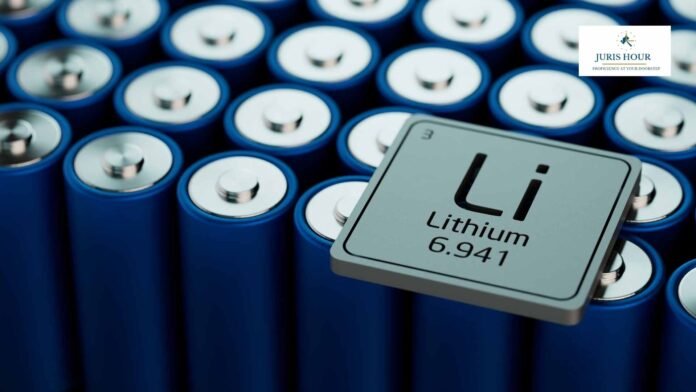
The Central Government has expanded customs duty concessions for machinery, equipment, and critical components used in electronics production, extending the benefits until March 31, 2029. The move is aimed at strengthening domestic manufacturing capabilities, encouraging investment in advanced technologies, and reducing dependence on imported finished products.
The revised exemptions, notified by the Central Board of Indirect Taxes and Customs (CBIC), come into effect immediately and primarily benefit manufacturers engaged in lithium-ion battery production, display assembly manufacturing, and wireless charging module manufacturing.
Buy Now: Must Cite Cases Laws In GST Notices via Common Portal Related Disputes
Wider Customs Relief for Lithium-Ion Battery Manufacturing
One of the most significant changes introduced through the notifications is the substantial expansion of the list of machinery eligible for concessional customs duty for lithium-ion battery manufacturing.
The government has replaced the earlier limited list with a comprehensive schedule covering 85 categories of machinery and equipment used across the entire battery manufacturing process. The revised schedule encompasses virtually every stage of production, providing broader support to companies establishing or expanding battery manufacturing facilities in India.
The eligible machinery now includes equipment used for:
- Powder preparation and material processing
- Slurry mixing
- Electrode coating
- Calendering
- Slitting operations
- Electrode stacking and winding
- Electrolyte filling
- Laser welding
- Battery formation and ageing
- Testing and quality inspection
- Final packaging
In addition to core production machinery, the customs duty concession also extends to several supporting systems that are essential for modern battery manufacturing plants. These include solvent recovery systems, heat recovery equipment, dust collection units, and effluent treatment plants, reflecting the government’s intention to support complete manufacturing ecosystems rather than isolated production stages.
Greater Clarity Through Tariff Classification
The CBIC notifications also assign specific customs tariff classifications to each category of eligible machinery. This is expected to provide greater certainty to importers and customs authorities by minimizing classification disputes and ensuring uniform implementation of the concessional duty scheme.
The detailed tariff mapping is likely to simplify the import process for manufacturers seeking to establish large-scale battery production facilities under India’s clean energy and electric mobility initiatives.
Customs Relief Continues for Display Manufacturing Inputs
Apart from battery manufacturing, the government has also extended customs duty concessions for five critical inputsused in manufacturing display assemblies designed for automotive, medical, and industrial electronic applications.
The eligible components include:
- Display cells
- Flexible Printed Circuit Assemblies (FPCAs)
- Backlight units
- Display frames
- Anisotropic Conductive Film (ACF)
However, the exemption has been specifically restricted and does not apply to display assemblies intended for products such as mobile phones, smartwatches, televisions, smart meters, or interactive flat-panel displays.
This targeted approach is intended to support specialized manufacturing segments while maintaining the existing duty structure for consumer electronics.
Concessional Duty for Wireless Charging Components
In another measure to strengthen India’s electronics manufacturing ecosystem, the Centre has granted concessional customs duty on six key components used in manufacturing wireless charging inductor coil modules for smartphones.
The notified components include:
- Nano-crystalline assemblies
- E-shields
- PET liners
- PC shims
- Coils
- Neodymium magnets
To facilitate consistent implementation, the CBIC notifications provide detailed technical descriptions of each component, reducing the scope for varying interpretations at different customs ports.
Boost to Domestic Manufacturing Ecosystem
The latest customs duty concessions align with the government’s broader policy objective of developing India into a global manufacturing hub for advanced electronics, energy storage technologies, and electric mobility.
By reducing the import cost of sophisticated manufacturing machinery and critical production inputs, the measures are expected to encourage fresh investments in domestic production facilities, improve competitiveness, and strengthen local value addition.
Manufacturers importing the notified machinery and components will be eligible for the concessional customs duty, subject to compliance with the conditions prescribed under the respective exemption notifications.
The extension of these incentives until March 31, 2029, provides long-term policy certainty for investors and manufacturers planning large-scale projects in India’s rapidly expanding electronics and battery manufacturing sectors.
Membership Required to Access Notification Details & Copy
To view the complete Notification Details and Download Copy, you must have an active membership. Please subscribe to continue.
Read More: ITAT Upholds ₹11.45 Lakh Addition After Assessee Fails to Explain Seized Cash

