
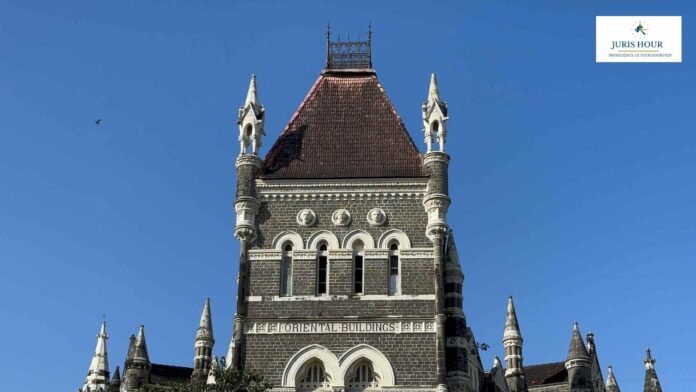
The Bombay High Court has set aside a GST demand of over ₹42.65 crore holding that the tax proceedings were fundamentally without jurisdiction because they were initiated against a company that had ceased to exist following its merger.
The bench of Justice Suman Shyam and Justice Advait M. Sethna ruled that a show cause notice issued to an amalgamating company after its dissolution is legally non-est and any consequential adjudication order founded on such notice cannot survive in law.
The dispute arose from the merger of the companies pursuant to a scheme of amalgamation approved by the Bombay High Court on 29 November 2016, with 1 April 2015 as the appointed date. Following the merger, KSCPL stood dissolved and its name was struck off the records of the Registrar of Companies.
Buy Now: GST Judgements E-Compilation – June 2026
Before the merger, KSCPL had been engaged in construction activities under the Slum Rehabilitation Authority (SRA) scheme and had discharged its service tax liabilities amounting to ₹62.78 lakh. The company also informed the Service Tax Department in February 2017 about the amalgamation and transfer of unutilised CENVAT credit.
Although KSCPL’s service tax registration was automatically migrated into GST after the implementation of the GST regime, the petitioner maintained that the migration occurred automatically under the CGST Act without any intimation, and the company had already ceased to exist by then. Subsequently, its GST registration was cancelled in February 2020 with nil liability.
Despite being informed about the amalgamation on multiple occasions, the Directorate General of GST Intelligence (DGGI) initiated proceedings alleging unpaid GST liability relating to flats and commercial properties allotted under redevelopment projects.
The Department first issued Form DRC-01A in May 2025 in the name of KSCPL and later served a show cause notice dated 25 June 2025 under Section 74 of the CGST Act, proposing a GST demand of ₹44.78 crore, together with interest and penalty.
After adjudication, the Joint Commissioner passed an Order-in-Original dated 31 December 2025, confirming a GST demand of ₹42.65 crore along with applicable interest and penalty while dropping part of the proposed demand relating to land value. The petitioner challenged this order before the Bombay High Court.
The principal question before the High Court was not whether GST dues could ultimately be recovered from the successor company, but whether tax proceedings initiated on the basis of a show cause notice issued to a company that had already ceased to exist could be sustained in law.
The petitioner argued that once KSCPL had merged into Kanakia Spaces Realty Private Limited and stood dissolved, any notice issued in its name was void ab initio. It relied on earlier judicial precedents, including the Supreme Court’s decision in Principal Commissioner of Income Tax v. Maruti Suzuki India Ltd., as well as the Bombay High Court’s rulings in Reliance Industries Ltd. v. P. L. Roongta and Vodafone Idea Ltd. v. Union of India, which had consistently held that proceedings against non-existent entities are legally invalid.
The tax authorities contended that the liability of the transferor company continued notwithstanding the amalgamation and relied upon Section 87 of the CGST Act, which deals with amalgamation and merger of companies. According to the Department, the provision permitted recovery of unpaid GST dues even after the merger.
Rejecting the Department’s argument, the High Court observed that Section 87 merely governs the tax treatment of transactions during the intervening period between the effective date of amalgamation and the date of the merger order.
The Bench clarified that the provision does not authorise the Department to issue show cause notices to an entity that has already ceased to exist by virtue of the approved scheme of amalgamation.
The Court held that once the Department was aware of the merger, initiating proceedings in the name of the dissolved company was without jurisdiction and rendered the entire adjudication process void.
The Bench reaffirmed the principle laid down by the Supreme Court in Maruti Suzuki India Ltd., which held that proceedings initiated against a non-existent amalgamating company, despite the authorities having knowledge of the merger, are void ab initio.
The Court also followed its earlier rulings in Reliance Industries Ltd. and Vodafone Idea Ltd., observing that these precedents squarely governed the present dispute and left no scope for sustaining the impugned proceedings.
Allowing the writ petition, the Bombay High Court quashed the Order-in-Original solely because it was founded upon a show cause notice issued to a non-existent company.
However, the Court expressly clarified that it had not examined the merits of the alleged GST liability. It left the authorities free to initiate fresh proceedings against the appropriate legal entity, namely the successor company, if such action is otherwise permissible under law.
Membership Required to Access Case Details & Order Copy
To view the complete Case Details and Download Order Copy, you must have an active membership. Please subscribe to continue.

