
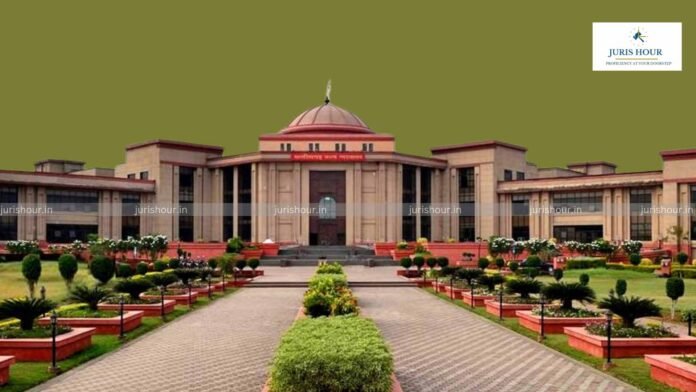
The Chhattisgarh High Court has dismissed the Income Tax Department’s appeal holding that the market value of electricity transferred from an eligible captive power unit to a non-eligible manufacturing unit must be determined based on the tariff charged by the State Electricity Board to industrial consumers and not the price at which electricity is purchased by the Board from power generators.
The Bench of Justice Parth Prateem Sahu and Justice Sachin Singh Rajput has relied upon the Supreme Court’s judgment in Commissioner of Income Tax v. Jindal Steel & Power Ltd. (2023), which authoritatively settled the issue by holding that the market value of electricity supplied by captive power plants should be determined based on the tariff charged by the State Electricity Board to industrial consumers; the procurement price at which electricity boards purchase electricity from generating companies cannot represent the open market price for industrial consumers.
Buy Now: INCOME TAX E-COMPILATION – JUNE 2026
The case arose from the assessment for Assessment Year 2017-18, during which Godawari Power and Ispat Ltd., engaged in mining, steel manufacturing and power generation, reported specified domestic transactions involving the transfer of electricity generated by its eligible captive power units to its non-eligible steel manufacturing units. The transactions were reported in Form 3CEB under the transfer pricing provisions applicable to specified domestic transactions.
The Assessing Officer referred the matter to the Transfer Pricing Officer (TPO) under Section 92CA of the Income Tax Act for determining the arm’s length price of these transactions.
The TPO concluded that the electricity transferred by the eligible units had been valued at a higher rate than permissible and proposed a substantial downward adjustment to the value of the specified domestic transactions. Based on this determination, the Assessing Officer made additions to the assessee’s income.
The Revenue argued before the High Court that the Income Tax Appellate Tribunal (ITAT) had wrongly relied upon an earlier judgment of the Chhattisgarh High Court concerning Section 80-IA without independently examining the transfer pricing framework under Chapter X of the Income Tax Act.
According to the Department, the tariff charged by the Chhattisgarh State Power Distribution Company Ltd. (CSPDCL) to consumers includes transmission and distribution costs and therefore cannot be compared with electricity transferred internally by the assessee. It further contended that the ITAT ignored transfer pricing principles such as Functions Performed, Assets Employed and Risks Assumed (FAR analysis) while allowing the assessee’s appeal.
The assessee submitted that it had not actually claimed any deduction under Section 80-IA during the relevant assessment year because its gross income was nil owing to accumulated business losses.
It further argued that even otherwise, the “market value” contemplated under Section 80-IA(8) refers to the price that electricity would ordinarily fetch in the open market. Therefore, electricity transferred to its manufacturing units should be valued at the tariff charged by CSPDCL to industrial consumers rather than the procurement price paid by the electricity board to power generators.
The High Court examined Section 80-IA(8) and its Explanation, which defines “market value” as the price that goods or services would ordinarily fetch in the open market or the arm’s length price where the transaction constitutes a specified domestic transaction.
The Bench noted that this issue had already been decided in the earlier Godawari Power & Ispat Ltd. decision, where it was held that electricity transferred from a captive power plant should be valued with reference to the rate charged by the electricity distribution company to industrial consumers and not the rate at which electricity is sold by generators to the Board.
The High Court observed that the ITAT had correctly followed the binding precedent of the jurisdictional High Court as well as its own earlier decisions, including Mahendra Sponge & Power Pvt. Ltd., while allowing the assessee’s appeal.
Since the quantum addition itself was deleted, the consequential penalty under Section 270A also could not survive.
Finding no legal infirmity in the Tribunal’s order, the Chhattisgarh High Court dismissed the Department’s appeal and answered the substantial question of law against the Revenue.
Membership Required to Access Case Details & Order Copy
To view the complete Case Details and Download Order Copy, you must have an active membership. Please subscribe to continue.

