
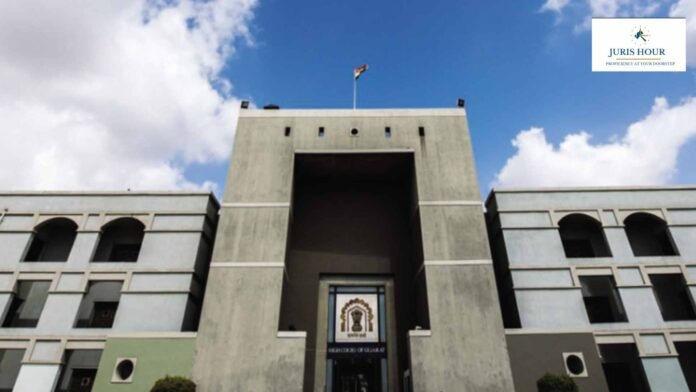
The Gujarat High Court has dismissed a writ petition filed by two partners of M/s. Maa Renuka Trading Company, refusing to interfere with an Order-in-Original imposing penalties under Sections 122(1A) and 122(3) of the Central Goods and Services Tax Act, 2017 (CGST Act).
The bench of Justice A.S. Supehia and Justice Vaibhavi D. Nanavati has observed that the adjudicating authority had recorded detailed findings establishing the petitioners’ involvement in a large-scale fake invoice and hawala racket and found no violation of the principles of natural justice warranting interference under Article 226 of the Constitution.
The Special Civil Application filed against the Union of India and GST authorities.
The petitioners challenged the Order-in-Original dated 30 January 2026, contending that no finding had been recorded establishing their liability under Section 122(1A) of the CGST Act. They further argued that the adjudicating authority failed to consider their defence and passed the order in violation of the principles of natural justice.
It was also contended that since the partnership firm itself had already been penalised, separate penalties could not be imposed upon the individual partners under Section 122(1A). The petitioners relied upon the Supreme Court’s decision in Kranti Associates Pvt. Ltd. v. Masood Ahmed Khan relating to reasoned orders and a recent Bombay High Court judgment concerning the retrospective application of Section 122(1A).
The GST Department opposed the petition by submitting that the petitioners had an effective statutory remedy of appeal under Section 107 of the CGST Act.
According to the Department, an extensive investigation uncovered a large-scale fraudulent network involving the generation of bogus invoices and fake e-way bills without actual movement of goods. The authorities alleged that the petitioners, acting as partners of the firm, knowingly participated in transactions designed to facilitate wrongful availment and passing of Input Tax Credit (ITC) through hawala channels.
The Court noted that investigations were conducted against 23 persons and entities connected with the alleged fraud. Search proceedings under Section 67(2) of the CGST Act were carried out, statements were recorded, summons were issued and documentary as well as electronic evidence was collected.
During the investigation, one of the partners reportedly admitted that several e-way bills reflected impossible transportation timelines and acknowledged that invoices from Delhi-based entities were routed through a broker. According to the statements recorded, these entities were merely issuing invoices without a genuine supply of bitumen for the purpose of passing fraudulent ITC.
The Court further recorded that forensic examination of mobile phones and WhatsApp chats allegedly established the petitioners’ coordination with a broker named Ankur Kanda, including routing payments through bank accounts, receiving cash via hawala channels after deduction of commission and using coded messages to facilitate cash movement.
The adjudicating authority had concluded that the partners operated and managed multiple concerns for wrongful and fraudulent availment of Input Tax Credit, thereby attracting penalties under Sections 122(1A) and 122(3) of the CGST Act.
After examining the record, the High Court observed that the adjudicating authority had passed a detailed and reasoned order based upon: Statements recorded during investigation; Documentary evidence; Electronic records, including WhatsApp chats; Admissions allegedly made by the petitioners; and Findings establishing their knowledge and participation in the fraudulent transactions.
The Bench held that the order clearly analysed the petitioners’ role in generating fake invoices, bogus e-way bills and facilitating hawala transactions, thereby satisfying the requirements of Section 122(1A).
Rejecting the plea of violation of natural justice, the Court observed that the Order-in-Original extensively considered the petitioners’ defence and contained detailed reasoning. Consequently, the Supreme Court decision in Kranti Associates regarding reasoned orders was held to be inapplicable to the facts of the case.
The Bench also distinguished the Bombay High Court judgment relied upon by the petitioners, observing that the present matter involved a widespread fraudulent network supported by substantial evidence, unlike the facts before the Bombay High Court.
The Court noted that although the petitioners were specifically asked whether they wished to avail the statutory appellate remedy under Section 107 of the CGST Act, they consciously chose to seek adjudication of the writ petition on merits.
Holding that the petitioners had an efficacious alternative remedy and that no exceptional circumstance existed for invoking writ jurisdiction, the Court declined to interfere with the impugned order. Questions relating to the applicability of Section 122(1A), including any issue concerning its retrospective operation, were held to be matters appropriately examinable by the appellate authority.
The Gujarat High Court ultimately dismissed the writ petition, discharged the rule and declined to grant any relief, thereby allowing the penalties imposed under Sections 122(1A) and 122(3) of the CGST Act to stand, subject to the petitioners pursuing their statutory appellate remedies.
Membership Required to Access Case Details & Order Copy
To view the complete Case Details and Download Order Copy, you must have an active membership. Please subscribe to continue.
Read More: Challenge to Unsigned Section 73 Order By Filing GST Appeal: Telangana High Court

