
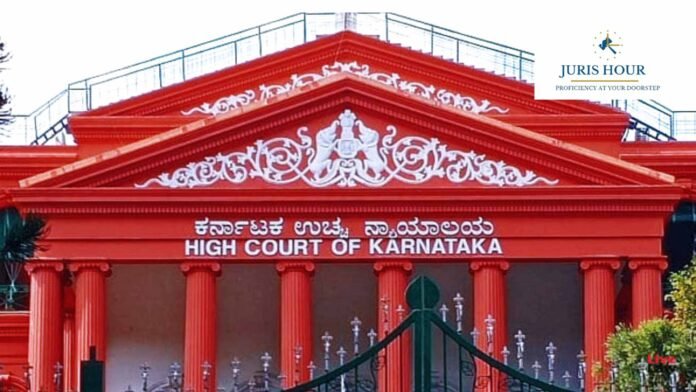
The Karnataka High Court has held that while contractors may be entitled to reimbursement of incremental taxes under contractual terms, the actual amount payable must be established through proper documentary evidence.
The bench of Chief Justice Vibhu Bakhru and Justice K.S. Hemalekha set aside a Single Judge’s direction requiring the Bruhath Bengaluru Mahanagara Palike (BBMP) to reimburse ₹2.23 crore to a contractor and directed the civic body to independently verify the claim.
The dispute arose from infrastructure contracts awarded by BBMP for the construction of a 20-metre corridor from BTM Layout to Hosur Road along Madiwala Tank Bund Road and a four-lane bidirectional underpass at the Magadi Road–Basaveshwar Nagar Road junction.
The work orders had been issued in 2013 and 2015, prior to the introduction of GST. While there was no dispute regarding payments made before 1 July 2017, the controversy centred on works executed after GST came into force.
The contractor claimed that because GST replaced the earlier VAT regime, it had incurred an additional tax burden of approximately 8%, which BBMP was contractually bound to reimburse under the “Taxes and Duties” clause contained in the agreement.
Buy Now: GST Judgements E-Compilation – May 2026
The Court noted that although the contract price was inclusive of taxes prevailing at the time of tender, the agreement specifically contemplated reimbursement where taxes increased due to subsequent changes introduced by either the State or Central Government.
Relying on this clause, the contractor sought reimbursement of the incremental GST paid on works executed after the GST rollout.
The contractor also relied upon a BBMP circular issued in September 2017 supporting reimbursement of GST in eligible cases.
The Single Judge had earlier allowed the writ petition and directed BBMP to reimburse ₹2,23,23,979.92 towards the differential GST component within two months.
The order was based on the conclusion that the contractor was entitled to reimbursement of the incremental tax burden resulting from the introduction of GST.
While examining the appeal, the Division Bench observed that BBMP did not seriously dispute the principle that contractors could be entitled to reimbursement of additional taxes imposed after submission of the tender.
However, the Court emphasised that reimbursement cannot be granted merely on assertion. The contractor must establish, through proper documentary evidence, that the claimed incremental tax was actually paid.
The Bench held that relevant documents such as GST returns, challans and other records are necessary to substantiate the claim.
One important issue before the Court was whether the contractor was required to obtain certification from GST authorities confirming payment of the incremental tax.
The Court held that no such certification mechanism exists under the CGST Act, KGST Act or IGST Act.
Referring to its earlier decision in M. Venkata Rao Infra Projects Private Limited, the Bench reiterated that production of GST returns, challans and other supporting documents is sufficient and certification from GST authorities cannot be insisted upon.
The Division Bench observed that although the Single Judge directed reimbursement of more than ₹2.23 crore, the judgment did not explain how this amount had been computed or whether the evidence on record conclusively established that the contractor had actually paid the incremental GST claimed.
The Bench accepted BBMP’s contention that it had not been given an adequate opportunity to verify the documentary evidence or examine whether the claimed amount genuinely represented additional tax paid.
The Court further noted that disputed questions regarding the actual quantum of incremental tax cannot ordinarily be decided in writ proceedings without proper factual verification.
Accordingly, the High Court set aside the reimbursement order and granted liberty to the contractor to submit all relevant documents before the Commissioner of BBMP within four weeks.
The Commissioner has been directed to examine the records, decide the reimbursement claim on its merits, and communicate the decision within eight weeks thereafter.
If the contractor remains dissatisfied with BBMP’s decision, the Court clarified that it would be free to pursue available legal remedies, including seeking reference of the dispute to arbitration.
The Bench also protected the contractor by directing that the time spent prosecuting the writ proceedings shall be excluded while computing limitations for any future proceedings.
Membership Required to Access Case Details & Order Copy
To view the complete Case Details and Download Order Copy, you must have an active membership. Please subscribe to continue.

