
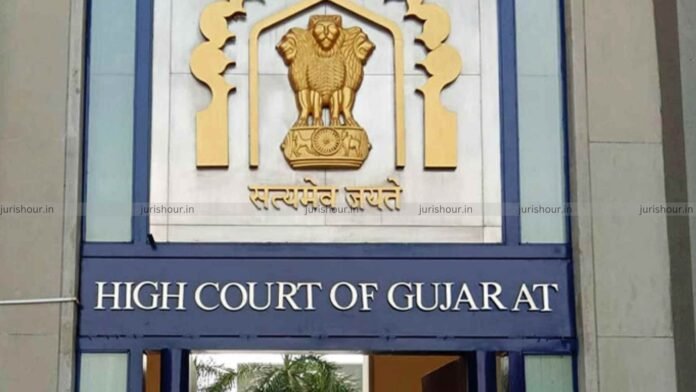
The Gujarat High Court has lifted the Bank Attachment by the GST Department as there cannot be any recovery against the director without prior notice under Section 89 of the CGST Act.
The bench of Justice A.S. Supehia and Justice Vaibhavi D. Nanavati has directed the State GST authorities to immediately release the bank accounts, fixed deposits, and demat account of an individual taxpayer after finding that the department had failed to record the necessary findings required before initiating recovery proceedings against him for the dues of a company. The attachment could not be sustained when there was no categorical determination that recovery from the company itself was impossible.
The case arose from recovery proceedings initiated by the GST authorities against a company whose directors had allegedly abandoned the business. According to submissions made before the Court, the department had initially recovered approximately ₹12 lakh from the company. However, after further attempts to recover the outstanding dues proved unsuccessful and no representatives appeared on behalf of the company, the authorities proceeded to attach the bank account and other financial assets of the petitioner.
The petitioner challenged the attachment before the Gujarat High Court through a Special Civil Application, contending that the recovery action against him was contrary to law.
During the hearing, the State’s counsel, acting on instructions from the concerned State Tax Officer, made a significant admission before the Court.
The department acknowledged that there were no findings recorded in Form GST DRC-18 specifically stating that recovery from the company was not possible and that the authorities were therefore compelled to recover the amount from the petitioner. The State further submitted that an opportunity should be granted to the authorities to take appropriate legal recourse against the responsible directors if required.
This admission became crucial because GST recovery proceedings against directors or other persons associated with a company generally require compliance with statutory safeguards and proper recording of reasons before shifting liability beyond the company itself.
Taking note of the department’s candid admission, the Bench observed that the requisite findings had not been recorded before proceeding against the petitioner.
In light of these facts, the Court found it appropriate to grant relief to the petitioner and directed the immediate release of the attached financial assets.
The High Court ordered the GST authorities to release, within two days, the attachment over: the petitioner’s bank account maintained with Kotak Mahindra Bank; two fixed deposits; and the petitioner’s demat account.
The Court’s direction effectively restored the petitioner’s access to his financial assets, which had been frozen as part of the recovery proceedings.
While granting relief to the petitioner, the Court clarified that its order would not prevent the GST authorities from pursuing lawful recovery measures in the future.
The Bench specifically reserved liberty in favour of the department to take appropriate action in accordance with law for recovery of the outstanding dues either from the company itself or from the responsible directors, if legally permissible.
Membership Required to Access Case Details & Order Copy
To view the complete Case Details and Download Order Copy, you must have an active membership. Please subscribe to continue.
Read More: Can Income Tax Orders Still Be Challenged for Missing DIN? Finance Act 2026 Changes the Rules

