
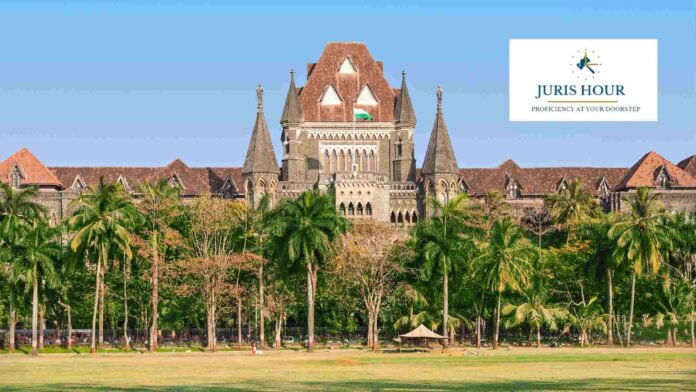
The Bombay High Court has framed important legal questions in a batch of petitions led by Bajaj General Insurance Company Limited concerning the interpretation of Section 20 of the Central Goods and Services Tax (CGST) Act, 2017.
The dispute centers around whether, prior to the amendment that came into effect from 1 April 2025, businesses were mandatorily required to distribute Input Tax Credit (ITC) through the Input Service Distributor (ISD) mechanism or whether such distribution remained optional.
The matter was heard by a bench comprising Chief Justice Shree Chandrashekhar and Justice Suman Shyam. The petitions were listed primarily for framing issues that would govern the adjudication of the larger controversy involving the treatment of ITC distribution under the GST framework.
The petitioner-company argued that the language employed under Section 20 of the CGST Act, as it existed before the amendment, did not create a statutory obligation requiring the distribution of input credits. According to the submissions made on behalf of the company, the provision merely provided a mechanism and did not impose a mandatory duty on businesses to distribute common credits to various branches.
The department however, adopted an entirely different interpretation. It contended that an entity such as the petitioner-company falls squarely within the ambit of Section 20 and therefore is under a legal obligation to distribute credits to branches located across different States. The Revenue’s position effectively treats the ISD mechanism as mandatory for eligible entities dealing with common input services.
Recognising the broader implications of the dispute, the High Court formally framed three substantial questions for determination.
The first issue framed by the Court concerns whether the language of Section 20 of the CGST Act, read together with GST Council recommendations and departmental circulars, provides merely an option to distribute ITC or creates a mandatory requirement for businesses to distribute credits among their branches.
The second issue relates to the legal character of subsequent circulars and amendments made under Section 20. The Court will examine whether these changes are merely clarificatory and therefore capable of retrospective operation, or whether they introduce substantive changes applicable only prospectively. This issue assumes significance because retrospective application could affect tax positions adopted by businesses in earlier years.
The third issue framed by the Court deals with the concept of revenue neutrality. The Court will examine whether the interpretation of Section 20 should be influenced by the argument that no actual loss occurs to the Government exchequer where credit remains within the same entity and is not distributed across branches. This aspect may have substantial implications because the GST system is designed around seamless credit flow, and disputes frequently arise where the department alleges procedural non-compliance despite no corresponding revenue loss.
The controversy has wide implications for multi-state companies, especially insurance companies, banks, and large corporations operating through multiple branches across India. The eventual outcome may determine whether past practices adopted by taxpayers before the 2025 amendment face scrutiny or whether businesses can rely on the argument that the earlier legal framework did not impose a mandatory distribution requirement.
The High Court has now directed that the matters be listed on 10 June 2026 for further hearing.
Case Details
Case Title: Bajaj General Insurance Company Limited Versus UOI
Case No.: WRIT PETITION (L) NO.3983 OF 2026
Date: 05/05/2026
Counsel For Appellant: Rafique Dada, Senior Advocate
Counsel For Respondent: M. P. Sharma
Read More: Govt. Authorises 7 Financial Entities To Use Aadhaar Authentication Under PMLA

