
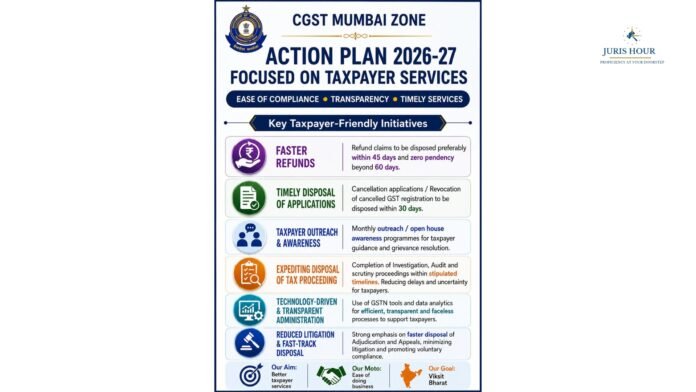
The CGST Mumbai Zone has released its “Action Plan 2026–27” with a strong focus on taxpayer services, transparency, ease of compliance and faster disposal of GST-related matters.
The initiative aims to improve taxpayer experience through time-bound administrative action, technology-driven governance and reduction in procedural delays.
The action plan highlights several taxpayer-friendly initiatives designed to streamline GST administration and improve efficiency in service delivery. One of the key announcements relates to refund processing timelines. According to the plan, refund claims are proposed to be disposed of preferably within 45 days, with an emphasis on ensuring zero pendency beyond 60 days. The move is expected to provide relief to businesses facing working capital constraints due to delayed refunds.
The department has also announced timelines for disposal of cancellation and revocation applications relating to GST registrations. Such applications are proposed to be disposed of within 30 days, which may help businesses facing operational disruptions due to registration cancellation or pending revocation proceedings.
Another important feature of the action plan is the focus on taxpayer outreach and awareness programmes. The CGST Mumbai Zone stated that monthly outreach and open house awareness programmes would be conducted for taxpayer guidance and grievance resolution. The initiative is aimed at improving communication between taxpayers and the department while helping businesses understand compliance requirements more effectively.
The action plan further emphasizes expediting disposal of tax proceedings. Investigation, audit and scrutiny proceedings are proposed to be completed within stipulated timelines to reduce uncertainty and delays for taxpayers. The department indicated that quicker completion of proceedings would improve predictability and reduce prolonged litigation exposure for businesses.
The administration has also stressed the use of technology-driven and transparent governance mechanisms. The plan refers to increased use of GSTN tools and data analytics for efficient, transparent and faceless processes. The focus on digital administration aligns with the broader objective of minimizing manual intervention and improving accountability in tax administration.
In another major step aimed at reducing disputes, the CGST Mumbai Zone has proposed faster disposal of adjudication and appeal matters. The department stated that there would be a strong emphasis on reducing litigation and promoting voluntary compliance through fast-track disposal mechanisms.
The action plan repeatedly emphasizes the themes of “Ease of Compliance”, “Transparency” and “Timely Services”. The initiative appears to be aligned with the government’s broader “Ease of Doing Business” and “Viksit Bharat” objectives by seeking to improve taxpayer confidence and administrative efficiency under the GST regime.
The CGST Mumbai Zone has described its overall aim as providing better taxpayer services while promoting good governance and smoother compliance processes for businesses and individuals operating under GST.

